
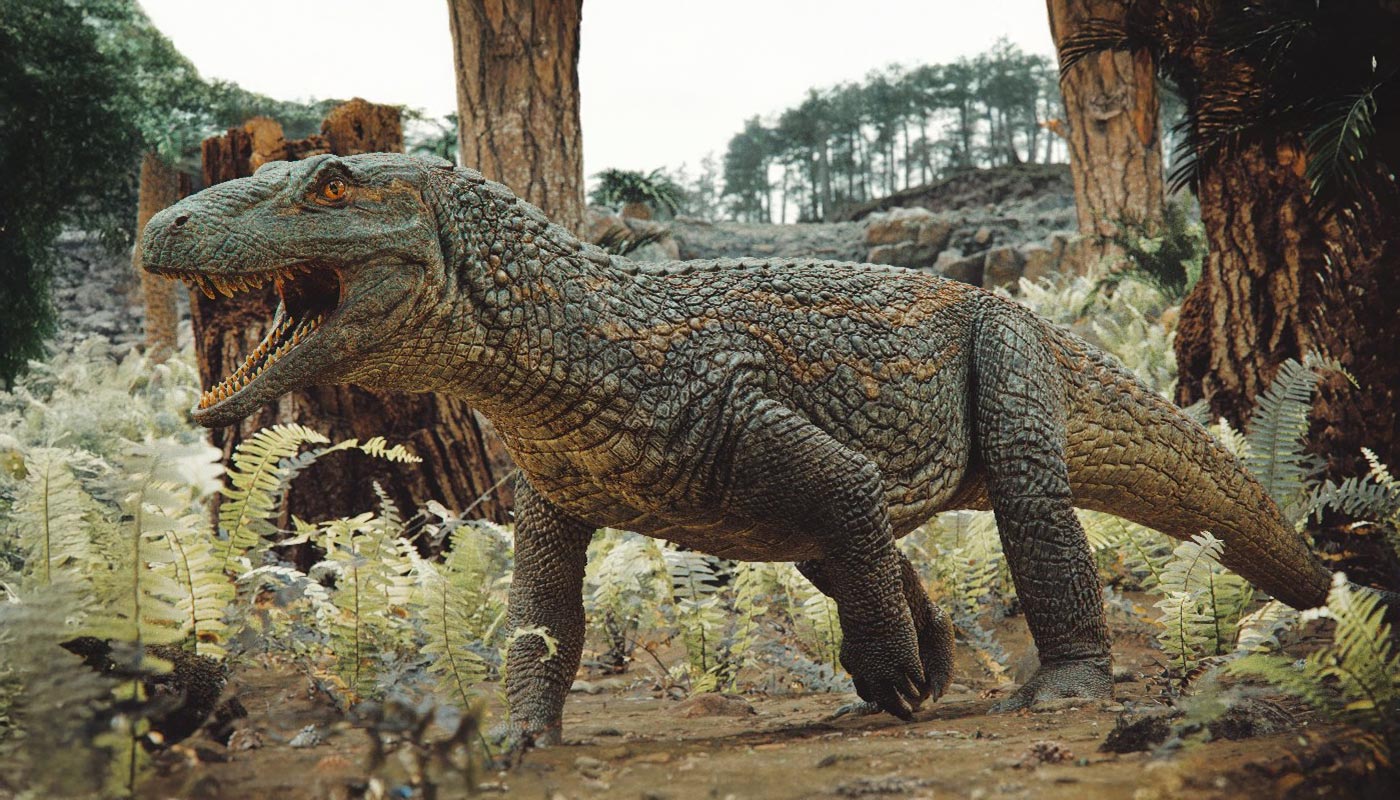
“Extremely rare” discovery of this newly identified armor-plated carnivorous reptile strengthens our understanding of the link between Brazil and Africa 240 million years ago
A newly identified carnivorous lizard might look like a dinosaur to most observers, but it is actually an early ancestor of today’s crocodiles.
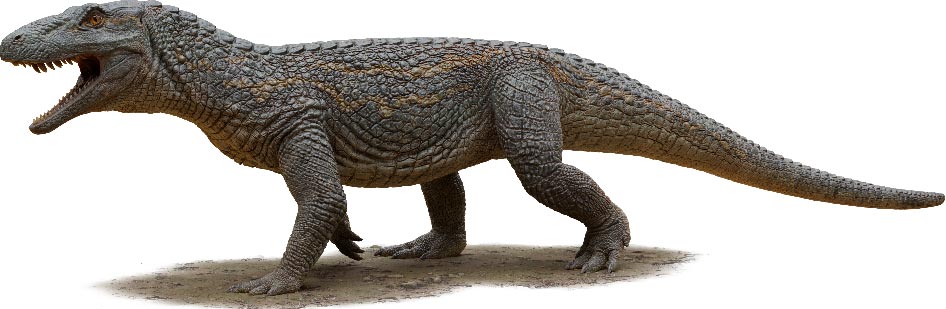
Called Tainrakuasuchus bellator, a name partly taken from Latin for “warrior” or “fighter,” this armored reptile lived 240 million years ago, just before dinosaurs appeared.
As a member of Pseudosuchia (the precursors of modern crocodiles and alligators), it belonged to one of the leading groups of dominant predators during the Triassic Period.
This new species, described in the peer-reviewed Journal of Systematic Palaeontology, measured about 2.4m in length and weighed around 60kg.
It relied on a long neck and quick, agile movements to capture prey, then used a slender jaw lined with sharp, recurved teeth to grip its target and prevent escape.
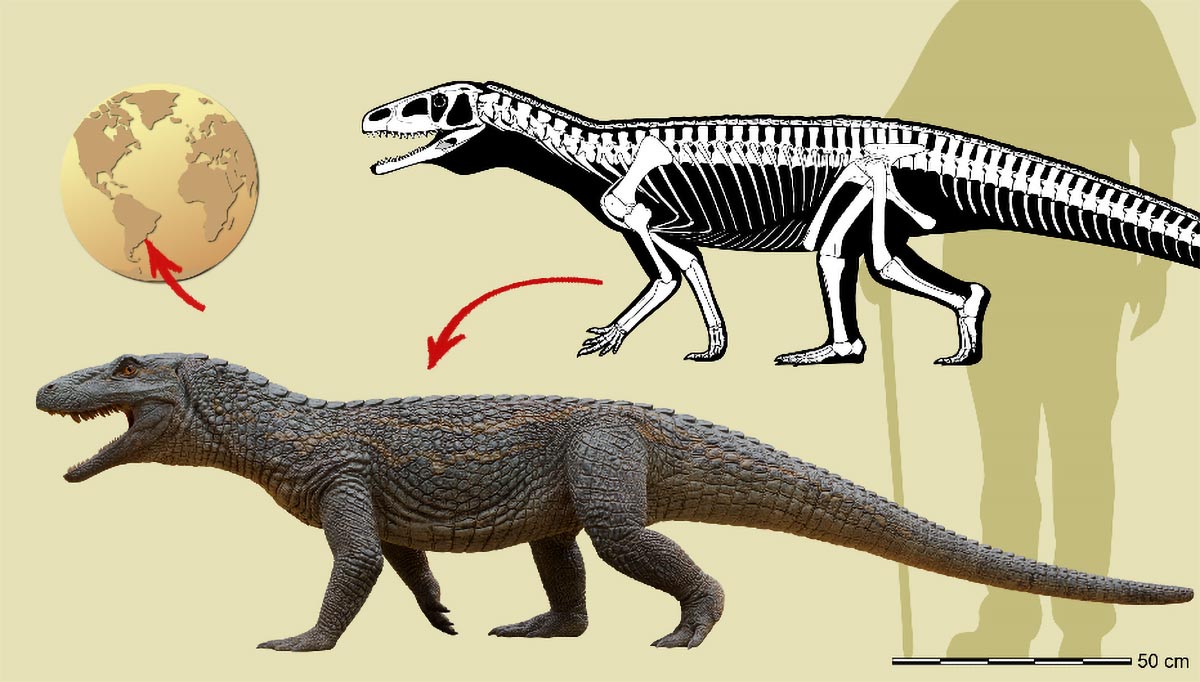
Predatory behavior and anatomical distinctions
“This animal was an active predator, but despite its relatively large size, it was far from the largest hunter of its time with the same ecosystem home to giants as big as seven meters long,” explains lead author Dr. Rodrigo Temp Müller, who led a team of palaeontologists from the Universidade Federal de Santa Maria, in Brazil.
“Pseudosuchia were a diverse group of animals capable of tackling robust prey, as well as small hunters specialized in catching swift animals.
“Although its appearance superficially resembles that of a dinosaur, Tainrakuasuchus bellator does not belong to that group. One of the clearest ways for us to distinguish it from dinosaurs lies in the structure of the pelvis where the characteristics of its hip and femur joints are very different.”
Dr. Müller adds: “Tainrakuasuchus bellator’s discovery represents the complexity of the ecosystem at the time, with different pseudosuchia species – varying in sizes and hunting strategies – occupying specific ecological niches.
“Its discovery helps illuminate a key moment in the history of life, the period that preceded the rise of the dinosaurs.”
Excavation and fossil reconstruction
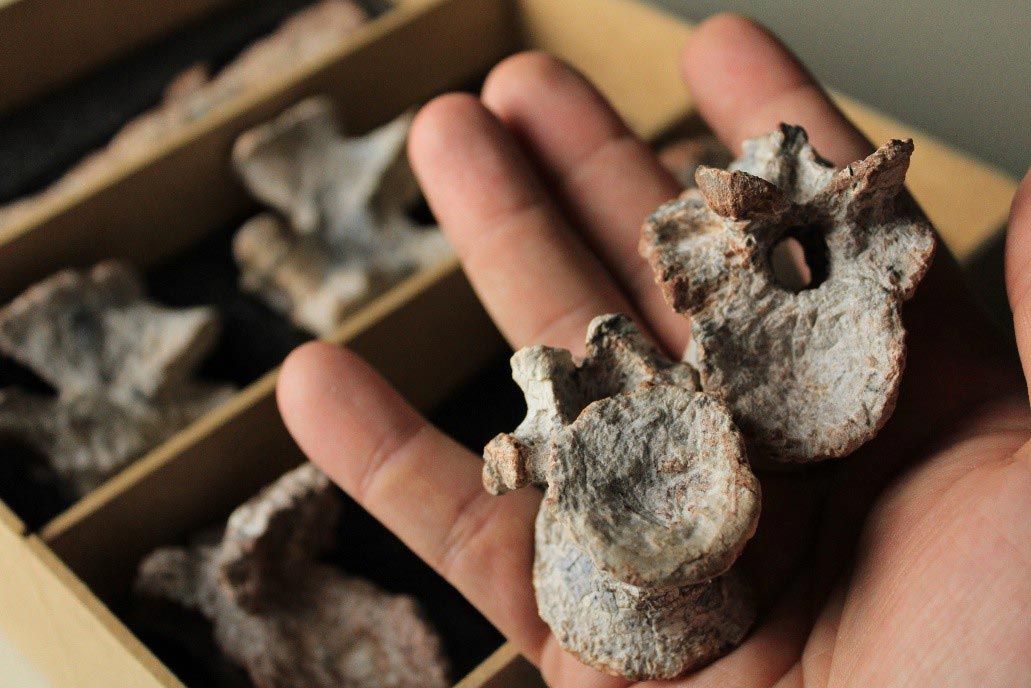
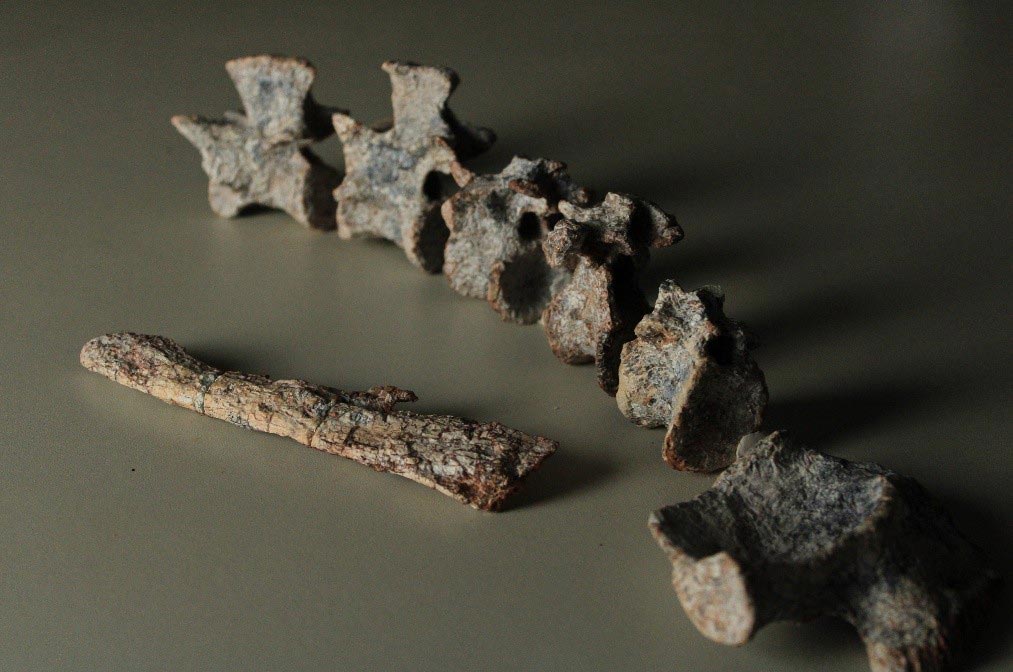
Dr. Müller and his team uncovered the fossils during a May 2025 excavation in the municipality of Dona Francisca in southern Brazil. They found a partial skeleton embedded in rock that included sections of the lower jaw, vertebral column, and pelvic girdle.
These remains allowed researchers to infer several behaviors of the animal and confirm that Tainrakuasuchus bellator had a back covered with bony plates called osteoderms, features also seen in modern crocodiles. Although the limbs were not recovered, the team believes that, like its close relatives, the species moved on all four limbs.
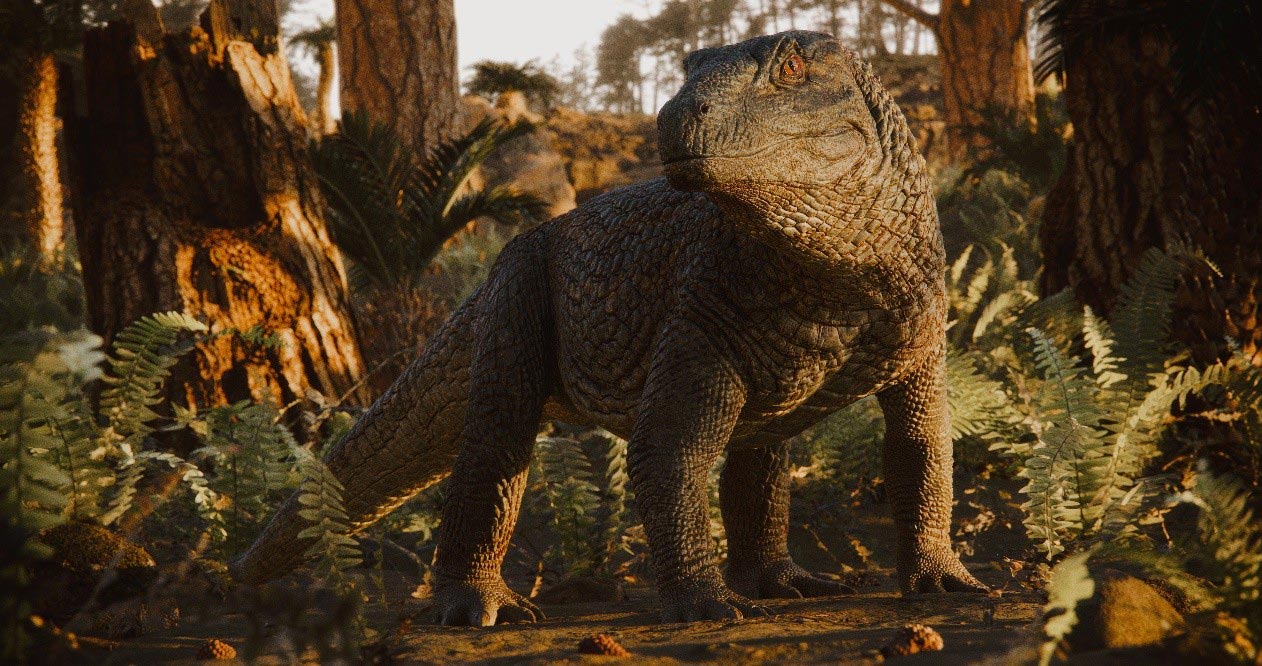
The researchers have named the animal Tainrakuasuchus. The name blends the Guarani terms tain (“tooth”) and rakua (“pointed”) with the Greek word suchus (“crocodile”). This combination highlights the creature’s notably sharp teeth.
The ‘bellator’ part of its name comes from the Latin word for “warrior” or “fighter”- which the authors state “honors the people of Rio Grande do Sul, symbolizing their strength, resilience, and fighting spirit, especially in light of the recent floods that have affected the state.”
Geological connections between Brazil and Africa
Dr. Müller describes Tainrakuasuchus bellator’s discovery as “extremely rare.” He explains it’s also further evidence of the ancient connection between Brazil and Africa during the Triassic Period – when the world’s continents were united into a single supercontinent, Pangaea.
“Despite the diversity of pseudosuchians, they remain poorly understood, as fossils of some their lineages are extremely rare in the fossil record,” Dr. Müller says.
“The fossils we found underwent a meticulous preparation process in the laboratory, during which the surrounding rock was carefully removed.
“Once the anatomical details were revealed, we were delighted and really excited to reveal that the specimen represented a species previously unknown to science.
“What we uncovered was a species that belongs to a predator closely related to one (Mandasuchus tanyauchen) found in Tanzania.
“This connection between animals from South America and Africa can be understood in light of the Triassic Period’s paleogeography.”
He continues, “At that time, the continents were still united, which allowed the free dispersal of organisms across regions that are now separated by oceans. As a result, the faunas of Brazil and Africa shared several common elements, reflecting an intertwined evolutionary and ecological history.
“Tainrakuasuchus bellator would have lived in a region bordering a vast, arid desert – the same setting as where the first dinosaurs emerged.
“It shows that, in what is now southern Brazil, reptiles had already formed diverse communities adapted to various survival strategies. Moreover, this discovery reveals that such diversity was not an isolated phenomenon.”
Reference: “Osteology, taxonomy and phylogenetic affinities of a new pseudosuchian archosaur from the Middle Triassic of southern Brazil” by Rodrigo Temp Müller, Mauricio Silva Garcia, Lísie Vitória Soares Damke, Fabiula Prestes de Bem, André de Oliveira Fonseca, Mariana Doering, Jeung Hee Schiefelbein and Vitória Zanchett Dalle Laste, 12 November 2025, Journal of Systematic Palaeontology.
DOI:10.1080/14772019.2025.2573750
Never miss a breakthrough: Join the SciTechDaily newsletter.
Follow us on Google and Google News.
7 Comments
This is from 240 millioin years ago? Has deep time actually has happened? Before you consider this as an absurd question, consider TWO expreiments never done AND PUBLISHED RESULTS on actual dinosaur collagen found inside of their fossils by secular evolutionist scientists.
The two experiments? Collagen is a protein and has carbon atoms. We are carbon-based life. Critical thinking skills will initiate a Carbon 14 test on these easy-to-find samples. If there has been over 100,000 years transpired then these should be Carbon 14-dead. If they have the same Carbon 14 ratio as mammoths, then deep time has NOT happened.
The 2nd experiment? It is checking the chiriality of the collagen to see if the molecules are 50/50 right and left-handed. If a vast majority are left-handed, as protein is, then deep time has not transpired.
Secularist’s silence is an answer. The silence is they have done these experiemnts and they hushed up the results. There you go. Scientists who are Christians HAVE done these two experiments and the results supports young earth. Deep time is supported by assumning the prerequisites to affirm the consequents. A lot of smoke mirrors. Evolution proven by observation? No. ‘Evolution’ is misrepresentations of epigenetic-derived adaptations and EFFECTS from mutations. It’s sleight of hand. Evolution is NOT happening whatsoever.
Incorrect. PS, which human-invented god/goddess did pre-hominid organisms worship?
Please, get a proper education and remain open minded. Copernicus was right. Sometimes the church is wrong. Radioisotope dating is a correct technique. God still created everything, including, obviously, all natural and physical laws. God gave us the ability to question and discern those laws. Don’t be ignorant.
Genesis says humans were made in God’s image, given dominion over every creature, and commanded to “fill the earth and subdue it.” That describes humanity as the pinnacle of creation—not a species cowering for survival.
But if humans and dinosaurs lived at the same time, that’s exactly what we would have been: prey. Daily life wouldn’t look anything like the biblical world of farming, herding animals, and building communities. It would look like people hiding in caves, hoping a 6-ton predator didn’t sniff them out. Nothing in Scripture even hints at a world like that.
Believe the earth is only a few thousand years old if you want—that’s your choice. But if you’re going to challenge others, at least make sure your version of reality doesn’t collapse under basic common sense. You don’t need radiometric dating to see the contradiction. You just need to imagine what life would actually be like sharing the planet with creatures that could swallow a person whole.
Well said. We are being lied to, in order to hide the real timeline of events.
Herb,
I won’t argue your assertion that evolution is a “sleight of hand” or that “deep time” is not a thing. But, I will ask you if the entire fossil record is no older than one hundred thousand years old? How about the earth itself, is it also no older than one hundred thousand years old? Also, I was under the impression that minerals replaced all of the organic materials in the fossilization process, no?
When we look around us it’s easy, easy to see and identify everything man-made. But when we look at something as simple as a flower which is not simple at all then we cannot see the hand of God. A flower is alive and have a dna. Now, google dna and look at its complexity, billion of cells coming in a specific order, each one more complex than anything man has ever created.
Now when I go to a party I know for sure that someone planed it and then worked hard to make it happen. And then science says that a living little thing like a flower, butterfly or cat who can even reproduce themselves were not planed but just happened. Come on, I don’t need any education to understand that, that is simply not true. We are indeed being lied to.