
Close Menu
    Facebook X (Twitter) Instagram
    SciTechDaily
    • Biology
    • Chemistry
    • Earth
    • Health
    • Physics
    • Science
    • Space
    • Technology
    Facebook X (Twitter) Pinterest YouTube RSS
    SciTechDaily
    Home»Space»Last Chance To See a Supermoon in 2024 – What Makes This “Beaver” Moon Special
    Space

    Last Chance To See a Supermoon in 2024 – What Makes This “Beaver” Moon Special

    By Serena Whitfield, NASANovember 13, 20242 Comments4 Mins Read
    Facebook Twitter Pinterest Telegram LinkedIn WhatsApp Email Reddit
    Share
    Facebook Twitter LinkedIn Pinterest Telegram Email Reddit
    Full Moon Supermoon Concept
    Experience the last Supermoon of 2024 on November 15th, known as the Beaver Moon, which will appear exceptionally large and bright.

    Catch the final Supermoon of 2024 on November 15, when the Beaver Moon will shine brighter and larger than usual.

    The name “Beaver Moon” reflects the time of year beavers get ready for winter, paralleled by NASA’s research into the ecological effects of beaver dams, which supports more robust ecosystems.

    The Spectacular Beaver Moon and Supermoon Phenomenon

    Skywatchers, get ready! The next full Moon, known as the Beaver Moon, will be visible on November 15, starting at 4:29 p.m. EST. This event is especially noteworthy because it marks the final Supermoon of 2024, meaning the Moon will appear larger and brighter than usual.

    Coined in 1979, the term “supermoon” refers to when a full Moon coincides with its closest approach to Earth. The Moon doesn’t orbit in a perfect circle. Instead, the Moon orbits Earth in an ellipse (shaped like an oval). This elliptical path causes the Moon’s distance from Earth to vary as it travels.
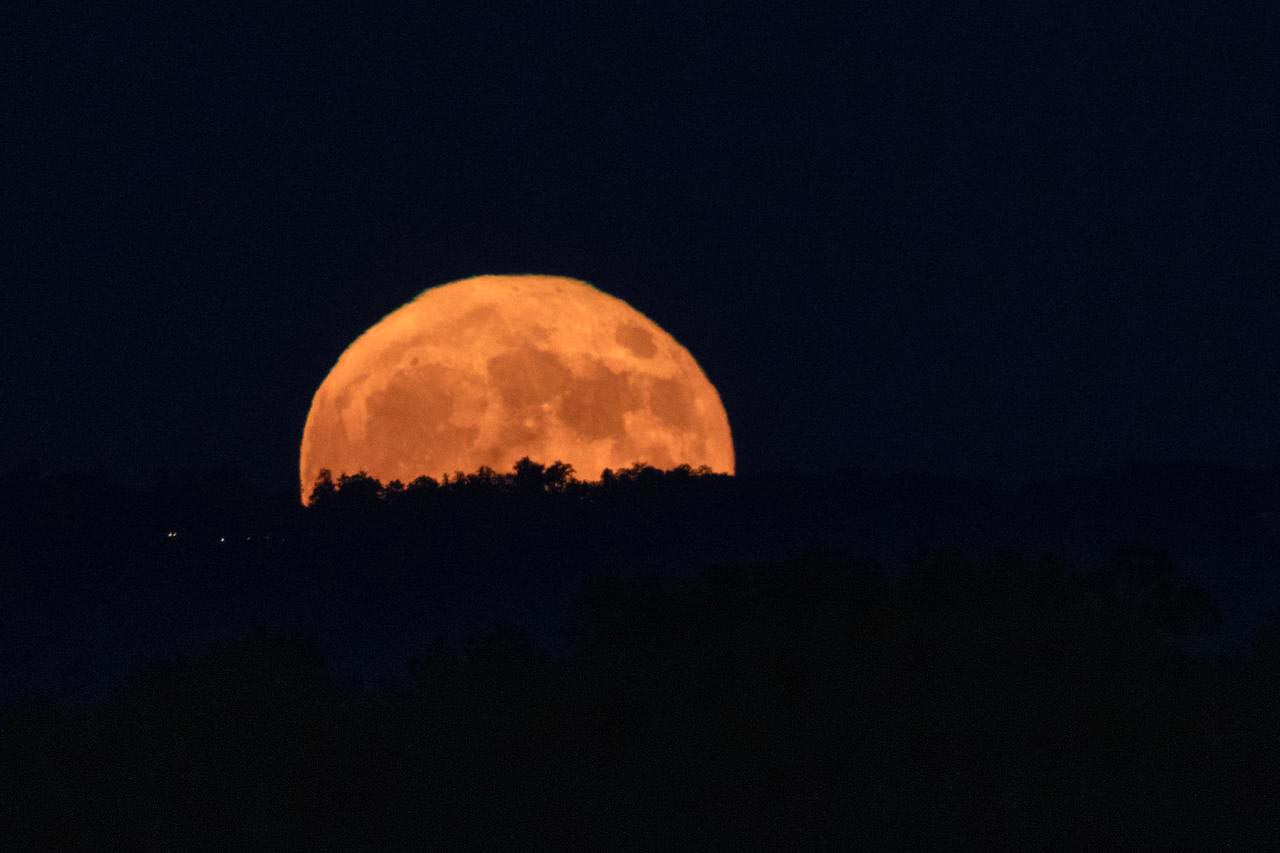
    Supermoon Rises Over Rocket City
    A supermoon rises over Huntsville, Alabama, home to NASA’s Marshall Space Flight Center, Aug. 19, 2024. Supermoons are the biggest and brightest full Moons of the year because the Moon is within 90% of its closest point to Earth. Credit: NASA/Michael DeMocker

    At its farthest point, known as the apogee, the Moon is about 253,000 miles from Earth. At its closest point, called the perigee, it averages about 226,000 miles away. Full moons can happen anywhere along this orbit, but when one occurs near the perigee, it appears slightly larger and brighter than the “average” full Moon—hence the term “supermoon.”

    Supermoons aren’t rare; they’re a natural part of the Moon’s orbit around Earth. According to NASA scientist Dennis Gallagher, these events happen three or four times each year due to the combined motions of the Earth, Moon, and Sun.

    “The Moon’s orbit takes it around the Earth about once every 27 and one-third days,” said Gallagher. “That time of closest approach to Earth, or perigee, happens three or four times each year due to the motions of Earth and the Moon around the Sun.”
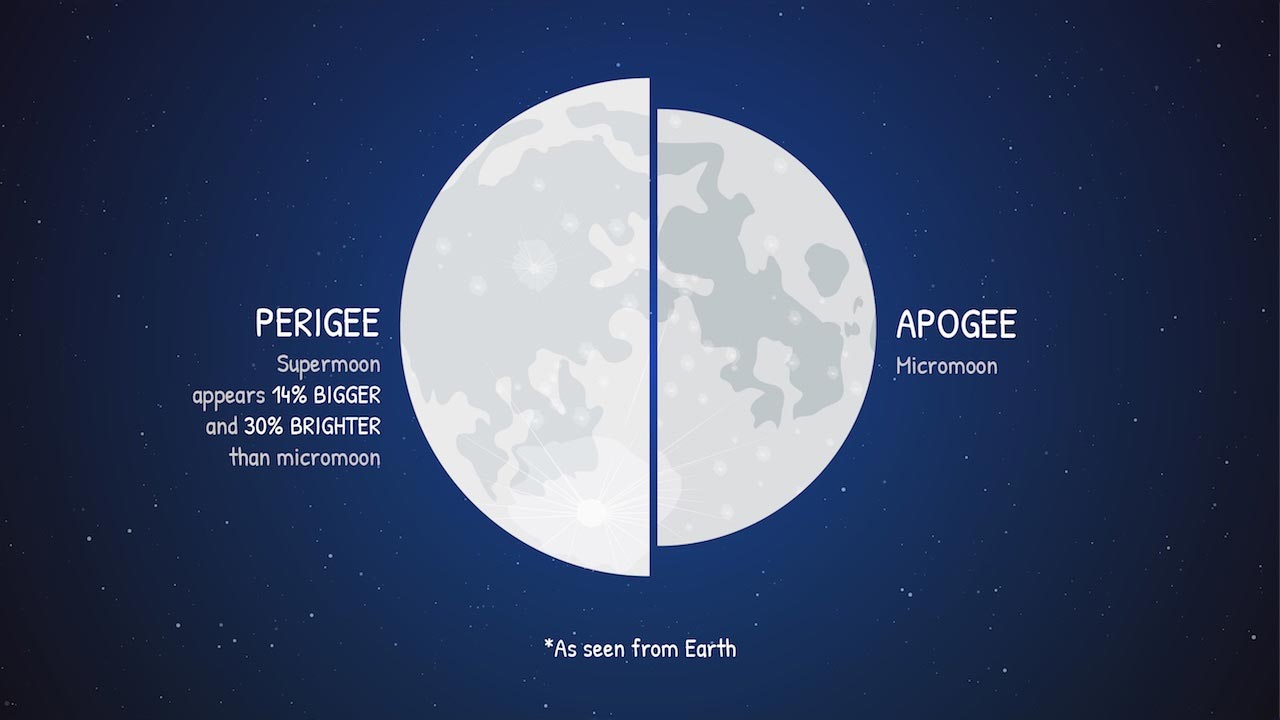
    Supermoon Perigee Micromoon Apogee Size Comparison
    This graphic shows the difference in the appearance of the Moon’s size in its furthest and closest distances to Earth. Credit: NASA/JPL-Caltech

    Why Is It Called the Beaver Moon?

    Beaver Moon is one of the nicknames for the November full Moon. The term has origins from a variety of traditions and folklore in Native American and European culture. One explanation – November is when beavers prepare for the winter by fortifying dams and stocking their food supply. November was also the season to trap beavers for their thick, winter-ready pelts to use for warmer clothing.

    NASA Beaver Restoration

    Researchers are using NASA Earth observations to monitor impacts of beaver restoration on water availability in drought-prone ecosystems. Credit: NASA/Boise State University

    Unveiling Beaver’s Unique Connection to Space

    Did you know Beavers have another space-related connection? Not only is November’s full Moon named in the industrious animal’s honor, but NASA also helps measures the impacts of beaver rewilding.

    NASA Applied Sciences’ Ecological Conservation Program helps fund a project, as a part of its Research Opportunities in Space and Earth Sciences grants, known as the Beaver Rewilding Project in Idaho.

    The project uses NASA’s fleet of Earth-observing missions, like Landsat and Sentinel, to collect data across large areas of the world and pass over the same areas regularly across seasons. From above the clouds, NASA can track the landscape’s transformation after beavers arrive, helping researchers at Boise State University and Utah State University understand the pace and nuance of beaver impacts without having to send researchers into remote areas.
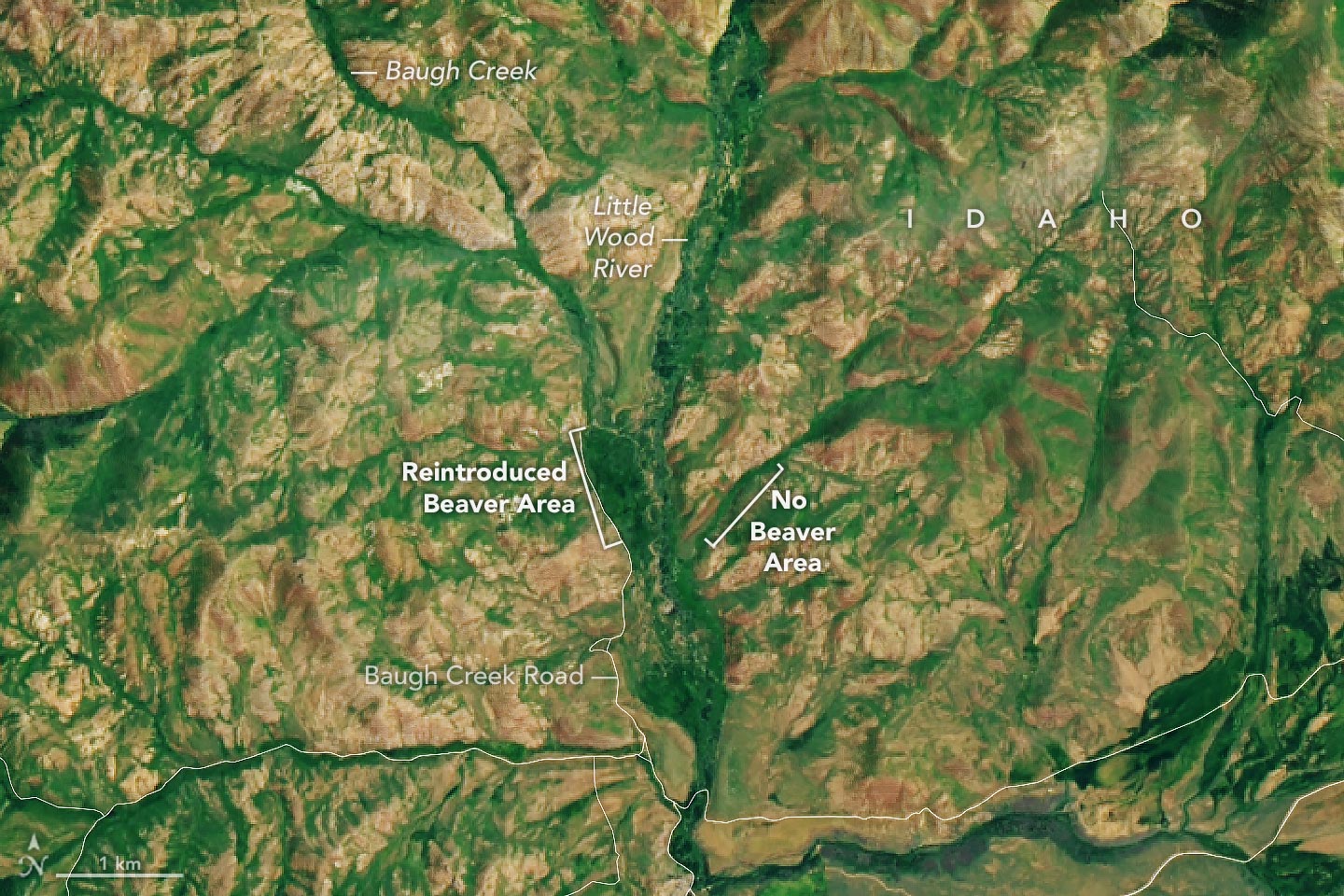
    Idaho Emerald Refuge
    This natural-color Landsat 9 satellite image shows an area in south central Idaho that includes Baugh Creek, Little Wood River, and Baugh Creek Road. The dense green patch indicates more vegetation due to the reintroduction of beavers, while the narrow green patch has limited beaver activity. Credit: NASA Earth Observatory

    The data showed that when beavers build dams across streams, they naturally disperse and hold water on the land longer, which supports more plants and creates habitats like ponds and meadows. The dams also create more fresh drinking water and better grazing land for cattle, and they make the landscape more resilient to fire and drought.

    Read more about NASA’s role in beaver rewilding.

    Enjoy 2024’s last supermoon knowing beavers and space have more in common than you may think!

    Never miss a breakthrough: Join the SciTechDaily newsletter.
    Follow us on Google and Google News.

    Astronomy Moon NASA Popular
    Share. Facebook Twitter Pinterest LinkedIn Email Reddit

    Related Articles

    Don’t Miss: Mars and the Wolf Moon Align in Epic Sky Spectacle

    Mars Ablaze: Witness Retrograde, Opposition, and a Cosmic Dance With the Moon

    Tonight’s Must-See: The Hunter’s Moon Shines As 2024’s Brightest Supermoon

    Look Up! A Blue Supermoon Will Light Up the Sky

    Don’t Miss the Strawberry Moon in June’s Night Sky!

    NASA’s Artemis Moon Telescope Could Explore the Cosmos in Unprecedented Detail

    NASA Spacecraft Confirms Existence of Neon in Lunar Atmosphere

    NASA’s GRAIL Mission Solves a Lunar Mystery Almost as Old as the Moon Itself

    Hubble Data Reveals a New Neptune Moon

    2 Comments

    1. Martin Dawson on November 14, 2024 5:30 am

      This is not science it’s complete and utter rubbish

      Reply
    2. Salihu bashar on November 21, 2024 2:32 am

      I am fine and my family members

      Reply
    Leave A Reply Cancel Reply

    • Facebook
    • Twitter
    • Pinterest
    • YouTube

    Don't Miss a Discovery

    Subscribe for the Latest in Science & Tech!

    Trending News

    Artificial Sweeteners May Harm Future Generations, Study Suggests

    Splashdown! NASA Artemis II Returns From Record-Breaking Moon Mission

    What If Consciousness Exists Beyond Your Brain

    Scientists Finally Crack the 100-Million-Year Evolutionary Mystery of Squid and Cuttlefish

    Beyond “Safe Levels”: Study Challenges What We Know About Pesticides and Cancer

    Researchers Have Found a Dietary Compound That Increases Longevity

    Scientists Baffled by Bizarre “Living Fossil” From 275 Million Years Ago

    Your IQ at 23 Could Predict Your Wealth at 27, Study Finds

    Follow SciTechDaily
    • Facebook
    • Twitter
    • YouTube
    • Pinterest
    • Newsletter
    • RSS
    SciTech News
    • Biology News
    • Chemistry News
    • Earth News
    • Health News
    • Physics News
    • Science News
    • Space News
    • Technology News
    Recent Posts
    • Geologists Reveal the Americas Collided Earlier Than We Thought
    • 20x Difference: Study Reveals True Source of Airborne Microplastics
    • Scientists Uncover Hidden Force Powering Yellowstone’s Supervolcano
    • This Metal Melts in Your Hand – and Scientists Just Discovered Something Strange
    • Why Losing Too Much Fat Can Be Just As Dangerous as Obesity
    Copyright © 1998 - 2026 SciTechDaily. All Rights Reserved.
    • Science News
    • About
    • Contact
    • Editorial Board
    • Privacy Policy
    • Terms of Use

    Type above and press Enter to search. Press Esc to cancel.