
Close Menu
    Facebook X (Twitter) Instagram
    SciTechDaily
    • Biology
    • Chemistry
    • Earth
    • Health
    • Physics
    • Science
    • Space
    • Technology
    Facebook X (Twitter) Pinterest YouTube RSS
    SciTechDaily
    Home»Science»Lonely People Experience Vasoconstriction Making Them Colder
    Science

    Lonely People Experience Vasoconstriction Making Them Colder

    By SciTechDailyDecember 10, 2012No Comments3 Mins Read
    Facebook Twitter Pinterest Telegram LinkedIn WhatsApp Email Reddit
    Share
    Facebook Twitter LinkedIn Pinterest Telegram Email Reddit
    lonely-people-chilly
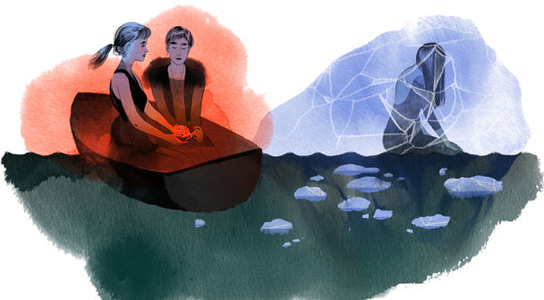
    Loneliness or social exclusion causes a drop in skin temperature, reflecting individuals’ responses to social interactions. Credit: Angie Wang

    When people feel lonely, or when someone is being excluded by others, the person’s skin becomes colder. This is how people respond to exclusion and other social interactions.

    The scientists published their findings in the journal Acta Psychologica. Dozens of students were asked to participate in a simulated ball-tossing game with computer-generated avatars. While they played, the researchers measured their skin temperature 24 times.

    winter-cold
    Credit: Xweather

    The avatars refrained from tossing the ball to certain subjects and this made people feel bad about being left out. The excluded people had their body temperature drop by an average of 0.378 degrees. This could be linked to the autonomic nervous system. Research has shown that heart rate, levels of registration, and other involuntary physiological responses are affected by social interactions.

    When people feel excluded, vasoconstriction occurs. Blood vessels at the periphery of the body may narrow in order to preserve core body heat. The memory of being socially excluded, or just feeling different from others, is enough to change our perception of the environment around them. This could lead people to sense that a room in which they are standing is colder than it actually is.

    Holding a warm cup of coffee or tea is enough to halt and even reverse some of these autonomic responses. The body can be fooled into feeling welcome by applying a little warmth and studies have shown that adults and children are more social after they’ve touched something warm.

    Relational models theory proposes that people engage in four types of basic relationships. Evolutionarily speaking, the most ancient is communal sharing, when people give according to ability and take according to need. Communal sharing relationships are typically formed and sustained through acts of physical contact. Such actions typically involve the sensation of being physically warm, which is something we instinctively find essential.

    More research needs to be done to figure out how the human body reacts to feeling and memory, and how thermal cues from the environment affect social interactions. But one thing is clear: humans everywhere connect the notions of warmth with welcoming, and cold with social exclusion.

    Reference: “Cold-blooded loneliness: Social exclusion leads to lower skin temperatures” by Hans IJzerman, Marcello Gallucci, Wim T. J. L. Pouw, Sophia C. Weiβgerber, Niels J. Van Doesum and Kipling D. Williams, 18 June 2012, Acta Psychologica.
    DOI: 10.1016/j.actpsy.2012.05.002

    Never miss a breakthrough: Join the SciTechDaily newsletter.
    Follow us on Google and Google News.

    Behavioral Science Psychology
    Share. Facebook Twitter Pinterest LinkedIn Email Reddit

    Related Articles

    Controversial Psychiatry Change Could See Bereavement as a Disease

    Kinder Children Are Happier & More Popular Than Bullies

    Curing Boredom

    Why Narcissists Seem More Attractive

    Body Language Is a Better Indicator of Intense Emotions Than Facial Expressions

    High School Popularity Influences Potential Earnings Later in Life

    Spending Time Online Lowers Self-Control and Is Linked to Higher Debt

    Searching for a More Accurate Classification of the Dimensions of Psychopathology

    Protective Factors Are Important in Preventing Violence in Veterans

    Leave A Reply Cancel Reply

    • Facebook
    • Twitter
    • Pinterest
    • YouTube

    Don't Miss a Discovery

    Subscribe for the Latest in Science & Tech!

    Trending News

    Millions Take These IBS Drugs, But a New Study Finds Serious Risks

    Scientists Unlock Hidden Secrets of 2,300-Year-Old Mummies Using Cutting-Edge CT Scanner

    Bread Might Be Making You Gain Weight Even Without Eating More Calories

    Scientists Discover Massive Magma Reservoir Beneath Tuscany

    Europe’s Most Active Volcano Just Got Stranger – Here’s Why Scientists Are Rethinking It

    Alzheimer’s Symptoms May Start Outside the Brain, Study Finds

    Millions Take This Popular Supplement – Scientists Discover a Concerning Link to Heart Failure

    The Universe Is Expanding Too Fast and Scientists Can’t Explain Why

    Follow SciTechDaily
    • Facebook
    • Twitter
    • YouTube
    • Pinterest
    • Newsletter
    • RSS
    SciTech News
    • Biology News
    • Chemistry News
    • Earth News
    • Health News
    • Physics News
    • Science News
    • Space News
    • Technology News
    Recent Posts
    • Doctors Surprised by the Power of a Simple Drug Against Colon Cancer
    • Why Popular Diabetes Drugs Like Ozempic Don’t Work for Everyone: The “Genetic Glitch”
    • Scientists Create Improved Insulin Cells That Reverse Diabetes in Mice
    • Scientists Stunned After Finding Plant Thought Extinct for 60 Years
    • A Common Diabetes Drug May Hold the Key to Stopping HIV From Coming Back
    Copyright © 1998 - 2026 SciTechDaily. All Rights Reserved.
    • Science News
    • About
    • Contact
    • Editorial Board
    • Privacy Policy
    • Terms of Use

    Type above and press Enter to search. Press Esc to cancel.