
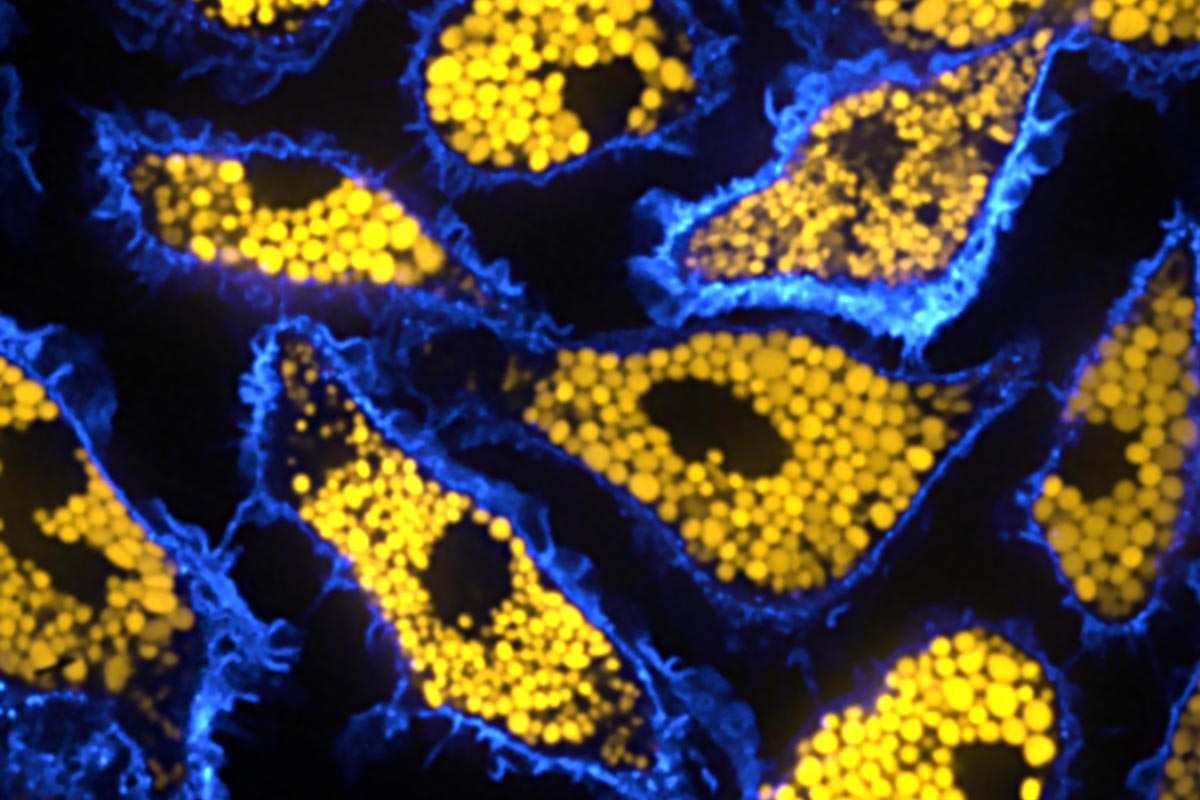
New research indicates that inflammation in macrophages caused by lysosomal dysfunction contributes to severe symptoms in lysosomal storage diseases. Targeting specific pathways in these cells may offer new therapeutic options for these genetic conditions.
Inflammation in an immune cell may be responsible in part for some severe symptoms in a group of rare genetic conditions called lysosomal storage diseases (LSDs). This is according to new research from The Hospital for Sick Children (SickKids).
LSDs affect about one in 7,700 live births worldwide. Children with the condition typically present at a young age with progressive neurodegeneration. Many children with LSDs die prematurely, and current treatments focus on symptom management.
Until now, the role of macrophages in the immune system and LSDs was not well known, but new research published today (July 12) in Nature Cell Biology led by Drs. Spencer Freeman, a Scientist in the Cell Biology program, Ruiqi Cai, a senior postdoctoral fellow and the first author of the study, and Ori Scott, a Transition Clinician Scientist in the Cell Biology program and a Staff Physician in the Division of Immunology & Allergy, identified that macrophage inflammation may contribute to LSD symptoms.
Macrophage cells take in and digest a large amount of nutrients to aid in the regular function of the immune system. To break down and recycle these nutrients, the cells rely on tiny organelles called lysosomes. When functional, a lysosome can break down large sugars into small sugars, which are then used as an energy source. In LSDs, these macrophage lysosomes become swollen and filled with waste.
On the publication of these findings, Freeman, Cai and Scott share how LSDs affect the immune system and how reducing inflammation could potentially improve or prevent symptoms in children with LSDs.
What is different about macrophages in patients with LSDs?
In LSD macrophages, swollen lysosomes try to avoid bursting open and spilling their contents – which would cause the cell to die. To do this, lysosomes open a channel that moves sodium out of the lysosomes, followed by water, to keep them smaller. This creates a message: the lysosome and the cell are stressed.
The stressed macrophages then send out an “SOS” signal by releasing a substance called MCP-1 (monocyte chemoattractant protein 1) that tells other macrophages: “please come and help.” As a result, many more macrophages move into the tissue. When there are too many macrophages in a tissue, and they all secrete MCP-1, this can cause inflammation and damage to the tissue.
How might your findings help patients with LSDs?
Our findings suggest that blocking the sodium channel or the MCP-1 receptor in macrophages could reduce the inflammation and tissue damage in LSDs. There are already drugs that target these molecules, some of which are used for other inflammatory conditions such as rheumatoid arthritis. We are planning to test these drugs in pre-clinical models, and hopefully translate the results to clinical trials for patients with LSDs.
By studying what causes severe symptoms in children with LSDs, we may identify better treatments for patients affected by these devastating conditions.
What are the next steps for your research?
We are continuing to explore how the lysosome regulates macrophage function and inflammation in LSDs and other conditions including neurodegenerative diseases. We hope that by understanding the molecular mechanisms of lysosome dysfunction and inflammation we can identify novel targets for drug development and improve the quality of life of patients with LSDs and other related conditions, like Parkinson’s disease.
When we study individuals with rare pediatric conditions, the benefits reach beyond these individuals and their families and extend to everyone by improving our knowledge of the complexities of human biology.
Reference: “Pressure sensing of lysosomes enables control of TFEB responses in macrophages” by Ruiqi Cai, Ori Scott, Gang Ye, Trieu Le, Ekambir Saran, Whijin Kwon, Subothan Inpanathan, Blayne A. Sayed, Roberto J. Botelho, Amra Saric, Stefan Uderhardt and Spencer A. Freeman, 12 July 2024, Nature Cell Biology.
DOI: 10.1038/s41556-024-01459-y
This research was funded by the Canadian Institutes of Health Research (CIHR), the German Research Foundation, the Hightech Agenda Bavaria, the European Research Council, and Toronto Metropolitan University.
Never miss a breakthrough: Join the SciTechDaily newsletter.
Follow us on Google and Google News.