
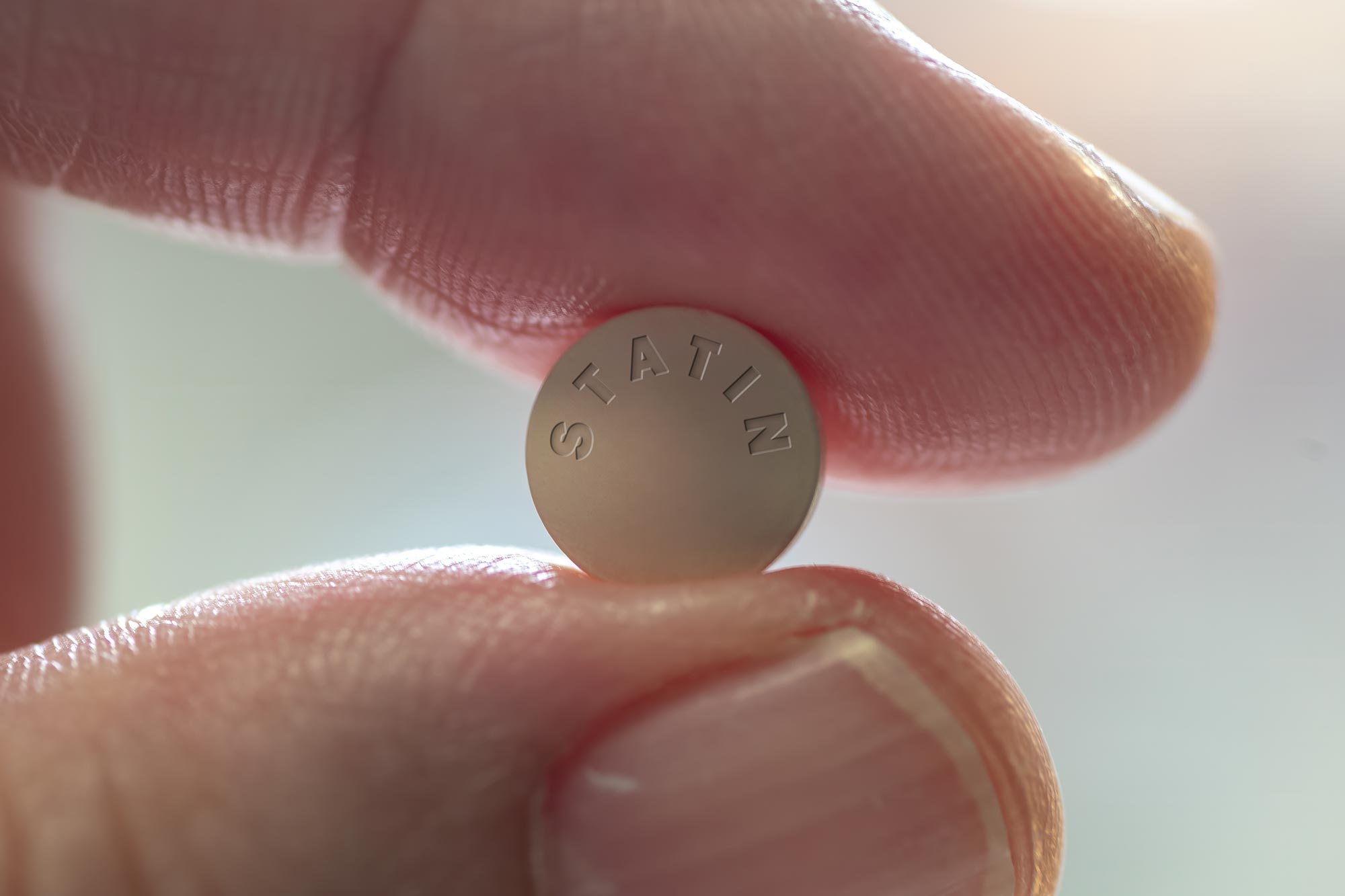
A massive analysis of randomized trials suggests that most side effects listed on statin labels may not be caused by the drugs at all.
Cardiovascular disease kills about 20 million people worldwide and accounts for roughly a quarter of all deaths in the UK. Statins are widely used because they lower LDL (“bad”) cholesterol and have repeatedly been shown to cut the risk of cardiovascular disease. Still, many people worry about side effects, especially when symptoms appear after starting a new medication.
To test whether statins truly cause the long list of problems often attributed to them, researchers pooled evidence from 23 large randomized studies in the Cholesterol Treatment Trialists’ Collaboration. The analysis included 123,940 participants in 19 major trials comparing statin therapy with a placebo (or dummy tablet), plus 30,724 participants in four trials that compared more intensive statin therapy with less intensive statin therapy.
Similar Rates of Reported Side Effects
Across nearly all conditions listed in statin package leaflets as possible side effects, the frequency of reported symptoms was similar between people taking statins and those taking a placebo. For instance, each year 0.2% of participants in the statin groups reported cognitive or memory problems. The same percentage, 0.2%, was reported among those taking a placebo.
These findings suggest that while some individuals may experience symptoms during statin treatment, the medication itself is unlikely to be responsible in most cases.
Key findings:
- The analysis found no statistically significant increase in risk for almost all health issues listed in package leaflets as potential side effects of statins.
- Statin use was not associated with a meaningful rise in memory loss or dementia, depression, sleep problems, erectile dysfunction, weight gain, nausea, fatigue, headaches, or many other commonly reported symptoms.
- Researchers did identify a small increase in abnormal liver blood test results, affecting about 0.1% of patients. However, there was no corresponding rise in serious liver conditions such as hepatitis or liver failure. This indicates that changes seen in liver blood tests rarely progress to more serious liver disease.
Christina Reith, Associate Professor at Oxford Population Health and lead author of the study, said, “Statins are life-saving drugs used by hundreds of millions of people over the past 30 years. However, concerns about the safety of statins have deterred many people who are at risk of severe disability or death from a heart attack or stroke. Our study provides reassurance that, for most people, the risk of side effects is greatly outweighed by the benefits of statins.”
Context From Previous Research
Previous work by the same researchers established that most muscle symptoms are not caused by statins; statin therapy caused muscle symptoms in only 1% of people during the first year of treatment with no excess thereafter. It has also been shown that statins can cause a small increase in blood sugar levels, so people already at high risk may develop diabetes sooner.
Professor Bryan Williams, Chief Scientific and Medical Officer at the British Heart Foundation, said, “These findings are hugely important and provide authoritative, evidence-based reassurance for patients. Statins are lifesaving drugs, which have been proven to protect against heart attacks and strokes. Among the large number of patients assessed in this well-conducted analysis, only four side effects out of 66 were found to have any association with taking statins, and only in a very small proportion of patients.”
He continues, “This evidence is a much-needed counter to the misinformation around statins and should help prevent unnecessary deaths from cardiovascular disease. Recognising which side effects might genuinely be associated with statins is also important as it will help doctors make decisions about when to use alternative treatments.”
Revising Statin Information
Professor Sir Rory Collins, Emeritus Professor of Medicine and Epidemiology at Oxford Population Health and senior author of the paper said, “Statin product labels list certain adverse health outcomes as potential treatment-related effects based mainly on information from non-randomised studies, which may be subject to bias. We brought together all of the information from large randomised trials to assess the evidence reliably. Now that we know that statins do not cause the majority of side effects listed in package leaflets, statin information requires rapid revision to help patients and doctors make better-informed health decisions.”
All of the trials included in the analyses were large-scale (involving at least 1,000 participants) and tracked patient outcomes for a median of nearly five years. The trials were double-blind, meaning that neither the trial participants nor those managing the participants or leading the study knew who was receiving which treatment, to avoid potential biases due to knowledge of treatment allocation. The list of possible side effects was compiled from those listed for the five most commonly prescribed statins.
Reference: “Assessment of adverse effects attributed to statin therapy in product labels: a meta-analysis of double-blind randomised controlled trials” by Christina Reith, Lisa Blackwell, Jonathan R Emberson, David Preiss, Enti Spata, Kelly Davies, Heather Halls, Charlie Harper, Lisa Holland, Kate Wilson, Robert Humphrey, Alistair J Roddick, Christopher P Cannon, Barry R Davis, Paul N Durrington, Shinya Goto, Graham A Hitman, G Kees Hovingh, Wolfgang Koenig, Vera Krane, Martin J Landray, Borislava Mihaylova, Connie Newman, Jeffrey L Probstfield, Marc S Sabatine, Naveed Sattar, Gregory G Schwartz, Andrew M Tonkin, Harvey D White, Jane Armitage, Anthony Keech, John Simes, Rory Collins, Colin Baigent, Elizabeth Barnes, Jordan Fulcher, William G Herrington, Adrienne Kirby, Rachel O’Connell, Pierre Amarenco, Hiroyuki Arashi, Philip Barter, D John Betteridge, Michael Blazing, Gerard J Blauw, Marc Bonaca, Jackie Bosch, Louise Bowman, Eugene Braunwald, Richard Bulbulia, Robert Byington, Robert Clarke, Michael Clearfield, Stuart Cobbe, Helen M Colhoun, Björn Dahlöf, James de Lemos, John R Downs, Bengt Fellström, Lawrence Fine, Marcus Flather, Ian Ford, Maria Grazia Franzosi, John Fuller, Curt Furberg, Robert Glynn, Uri Goldbourt, David Gordon, Antonio Gotto, Jr, Richard Grimm, Ajay Gupta, C Morton Hawkins, Richard Haynes, Hallvard Holdaas, Jemma Hopewell, Alan Jardine, J Wouter Jukema, John JP Kastelein, Sharon Kean, Patricia Kearney, George Kitas, John Kjekshus, Genell Knatterud, Robert H Knopp, John Kjekshus, Michael Koren, John LaRosa, Roberto Latini, Eva Lonn, Donata Lucci, Jean MacFadyen, Peter Macfarlane, Stephen MacMahon, Aldo Maggioni, Roberto Marchioli, Ian Marschner, Lemuel Moyé, Heather Murray, Sabina Murphy, Andrew Neil, Enrico B Nicolis, Chris Packard, Sarah Parish, Terje R Pedersen, Richard Peto, Marc Pfeffer, Neil Poulter, Sara Pressel, Mahboob Rahman, Paul M Ridker, Michele Robertson, Frank Sacks, Roland Schmieder, Patrick W Serruys, Peter Sever, John Shaw, James Shepherd, Lara Simpson, Peter Sleight, Liam Smeeth, Luigi Tavazzi, Jonathan Tobert, Gianni Tognoni, Stella Trompet, John Varigos, Christoph Wanner, Hans Wedel, Stephen Weis, K Michael Welch, John Wikstrand, Lars Wilhelmsen, Stephen Wiviott, Junichi Yamaguchi, Robin Young, Salim Yusuf and Faiez Zannad, 5 February 2026, The Lancet.
DOI: 10.1016/S0140-6736(25)01578-8
The study was conducted by the Cholesterol Treatment Trialists’ (CTT) Collaboration, a joint initiative coordinated between the Clinical Trial Service Unit & Epidemiological Studies Unit, Oxford Population Health, and the National Health and Medical Research Council Clinical Trials Centre, University of Sydney, Australia, on behalf of academic researchers representing major statin trials worldwide.
The work was funded by the British Heart Foundation, UKRI Medical Research Council, and the Australian National Health and Medical Research Council. The work of the CTT is overseen by an Independent Oversight Panel.
Never miss a breakthrough: Join the SciTechDaily newsletter.
Follow us on Google and Google News.
13 Comments
This reads like an advertisement for the statin manufacturers. The finding on muscle pain is a joke. I have personally had my life destroyed by statins. Horrible muscle and joint pain. I had to take naproxen and ibuprofen at maximum doses for years that ruined my kidneys. My first couple of doctors didn’t believe me. My last few believe me because they had the same symptoms and they won’t take statins anymore. My highly rated cardiologist included. Someone needs to take a closer look at the articles you publish.
Another thing is it can cause memory issues that may or may not reverse. The brain needs cholesterol
And it can cause memory issues may or may not be reversible. The brain needs cholesterol
Do you have evidence-based research on your findings? I suggest you provide studies that counters these findings before making unfounded sweeping statements. Read the complete study done and interact with the researchers before making these comments.
This article looks like propaganda for big pharma. Statins cause muscle loss, severe pain, weight gain, low energy & brain fog just to name a few side effects. To add to it, taking statins has never proved a decline in cardiovascular events.
I took statins after getting stents and after a few days I suffered diarrhea, stomach pain and stiff painful muscles. The effects were real.
A cute advertisement for statins… but if they were effective, you’d see a lifespan increase in those taking them versus those not taking them, and you simply don’t. Sure, they decrease the odds of a second heart attack, but have a less than zero impact to mortality rates.
So maybe they’re preventing second heart attacks… but killing people of something, anything else before the next heart attack.
I tried 2 different statins and both caused increasing muscle pain the longer I took them, which quickly abated when I stopped taking them, and I have heard the same complaint from many other people I have spoken to. I am well aware that this is anecdotal, but I (and my doctor) have heard this too often for me to disregard it. I was not even aware of chronic muscle pain being a side effect until just before I quit taking the first statin I was prescribed, so I don’t think the effect was psychosomatic. I am on another medication now that has not caused any noticeable side effects and it has lowered my cholesterol, but not as much as we’d hoped.
I saw with my own eyes the rapid cognitive decline in a close friend, the fittest most active individual I ever knew. A doctor put him on a station because it’s a good idea for a 70 year old to take statins prophylactically….5 years later, he has severe dementia in a wheelchair
I’ve been prescribed statins twice in my life 1) in the States & 2) in Canada. In both cases, I complained to my doctor about symptoms that I did not associate with the statins. Two doctors who did not communicate with each other took me off for similar reasons.
I started taking statins after getting a stent in late 2016. Almost immediately I started to have chest pains.
I spoke to my then doctor about it several times and was referred to several cardiologists. I had a number of tests done, nothing found to be wrong with my heart, and I was fobbed off with “must be muscular skeletal”.
Last year I started to read up on statins and found that many people suffered same issues as I did.
Spoke to my new doctor who took me off statins and put me onto something else.
Result, no pains and cholesterol at an acceptable level.
Doctors are generally not reliable these days.
I had issues with statins when taken at “normal” doses. Apparently I have issues with processing of the statins by the liver, and the blood levels were building up to levels that were too high.
I still take a statin, but now I take a very low dose which is not causing overt side effects for me, but is having the full benefit that would be expected of the higher dose.
I’ve noticed a correlation when I start and stop the statin, to ED. No muscle pain. No brain fog. Anyone else have this issue?