
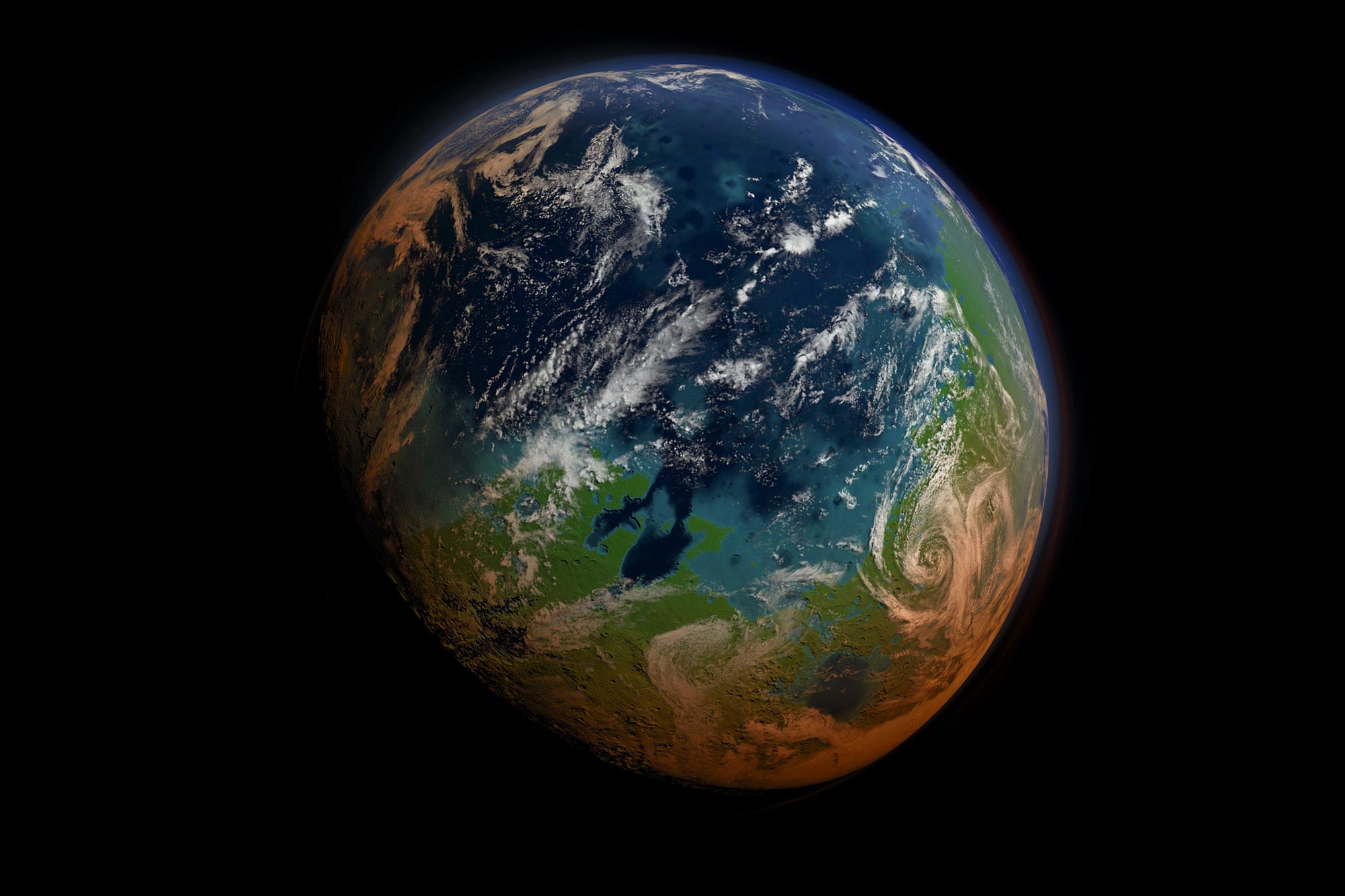
University of Chicago and Northwestern researchers have developed a new method to warm Mars by over 50 degrees Fahrenheit using engineered dust particles, which could make the planet suitable for microbial life and future human colonization.
This approach utilizes resources found on Mars and could be 5,000 times more efficient than previous methods, potentially accelerating our ability to make Mars habitable.
Revolutionary Terraforming Techniques
Ever since we learned that the surface of planet Mars is cold and dead, people have wondered if there is a way to make it friendlier to life.
In a groundbreaking study published on August 7 in the journal Science Advances, researchers from the University of Chicago, Northwestern University, and the University of Central Florida have proposed a revolutionary approach toward terraforming Mars. This new method, using engineered dust particles released to the atmosphere, could potentially warm the Red Planet by more than 50 degrees Fahrenheit, to temperatures suitable for microbial life—a crucial first step towards making Mars habitable.
The proposed method is over 5,000 times more efficient than previous schemes to globally warm Mars, representing a significant leap forward in our ability to modify the Martian environment.
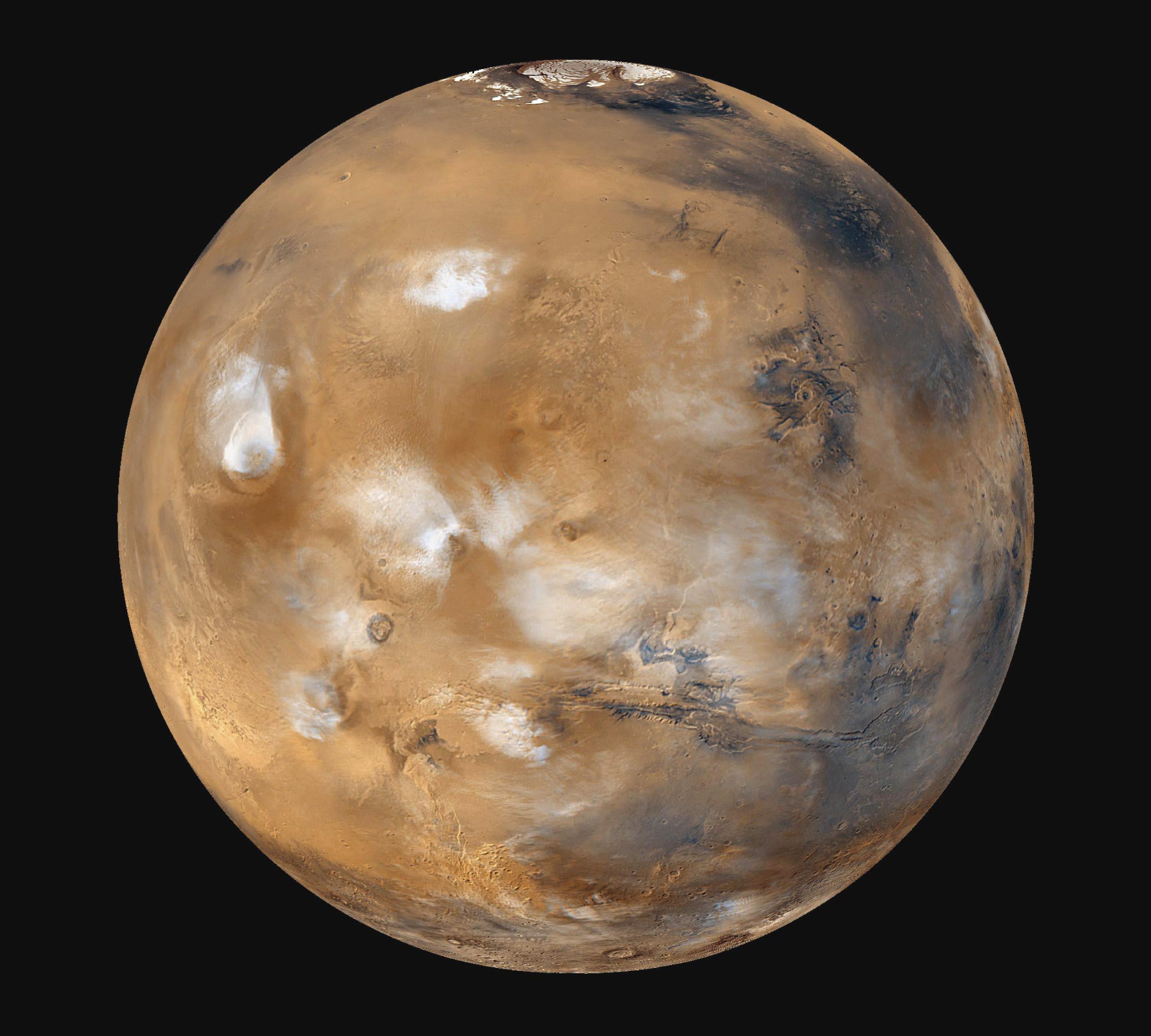
Enhancing Mars’ Habitability
What sets this approach apart is its use of resources readily available on Mars, making it far more feasible than earlier proposals that relied on importing materials from Earth or mining rare Martian resources.
This strategy would take decades. But it appears logistically easier than other plans proposed so far.
“This suggests that the barrier to warming Mars to allow liquid water is not as high as previously thought,” said Edwin Kite, an associate professor of geophysical sciences at the University of Chicago and corresponding author on the study. The lead author was Samaneh Ansari, a graduate student in Prof. Hooman Mohseni’s group at Northwestern University.
Long-Term Implications and Historical Context
Astronauts still won’t be able to breathe Mars’ thin air; making the planet suitable for humans to walk on the surface unaided requires much more work. But perhaps groundwork could be laid, by making the planet habitable for microbes and food crops that could gradually add oxygen to the atmosphere—much as they have done for Earth during its geologic history.
A New Approach to an Age-Old Dream
There is a rich history of proposals to make Mars habitable; Carl Sagan himself came up with one back in 1971. These have ranged from outright daydreams, such as science fiction writers depicting turning one of Mars’ moons into a sun, to more recent and scientifically plausible ideas, such as engineering transparent gel tiles to trap heat.
Any plan to make Mars habitable must address several hurdles, including deadly UV rays and salty soil. But the biggest is the planet’s temperature; the surface of Mars averages about -80 degrees Fahrenheit.
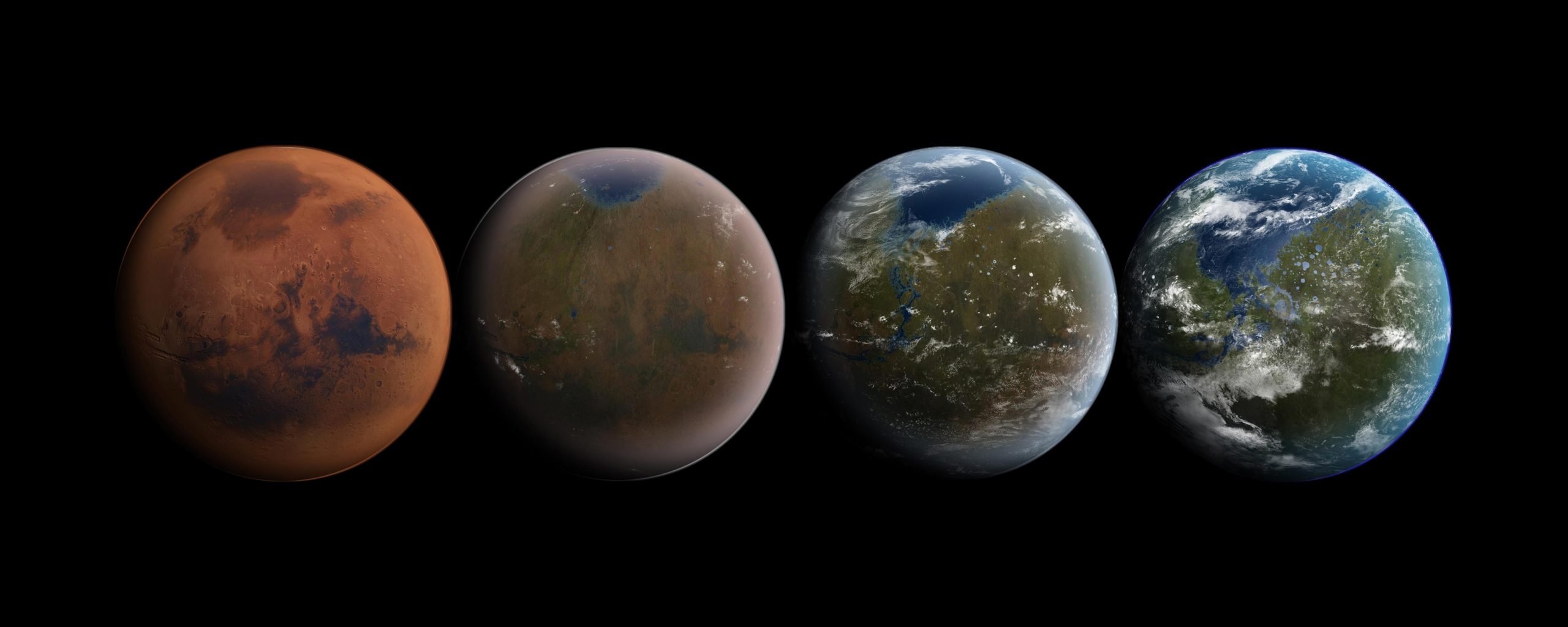
One strategy to warm the planet could be the same method that humans are unintentionally using here on Earth: releasing material into the atmosphere, which would enhance Mars’ natural greenhouse effect, trapping solar heat at the surface.
The trouble is that you would need tons of these materials—literally. Previous schemes depended on bringing gases from Earth to Mars, or attempting to mine Mars for a large mass of ingredients that aren’t very common there—both are costly and difficult propositions. But the team wondered whether it could be done by processing materials that already exist abundantly on Mars.
Innovative Particle Engineering for Warming Mars
We know from rovers like Curiosity that dust on Mars is rich in iron and aluminum. By themselves, those dust particles aren’t suitable to warm the planet; their size and composition mean they tend to cool the surface slightly rather than warm it. But if we engineered dust particles that had different shapes or compositions, the researchers hypothesized, perhaps they could trap heat more efficiently.
The researchers designed particles shaped like short rods—similar in size to commercially available glitter. These particles are designed to trap escaping heat and scatter sunlight towards the surface, enhancing Mars’ natural greenhouse effect.
“How light interacts with sub-wavelength objects is fascinating. Importantly, engineering nanoparticles can lead to optical effects that far exceed what is conventionally expected from such small particles,” said Ansari. Mohseni, who is a co-author, believes that they have just scratched the surface: “We believe it is possible to design nanoparticles with higher efficiency, and even those that can dynamically change their optical properties.”
“You’d still need millions of tons to warm the planet, but that’s five thousand times less than you would need with previous proposals to globally warm Mars,” said Kite. “This significantly increases the feasibility of the project.”
“This suggests that the barrier to warming Mars to allow liquid water is not as high as previously thought.”
Assoc. Prof. Edwin Kite
Calculations indicate that if the particles were released into Mars’ atmosphere continuously at 30 liters per second, the planet would warm by more than 50 degrees Fahrenheit—and the effect could be noticeable within as soon as months. Similarly, the warming would be reversible, stopping within a few years if release was switched off.
Future Prospects in Martian Terraforming
Much work remains to be done, the scientists said. We don’t know exactly how fast the engineered dust would cycle out of Mars’ atmosphere, for example. Mars does have water and clouds, and, as the planet warms, it’s possible that water would increasingly start to condense around the particles and fall back to the surface as rain.
“Climate feedbacks are really difficult to model accurately,” Kite cautioned. “To implement something like this, we would need more data from both Mars and Earth, and we’d need to proceed slowly and reversibly to ensure the effects work as intended.”
While this method represents a significant leap forward in terraforming research, the researchers emphasize that the study focuses on warming Mars to temperatures suitable for microbial life and possibly growing food crops—not on creating a breathable atmosphere for humans.
“This research opens new avenues for exploration and potentially brings us one step closer to the long-held dream of establishing a sustainable human presence on Mars,” said Kite.
Reference: “Feasibility of keeping Mars warm with nanoparticles” by Samaneh Ansari, Edwin S. Kite, Ramses Ramirez, Liam J. Steele and Hooman Mohseni, 7 August 2024, Science Advances.
DOI: 10.1126/sciadv.adn4650
Other coauthors of the study were Ramses Ramirez of the University of Central Florida and Liam Steele, formerly a postdoctoral researcher at UChicago, now with the European Center for Medium-Range Weather Forecasts.
The authors used the Quest high-performance computing facility at Northwestern and the University of Chicago Research Computing Center.
Never miss a breakthrough: Join the SciTechDaily newsletter.
Follow us on Google and Google News.
8 Comments
1. Climate scientists can’t even model Earth’s climate. Good luck with Mars!
2. Warming Mars surface is only one tiny piece of the terraforming puzzle. Why did Mars lose its atmosphere eons ago? Because its magnetic field shut down and the solar wind stripped its atmosphere. Good luck restarting or even substituting the magnetic dynamo required.
We if we could somehow reheat or Melt it’s solid Iron core thus making it liquid again, using something akin to say like microwaves to achieve it. That’ll reactivate it’s magnetic bubble to regenerate it’s magnetosphere. That’s something that’s probably beyond our current technological capability but maybe something that’s achievable by say a Type 1 or 2 civilization on the Kardashev scale. That’ll ensure our species survival because we’d no longer all be on one planet, so if something were to happen to Earth….. World war III/ super bug/virus… Rouge astroid or comet ☄️ or world war III or something like that then we’d be at least a multiplanet species but Mars different gravity might make the people born there taller eventually
It’s very do-able and has already been done.
This is accomplished from the outside-in, NOT the inside- out, fyi.
Fir your own educational benefit, and for obvious reasons, I’ll let you do your own supportive research on the matter — as opposed to simply gifting you the information.
If you’re the “Higher Thinker” that I suspect that you are — I have a strong feeling that you will understand my motivating rationale as to the “why”.
*For (Fat fingered + Semi-Blind)
As always, terraforming Mars is a fun intellectual exercise. However, can we get equally as excited about correcting the man-made crises right here on Earth BEFORE we spread our trash (literally and metaphorically) to additional planets? We’re bad stewards of the one planet we have…
It’s already been shown that practically initiating an artificial magnetosphere is readily possible.
If, in fact, you are a “Doctor” and/or a PhD in or near any of the related sciences — you should already know this.
Some pretty basic stuff, there.
The gravity on Mars is too weak for humans to survive there long-term, so even if you got everything else down pat, it’s still no dice.
And the “particle engineering” sounds like energy guzzler, anyway. Where are you gonna find that amount of energy out there? You will never be able to ship that amount from Earth.
Models have shown otherwise.
Yet you could still be correct.
Only one way to find out, for sure…