

Scientists recently spotted a molecule on a far-off planet they thought might signal life. But now, new research says that reading was likely just ordinary gas—and the evidence isn’t nearly as solid as it first seemed.
In April, scientists sparked excitement around the world with a bold announcement: they had detected a molecule in the atmosphere of a distant planet that might point to alien life.
But new research from the University of Chicago is urging caution. After analyzing data from multiple observations of the planet, the team says the evidence isn’t strong enough to support such an extraordinary claim. In fact, other molecules—ones not linked to life—could just as easily explain what the telescope picked up.
“We found the data we have so far is much too noisy for the proof that would be needed to make that claim,” said Rafael Luque, a postdoctoral researcher at UChicago and first author on a paper detailing their findings, which is submitted to Astronomy and Astrophysics Letters. “There’s just not enough certainty to say one way or the other.”
A Molecular Puzzle
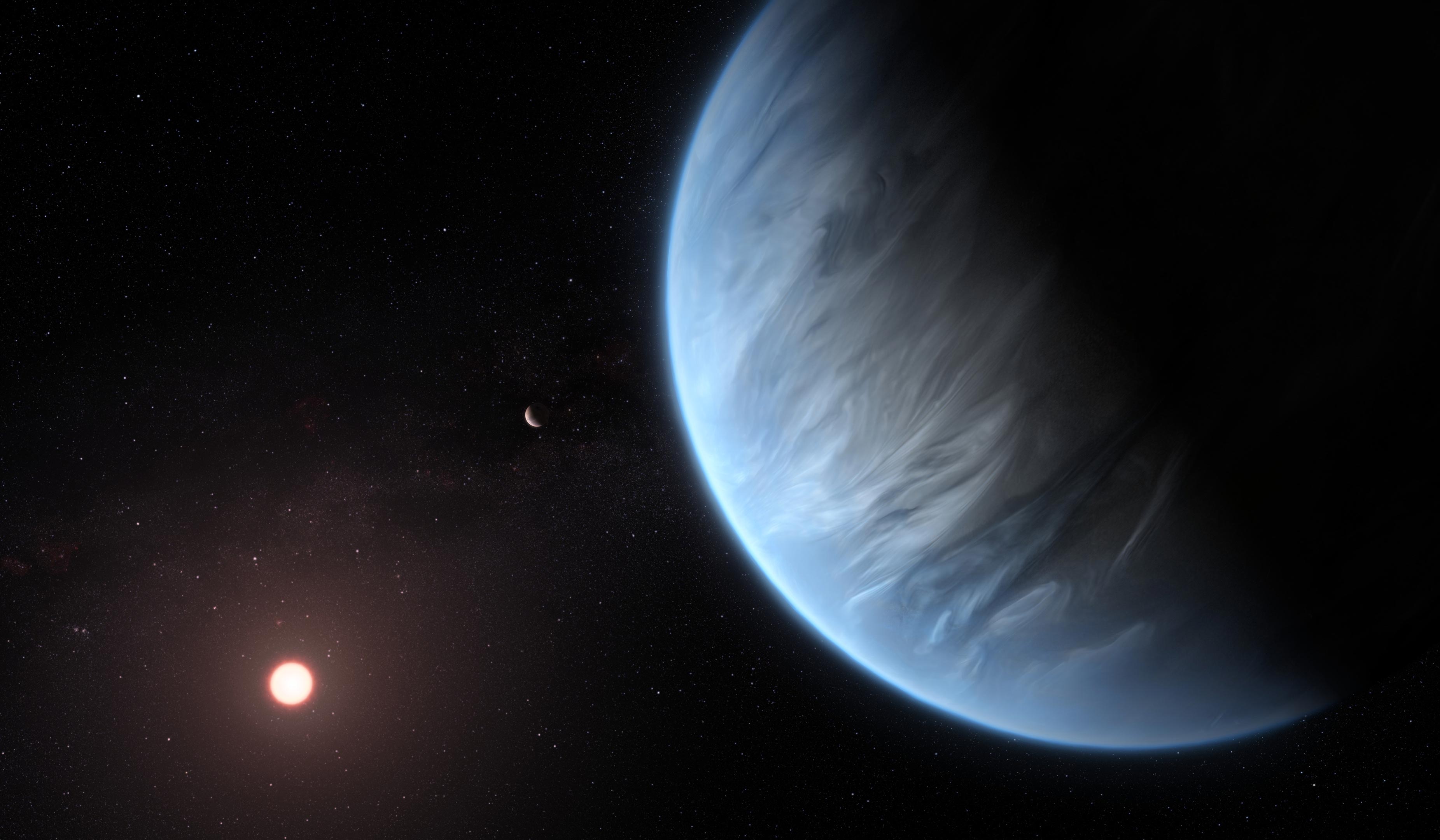
The original announcement, made on April 16 by a team from the University of Cambridge, centered on a planet called K2-18b, located 124 light-years from Earth. Using the James Webb Space Telescope, they reported signs of either dimethyl sulfide or dimethyl disulfide—two molecules that, on Earth, are only produced by living organisms.
That claim made headlines. But the UChicago team decided to take a closer look, knowing that extraordinary claims demand extraordinary evidence.
Interpreting telescope data isn’t straightforward. Planets like K2-18b are incredibly far away and too faint to observe directly. So scientists rely on clever techniques, to measure things indirectly.
Light, Molecules, and Telescope Clues
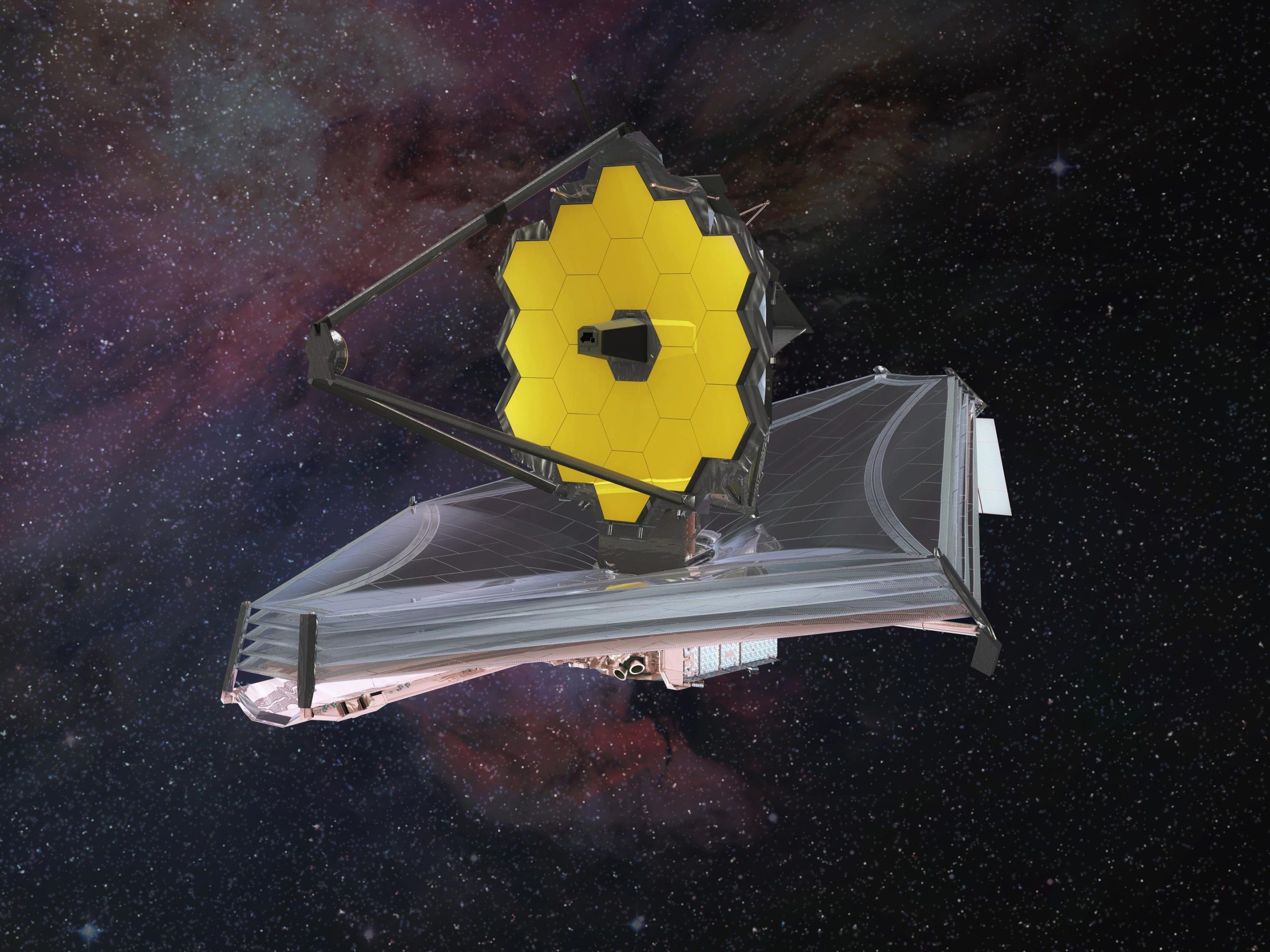
In this case, the Webb Telescope waits until the planet crosses in front of its star, then picks up the starlight that filters through the planet’s atmosphere. As the light passes through the planet’s atmosphere, different amounts of light are blocked at different wavelengths, depending on what molecules are present.
Study co-author Michael Zhang explained that when working with readings this faint, it’s very difficult to uniquely identify a particular molecule.
“Anything with a carbon bonded to three hydrogens will show up at a particular wavelength,” he said. “That’s what dimethyl sulfide has. But there are countless other compounds that contain a carbon and three hydrogens, and would exhibit similar features in Webb’s data. So, even with much better data, it’ll be hard to be sure that dimethyl sulfide is what we’re seeing.”
Ethane, Not Extraterrestrials?
Their analysis concluded that multiple other molecules could fit the bill for what the telescope saw. For example, another molecule that has a similar profile is ethane, a gas that has been found in many planets’ atmospheres, such as Neptune, which definitely doesn’t indicate life.
Co-author Caroline Piaulet-Ghorayeb said researchers usually favor the simplest explanation when reviewing data: “We should only introduce exotic molecules in the interpretation after ruling out molecules that we would expect to be in the atmosphere.”
In this case, if the signature could be dimethyl sulfide or ethane—a molecule we’ve seen around planets in our own solar system—they assume the answer that’s more common, not the most exciting.
Data Gaps and Overstatements
Another caution is that the analysis reported in April was based only on one set of observations.
Telescopes, including both Webb and Hubble, have taken multiple passes at observing this planet. If you include the data from all these passes, the team said, the evidence for dimethyl sulfide looks much weaker.
The authors said their report aims to provide a fuller view of the findings.
Proceeding With Care in the Search for Life
“Answering whether there is life outside the solar system is the most important question of our field. It is why we are all studying these planets,” Luque said. “We are making enormous progress in this field, and we don’t want that to be overshadowed by premature declarations.”
Reference: “Insufficient evidence for DMS and DMDS in the atmosphere of K2-18 b. From a joint analysis of JWST NIRISS, NIRSpec, and MIRI observations” by R. Luque, C. Piaulet-Ghorayeb, M. Radica, Q. Xue, M. Zhang, J. L. Bean, D. Samra, M. E. Steinrueck, Submitted, Astronomy & Astrophysics Letters.
arXiv:2505.13407
In addition to Luque, Piaulet-Ghorayeb and Zhang, study co-authors included grad student Qiao Xue; postdoctoral researchers Michael Radica, Maria Steinrueck and Dominic Samra; and Prof. Jacob Bean.
Funding: NASA, Heising-Simons Foundation, Brinson Foundation, Natural Sciences and Engineering Research Council of Canada.
Never miss a breakthrough: Join the SciTechDaily newsletter.
Follow us on Google and Google News.
6 Comments
Aliens are soul beings. They have no biology or metabolism. They do not require air, water, food, sleep nor what your life form requires. Your earth souls are born running on Sound, which is emotion. You were not meant to live on that side of your soul. Light is the other side of your soul. This is an alien creation, being retired. Hope you are running emotion free. Peace and All Glory to the Light
Maybe its unicorn farts. Why not?
Note 2505270533_Source1. Analyzing【
There is a way to accurately identify the signals of life h3c molecules coming from the universe.
Find qpeoms.msbase.side_value on the side line rather than the front, all over the space or in some areas. It’s too simple.
_[2-1]The molecules have msbase.mode light, which is an assembly of elements. The light of the intrinsic molecule has a frequency of its own arrangement. The light of msbase.nk ̧.stars,planet emits the intrinsic frequency of the molecules.
Although there is a frequency of the intrinsic arrangement of dimethyl sulfide molecules (carbon 1 has hydrogen 3), there are countless compounds containing these molecules, making it difficult to distinguish the uniqueness and mixing of molecules, which are signals of life, only with the observed light.
a.Example 1. A combination of numerous mixed dimethyl sulfide molecules is implemented using an algorithm.
b.However, uniqueness appears in side.magicsum.value, which clarifies the observational distinction.
c. Many compounds of unique molecules may be in the frontal view of the collective state, but the uniqueness of the molecules appears in the lateral view value. Uh-huh.
See 1. is a molecule. an atom.It is used after switching to the algorithm mode of the subatomic configuration simulation authoring tool. The front view can represent a mixture, and the side view value can represent a myriad of the frequency (h3c.oms) of the intrinsic molecule. Uh-huh. All the countless intrinsic molecules scattered in the universe are applied to example 1. Uh-huh.
View 1.
sample 1.vix.a’6//vixx.a(b1,g3,k3,o5,n6)
b0acfd|0000e0
000ac0|f00bde
0c0fab|000e0d
e00d0c|0b0fa0
f000e0|b0dac0
d0f000|cae0b0
0b000f|0ead0c
0deb00|ac000f
ced0ba|00f000
a0b00e|0dc0f0
0ace00|df000b
0f00d0|e0bc0a
≈≈≈≈==========
Source 1.
https://scitechdaily.com/is-it-alien-life-or-just-ethane-scientists-reassess-webb-telescope-discovery/
1.
Is It Alien Life or Ethan? Scientists Reevaluate Webb Telescope Discovery
Are there signs of life on distant planets? It is impossible to conclude prematurely. New research suggests that the signal is likely a normal molecule, not an alien life.
1-1.
Scientists recently discovered a molecule on a distant planet that could be a signal of life. However, according to new research, this molecule is likely an ordinary gas, and the evidence is not as clear as first thought.
In April, scientists shook the world with a bold announcement. However, the new research is urging a cautious approach. The team said that after analyzing various observational data on the planet, there was not enough evidence to support this surprising claim. In fact, other molecules that are not related to life can easily explain what the telescope has captured.
1-2.
The data we have obtained so far is too noisy to provide evidence to support the claim. There is not enough certainty to say for sure what the claim is.
1-3. Molecular Puzzle
On April 16, a team of researchers from the University of Cambridge published the following findings, focusing on a planet called K2-18b 124 light-years away from Earth. Using the James Webb Space Telescope, the team discovered traces of dimethyl sulfide (DMSO) or dimethyl disulfide (DMSO), two molecules produced only in living organisms on Earth.
1-4.
The claim received media attention. However, the team learned that a special claim requires special evidence, so they decided to examine it more closely.
Interpreting telescope data is not simple. Planets such as K2-18b are incredibly far away and too faint to observe for themselves. So scientists rely on clever techniques to make indirect measurements.
2. Light, Molecules, and Telescope Clues
In this case, the Webb telescope waits until the planet passes in front of a star before capturing the light passing through the planet’s atmosphere. As light passes through the planet’s atmosphere, light of different wavelengths is blocked depending on which molecule exists.
With such faint readings, it is very difficult to uniquely identify a particular molecule.
2-1.
[A substance in which one carbon is combined with three hydrogens appears at a specific wavelength. Dimethyl sulfide is such a substance.] However, [there are countless other compounds containing one carbon and three hydrogens], and data on the web will show similar characteristics. Therefore, even with much better data, it would be difficult to be sure that what we are seeing is dimethyl sulfide.
2-2. Isn’t Ethan an alien?
Their analysis concluded that there could be several other molecules that meet the same conditions observed by the telescope. For example, ethane, a gas found in the atmosphere of Neptune and other planets, is another molecule with similar characteristics. This does not suggest the existence of life.
Researchers said that when reviewing data, they usually prefer the simplest explanation. Only after we exclude the molecules expected to be in the atmosphere should we introduce exotic molecules into the interpretation.
In this case, if the feature could be dimethyl sulfide or ethane (a molecule seen around our solar system planet), they guess a more common, if not the most interesting, answer.
3. Data gaps and exaggerations
Another caveat is that the analysis reported in April was based on only one observation.
Several telescopes, including Webb and Hubble, have made several observations of the planet. Including all these observations, the team said, the evidence for dimethyl sulfide appears much weaker.
The authors stated that the purpose of this report is to provide a more holistic view of the findings.
If you widen the possible candidate to take into millions of molecules then of course it will look weak, that why you neec to model with the most likely candidates for the observations. The research still holds up and has conclusion that scientifically sound.
People don’t even understand the long-term possibilities, positive or certainly negative, of any smelly goo they find on earth.
However (and this is the biggy), If an alien life-form were be molecularly destructive to DNA/RNA molecular life-forms we have that make up all life on earth, there would be a terminal time-trajectory before our little ball was perfectly sterile – depending only on the nature of the conflagration.
This probability is way higher than 50%.
Intelligent little green men would already know this and would already know that our sending out signals means we’re just stupid enough to actually try to make contact – they knowing how societies, generally, are run by the less dim.
Out of self-preservation, when it started to look like we might gain the capacity, they’d do fly-by, dropping the contents of their septic tank. Then fly home.
It is not wise to broadcast our presence. Any alien civilization advanced enough to reach us will be advanced enough to obliterate us.
However, the probability of that happening is close to 0%. The speed of light is a hard speed limit for any civilization. Likelihood is that their top speed is but a fraction of that. At those speeds Interstellar travel is impractical.