
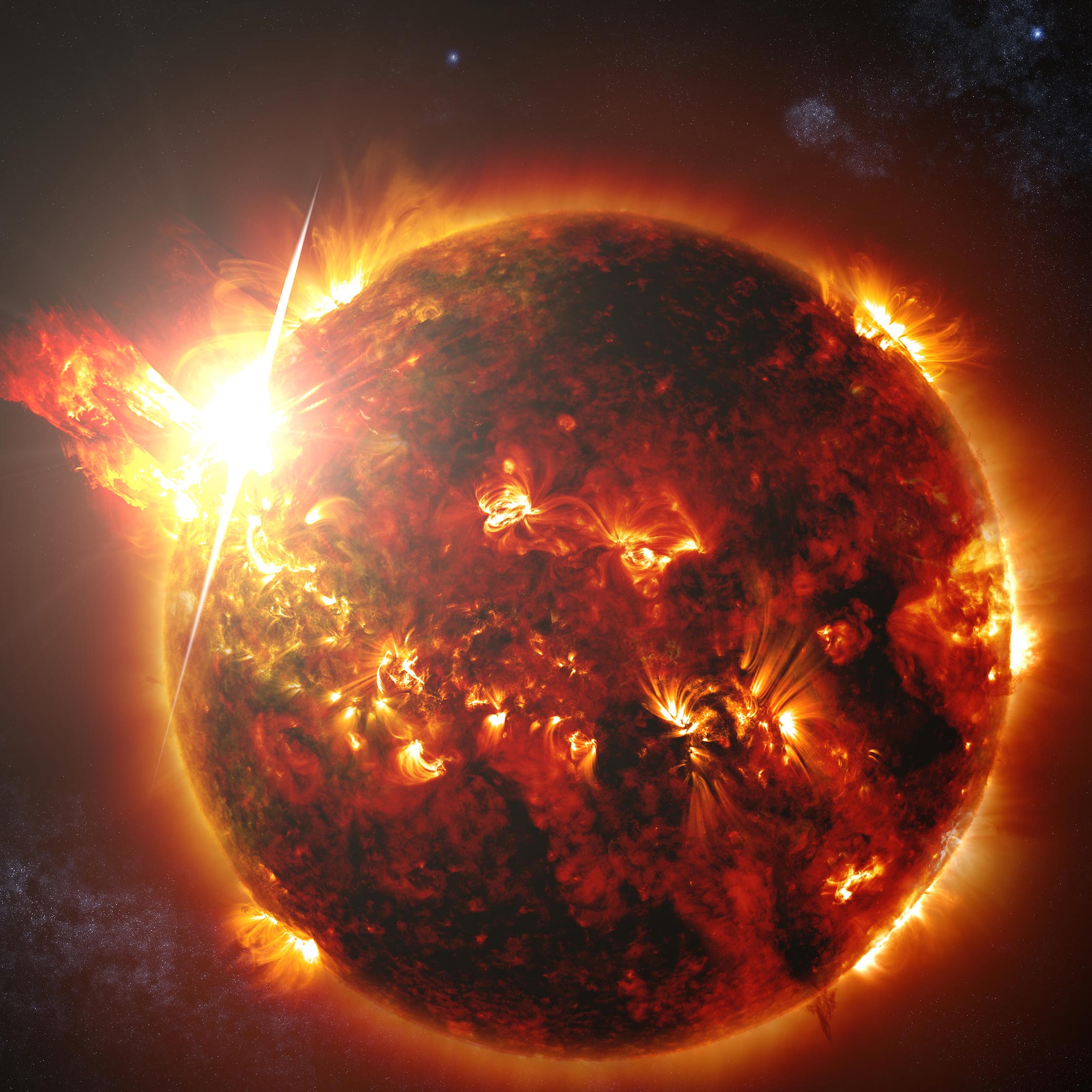
Red dwarf stars can produce stellar flares with far-ultraviolet radiation levels far exceeding previous expectations, potentially affecting the habitability of surrounding planets.
A groundbreaking study has revealed that red dwarf stars can produce stellar flares that carry far-ultraviolet (far-UV) radiation levels much higher than previously believed. This discovery suggests that the intense UV radiation from these flares could significantly impact whether planets around red dwarf stars can be habitable. Led by current and former astronomers from the University of Hawaiʻi Institute for Astronomy (IfA), the research was recently published in the Monthly Notices of the Royal Astronomical Society.
“Few stars have been thought to generate enough UV radiation through flares to impact planet habitability. Our findings show that many more stars may have this capability,” said astronomer Vera Berger, who undertook the study while in the Research Experiences for Undergraduates program at IfA, an initiative supported by the National Science Foundation.
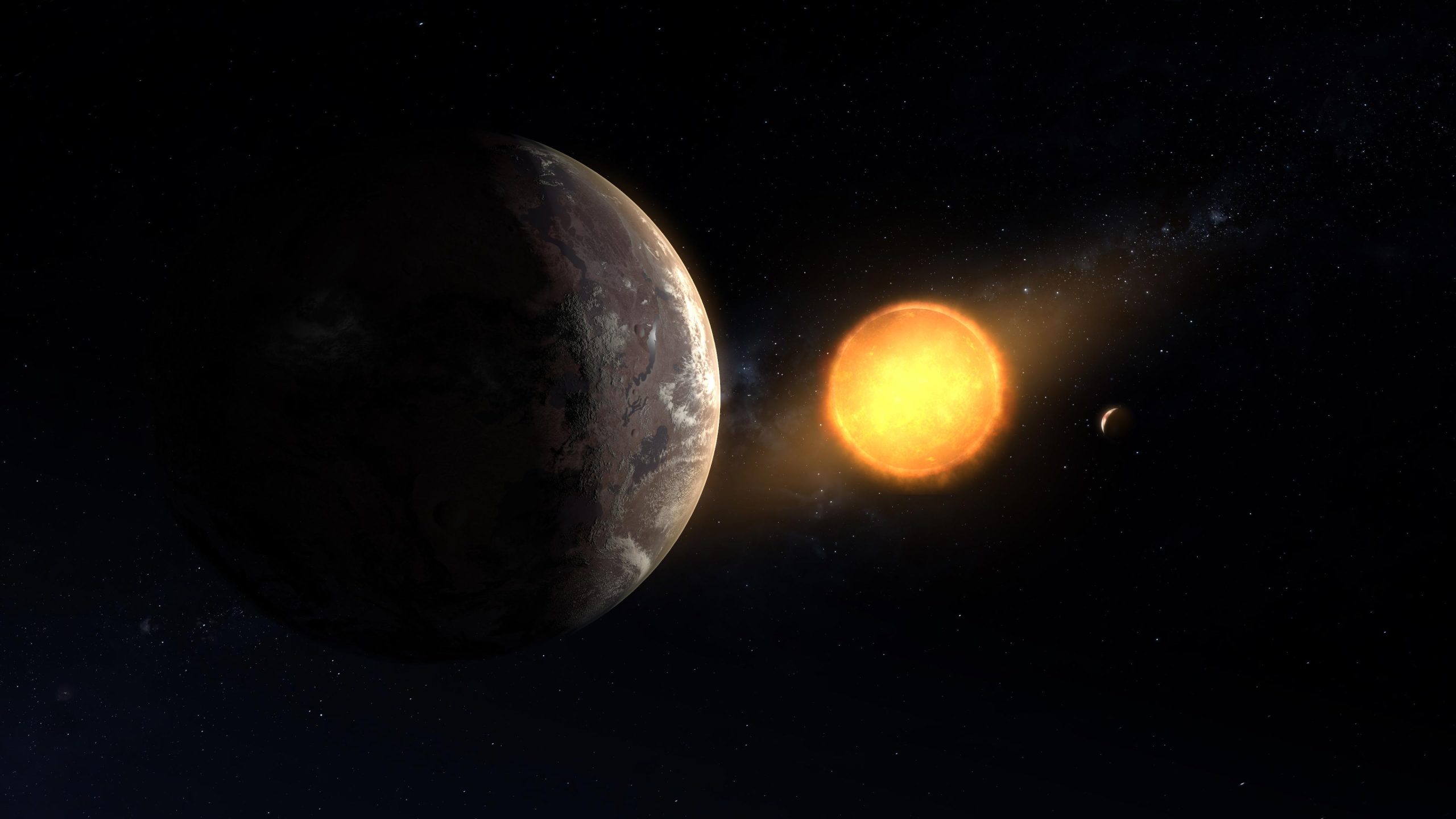
Berger and her team used archival data from the GALEX space telescope to search for flares among 300,000 nearby stars. GALEX is a now-decommissioned NASA mission that simultaneously observed most of the sky at near- and far-UV wavelengths from 2003 to 2013. Using new computational techniques, the team mined novel insights from the data.
“Combining modern computer power with gigabytes of decades-old observations allowed us to search for flares on thousands and thousands of nearby stars,” said Michael Tucker, a PhD graduate of IfA and now a postdoctoral fellow at Ohio State University.
UV’s Double Edge
According to researchers, UV radiation from stellar flares can either erode planetary atmospheres, threatening their potential to support life, or contribute to the formation of RNA building blocks, which are essential for the creation of life.
This study challenges existing models of stellar flares and exoplanet habitability, showing that far-UV emission from flares is on average three times more energetic than typically assumed, and can reach up to twelve times the expected energy levels.

“A change of three is the same as the difference in UV in the summer from Anchorage, Alaska to Honolulu, where unprotected skin can get a sunburn in less than 10 minutes,” said Benjamin J. Shappee, an Associate Astronomer at IfA who mentored Berger.
The Mysterious Nature of Enhanced UV Emission
The exact cause of this stronger far-UV emission remains unclear. The team believes it might be that flare radiation is concentrated at specific wavelengths, indicating the presence of atoms like carbon and nitrogen.
“This study has changed the picture of the environments around stars less massive than our Sun, which emit very little UV light outside of flares,” said Jason Hinkle, a PhD candidate at IfA who co-authored the study.
Future Research Directions
According to Berger, now a Churchill Scholar at the University of Cambridge, more data from space telescopes is needed to study the UV light from stars, which is crucial for understanding the source of this emission.
Reference: “Stellar flares are far-ultraviolet luminous” by Vera L Berger, Jason T Hinkle, Michael A Tucker, Benjamin J Shappee, Jennifer L van Saders, Daniel Huber, Jeffrey W Reep, Xudong Sun and Kai E Yang, 5 August 2024,Monthly Notices of the Royal Astronomical Society.
DOI: 10.1093/mnras/stae1648
Never miss a breakthrough: Join the SciTechDaily newsletter.
Follow us on Google and Google News.
1 Comment
You ain’t seen nothin’ yet. Within the next decade, the weakening of the earth’s magnetic shield caused by the constantly-accelerating pole switch, will expose the earth to a bombardment of deadly rays and particles from our closest star, the sun.
This will cause a massive rise in disease, notably cancer, disorientate many bird and animal species which rely on fixed poles for navigation, cause unprecedented climate events, and knock out the global electricity grid, with horrendous consequences for human populations, particularly those in the northern hemisphere.
Yet oddly, none of the popular science journals or websites, let alone governments, are doing anything to warn us about this looming disaster, which is a much more pressing issue than climate change. Here’s a link for anybody interested in learning more.
https://www.youtube.com/watch?v=dzEs4HJssfo