
Close Menu
    Facebook X (Twitter) Instagram
    SciTechDaily
    • Biology
    • Chemistry
    • Earth
    • Health
    • Physics
    • Science
    • Space
    • Technology
    Facebook X (Twitter) Pinterest YouTube RSS
    SciTechDaily
    Home»Biology»Meet the ‘Mold Pigs,’ a Newly Discovered Invertebrate From 30 Million Years Ago
    Biology

    Meet the ‘Mold Pigs,’ a Newly Discovered Invertebrate From 30 Million Years Ago

    By Oregon State UniversityOctober 27, 2019No Comments3 Mins Read
    Facebook Twitter Pinterest Telegram LinkedIn WhatsApp Email Reddit
    Share
    Facebook Twitter LinkedIn Pinterest Telegram Email Reddit
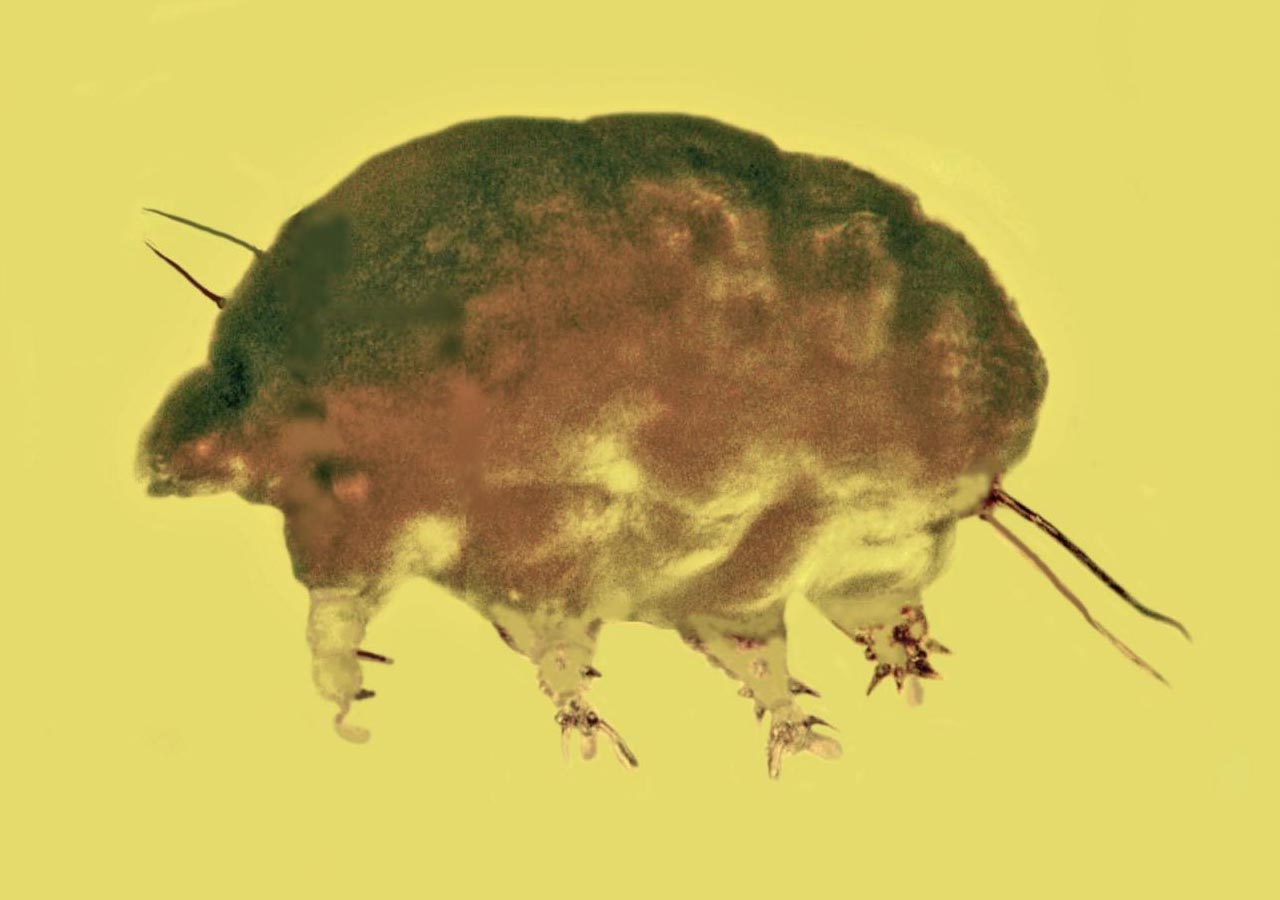
    Mold Pig
    Fossils preserved in Dominican amber reveal a new family, genus, and species of microinvertebrate from the mid-Tertiary period, a discovery that shows unique lineages of the tiny creatures were living 30 million years ago. Credit: Provided by George Poinar Jr.

    Fossils preserved in Dominican amber reveal a new family, genus, and species of microinvertebrate from the mid-Tertiary period, a discovery that shows unique lineages of the tiny creatures were living 30 million years ago.

    The findings by George Poinar Jr. of the Oregon State University College of Science give a rare look at a heretofore unknown clade of invertebrates, along with their fungal food source and other animals that lived in their habitat.

    Poinar, an international expert in using plant and animal life forms preserved in amber to learn more about the biology and ecology of the distant past, informally calls the new animals “mold pigs” for their resemblance to swine, and their diet. Scientifically, they are Sialomorpha dominicana, from the Greek words for fat hog (sialos) and shape (morphe).

    Invertebrate means not having a backbone, and invertebrates account for roughly 95 percent of animal species.

    “Every now and then we’ll find small, fragile, previously unknown fossil invertebrates in specialized habitats,” Poinar said. “And occasionally, as in the present case, a fragment of the original habitat from millions of years ago is preserved too. The mold pigs can’t be placed in any group of currently existing invertebrates – they share characteristics with both tardigrades, sometimes referred to as water bears or moss pigs, and mites but clearly belong to neither group.”

    The several hundred individual fossils preserved in the amber shared warm, moist surroundings with pseudoscorpions, nematodes, fungi, and protozoa, Poinar said.

    “The large number of fossils provided additional evidence of their biology, including reproductive behavior, developmental stages, and food,” he said. “There is no extant group that these fossils fit into, and we have no knowledge of any of their descendants living today. This discovery shows that unique lineages were surviving in the mid-Tertiary.”

    The Tertiary period began 65 million years ago and lasted for more than 63 million years.

    About 100 micrometers long, the mold pigs had flexible heads and four pairs of legs. They grew by molting their exoskeleton and fed mainly on fungi, supplementing that food source with small invertebrates.

    “No claws are present at the end of their legs as they are with tardigrades and mites,” Poinar said. “Based on what we know about extant and extinct microinvertebrates, S. dominicana appears to represent a new phylum. The structure and developmental patterns of these fossils illustrate a time period when certain traits appeared among these types of animals. But we don’t know when the Sialomorpha lineage originated, how long it lasted, or whether there are descendants living today.”

    ###

    Findings were published in Invertebrate Biology. Diane Nelson of East Tennessee State University collaborated with Poinar on this research.

    Reference: “A new microinvertebrate with features of mites and tardigrades in Dominican amber” by George Poinar and Diane R. Nelson, 28 September 2019, Invertebrate Biology.
    DOI: 10.1111/ivb.12265

    About the OSU College of Science:  As one of the largest academic units at OSU, the College of Science has seven departments and 12 pre-professional programs. It provides the basic science courses essential to the education of every OSU student, builds future leaders in science, and its faculty are international leaders in scientific research.

    Never miss a breakthrough: Join the SciTechDaily newsletter.
    Follow us on Google and Google News.

    Entomology Evolution Oregon State University
    Share. Facebook Twitter Pinterest LinkedIn Email Reddit

    Related Articles

    Deaf Moths Evolved Noise-Cancelling Scales to Evade Prey – More Efficient Than Current Sound Engineering Technology

    “Profound” Evolution: Wasps Learn to Recognize Individual Faces

    Mosquitoes Are Drawn to Flowers As Much as People — Now Scientists Finally Know Why

    Ancient Wasp-Mimicking Fly Discovered – Named After PSY’s ‘Gangnam Style’

    Recently Discovered Parasitic Wasp Is Enemy of Serious Alien Pest in North America

    In a Twist of Fate, Ant Expert Discovers Distinct New Species in His Own Backyard

    The Unexpected Role Ant-Plant Partnerships May Play in Ant Evolution

    Frightening 500-Million-Year-Old Predator Unveils the Rise of Scorpions and Spiders

    Floral Scents Have Provided Olfactory Excitement Since Mid-Cretaceous Period

    Leave A Reply Cancel Reply

    • Facebook
    • Twitter
    • Pinterest
    • YouTube

    Don't Miss a Discovery

    Subscribe for the Latest in Science & Tech!

    Trending News

    The Universe Is Expanding Too Fast and Scientists Can’t Explain Why

    “Like Liquid Metal”: Scientists Create Strange Shape-Shifting Material

    Early Warning Signals of Esophageal Cancer May Be Hiding in Plain Sight

    Common Blood Pressure Drug Shows Surprising Power Against Deadly Antibiotic-Resistant Superbug

    Scientists Uncover Dangerous Connection Between Serotonin and Heart Valve Disease

    Scientists Discover a “Protector” Protein That Could Help Reverse Hair Loss

    Bone-Strengthening Discovery Could Reverse Osteoporosis

    Scientists Uncover Hidden Trigger Behind Stem Cell Aging

    Follow SciTechDaily
    • Facebook
    • Twitter
    • YouTube
    • Pinterest
    • Newsletter
    • RSS
    SciTech News
    • Biology News
    • Chemistry News
    • Earth News
    • Health News
    • Physics News
    • Science News
    • Space News
    • Technology News
    Recent Posts
    • A Common Diabetes Drug May Hold the Key to Stopping HIV From Coming Back
    • Ancient “Syphilis-Like” Disease in Vietnam Challenges Key Scientific Assumptions
    • Drinking Alcohol To Cope in Your 20s Could Damage Your Brain for Life
    • Scientists Crack Alfalfa’s Chromosome Mystery After Decades of Debate
    • Ancient Ant-Plant Alliance Collapses As Predatory Wasps Move In
    Copyright © 1998 - 2026 SciTechDaily. All Rights Reserved.
    • Science News
    • About
    • Contact
    • Editorial Board
    • Privacy Policy
    • Terms of Use

    Type above and press Enter to search. Press Esc to cancel.