
Close Menu
    Facebook X (Twitter) Instagram
    SciTechDaily
    • Biology
    • Chemistry
    • Earth
    • Health
    • Physics
    • Science
    • Space
    • Technology
    Facebook X (Twitter) Pinterest YouTube RSS
    SciTechDaily
    Home»Space»Memory Meltdown: NASA Engineers Pinpoint Cause of Voyager 1’s Cosmic Glitch
    Space

    Memory Meltdown: NASA Engineers Pinpoint Cause of Voyager 1’s Cosmic Glitch

    By NASAApril 6, 2024No Comments2 Mins Read
    Facebook Twitter Pinterest Telegram LinkedIn WhatsApp Email Reddit
    Share
    Facebook Twitter LinkedIn Pinterest Telegram Email Reddit
    NASA Voyager the Explorer
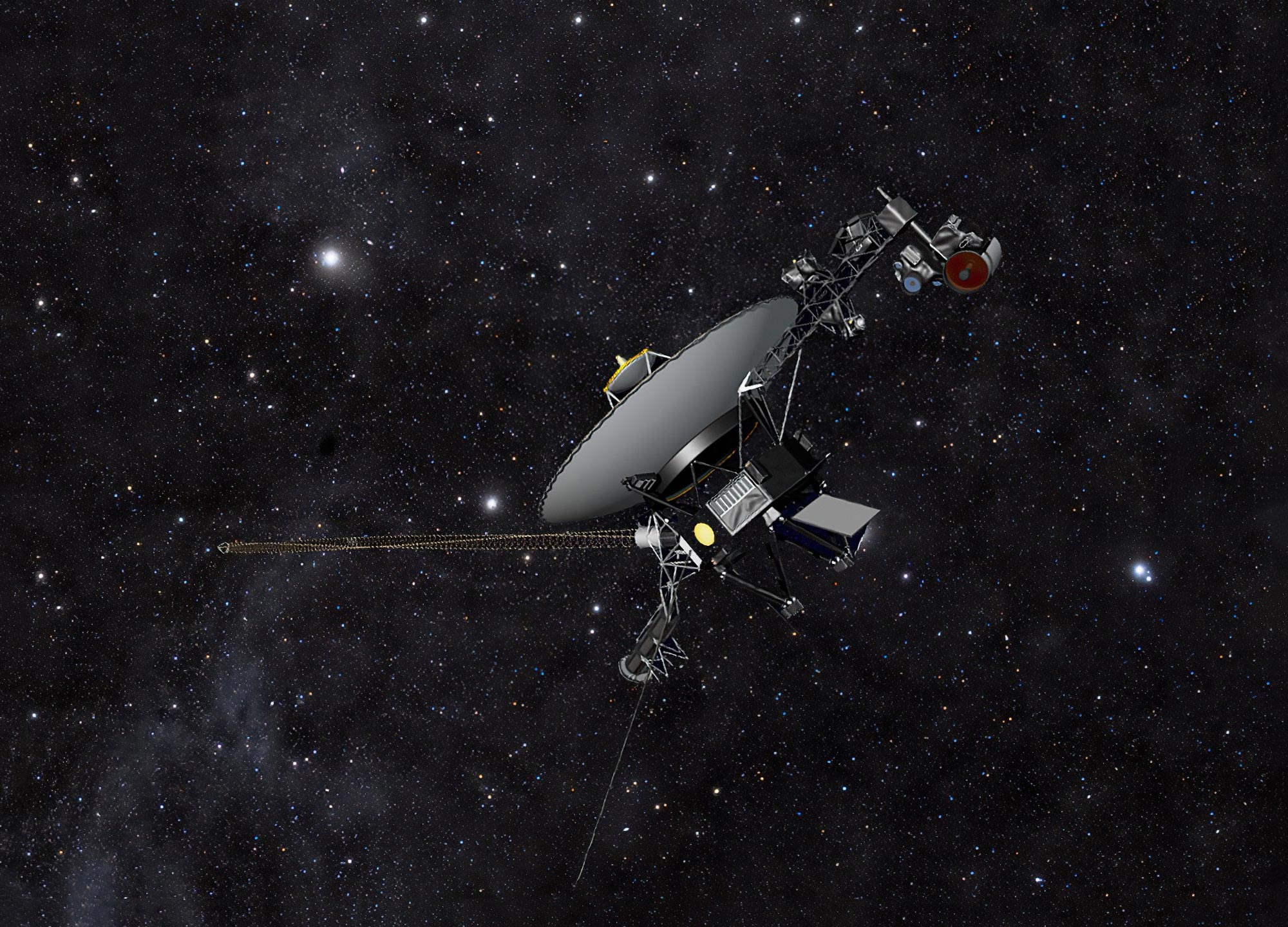
    This artist’s concept shows NASA’s Voyager spacecraft against a field of stars in the darkness of space. The two Voyager spacecraft are traveling farther and farther away from Earth, on a journey to interstellar space, and will eventually circle around the center of the Milky Way galaxy. Credit: NASA/JPL-Caltech

    Engineers have identified a corrupted memory issue in Voyager 1’s onboard computer, hindering data transmission to Earth.

    Engineers have confirmed that a small portion of corrupted memory in one of the computers aboard NASA’s Voyager 1 has been causing the spacecraft to send unreadable science and engineering data to Earth since last November. Called the flight data subsystem (FDS), the computer is responsible for packaging the probe’s science and engineering data before the telemetry modulation unit (TMU) and radio transmitter send the data to Earth.

    In early March, the team issued a “poke” command to prompt the spacecraft to send back a readout of the FDS memory, which includes the computer’s software code as well as variables (values used in the code that can change based on commands or the spacecraft’s status). Using the readout, the team has confirmed that about 3% of the FDS memory has been corrupted, preventing the computer from carrying out normal operations.

    The team suspects that a single chip responsible for storing part of the affected portion of the FDS memory isn’t working. Engineers can’t determine with certainty what caused the issue. Two possibilities are that the chip could have been hit by an energetic particle from space or that it simply may have worn out after 46 years.

    Although it may take weeks or months, engineers are optimistic they can find a way for the FDS to operate normally without the unusable memory hardware, which would enable Voyager 1 to begin returning science and engineering data again.

    Launched in 1977, the twin Voyager spacecraft flew by Saturn and Jupiter, and Voyager 2 flew by Uranus and Neptune. They are both exploring interstellar space, outside the bubble of particles and magnetic fields created by the Sun, called the heliosphere. Voyager 2 continues to operate normally.

    Never miss a breakthrough: Join the SciTechDaily newsletter.
    Follow us on Google and Google News.

    NASA Voyager 1
    Share. Facebook Twitter Pinterest LinkedIn Email Reddit

    Related Articles

    New Data Confirms That Voyager 1 Is in Interstellar Space

    NASA Image of the Day – Jupiter’s Great Red Spot Viewed by Voyager I

    IBEX Explores the Magnetic System Beyond the Solar Wind

    Voyager 1 Presents the “Sounds” of Interstellar Space

    It’s Official – Voyager 1 Has Entered Interstellar Space

    Voyager 1 Enters Interstellar Space

    NASA Responds to Voyager News, Gives Update on Voyager 1 Location

    Voyager 1 Enters “Magnetic Highway,” The Final Area before Interstellar Space

    NASA’s Voyager 1 Spacecraft Operating at Coldest Temperature Ever

    Leave A Reply Cancel Reply

    • Facebook
    • Twitter
    • Pinterest
    • YouTube

    Don't Miss a Discovery

    Subscribe for the Latest in Science & Tech!

    Trending News

    Black Hole Collisions May Follow a Surprisingly Simple Rule

    The Eye Has a Hidden Cleanup System and Scientists Just Discovered It

    The Truth About Vikings Is More Complicated Than Museums Admit

    New Catalyst Turns Stubborn Plant Waste Into Valuable Chemicals

    Quantum Gravity May Be Far Less Quantum Than Physicists Expected

    New Tool Supercharges Immunotherapy Against Prostate Cancer

    The Hidden Cancer Risk of Ketogenic Diets

    One Asteroid Collision May Have Rocked Earth, Mars, and the Moon

    Follow SciTechDaily
    • Facebook
    • Twitter
    • YouTube
    • Pinterest
    • Newsletter
    • RSS
    SciTech News
    • Biology News
    • Chemistry News
    • Earth News
    • Health News
    • Physics News
    • Science News
    • Space News
    • Technology News
    Recent Posts
    • Scientists Built a Programmable Chip That Can Slow Light on Command
    • Astronomers Detect an Atmosphere on a Potentially Earth-Like World
    • The Backyard “Silly Sprinkler” That Cracked One of Physics’ Biggest Puzzles
    • Magnetic Nanoparticles Restore Movement in Mice With Parkinson’s-Like Symptoms
    • Scientists Found What May Be Keeping the Alzheimer’s Brain Awake
    Copyright © 1998 - 2026 SciTechDaily. All Rights Reserved.
    • Science News
    • About
    • Contact
    • Editorial Board
    • Privacy Policy
    • Terms of Use

    Type above and press Enter to search. Press Esc to cancel.