
Close Menu
    Facebook X (Twitter) Instagram
    SciTechDaily
    • Biology
    • Chemistry
    • Earth
    • Health
    • Physics
    • Science
    • Space
    • Technology
    Facebook X (Twitter) Pinterest YouTube RSS
    SciTechDaily
    Home»Earth»Mini Satellite’s Incredible Inside View of Hurricane Dorian
    Earth

    Mini Satellite’s Incredible Inside View of Hurricane Dorian

    By Arielle Samuelson, Jet Propulsion LaboratorySeptember 5, 2019No Comments2 Mins Read
    Facebook Twitter Pinterest Telegram LinkedIn WhatsApp Email Reddit
    Share
    Facebook Twitter LinkedIn Pinterest Telegram Email Reddit
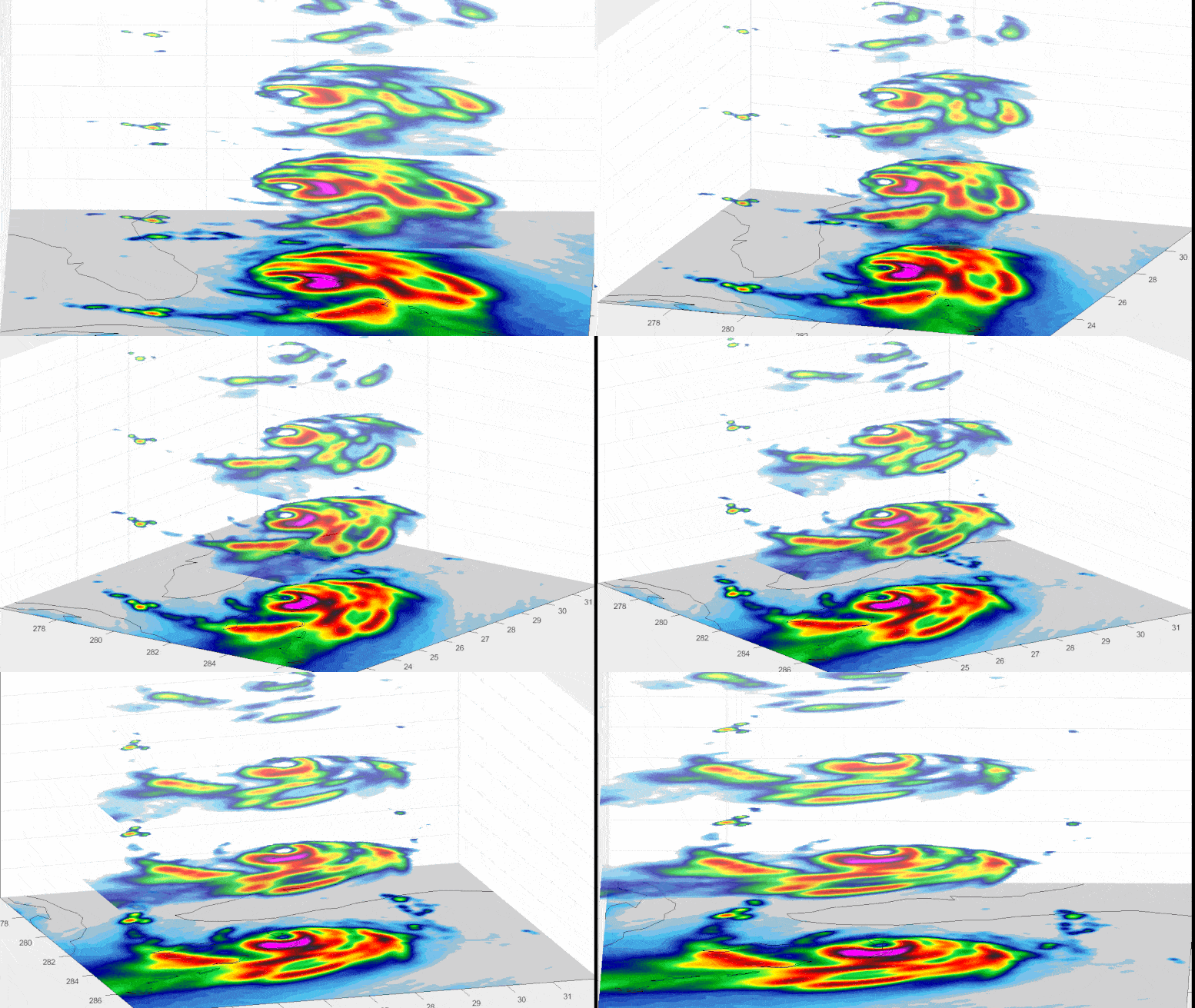
    Inside View of Hurricane Dorian
    Hurricane Dorian off the coast of Florida, as seen by the small satellite TEMPEST-D at 2 a.m. EDT on September 3, 2019 (11 p.m PDT on September 2, 2019). The layers in the animation reveal slices of the hurricane from four depths, taken at different radio wavelengths. The vertical view of Dorian highlights where the storm is strongest in the atmosphere. The colors in the animation show the heavy rainfall and moisture inside the storm. The least-intense areas of rainfall are shown in green, while the most intense are yellow, red and pink. Credit: NASA/JPL-Caltech

    A new view of Hurricane Dorian shows the layers of the storm, as seen by an experimental NASA weather satellite that’s the size of a cereal box. TEMPEST-D reveals rain bands in four layers of the storm as Hurricane Dorian approaches Florida on September 3, 2019. The multiple vertical layers show where the strongest convective “storms” within the hurricane are pushing high into the atmosphere, with pink, red and yellow corresponding to the areas of heaviest rainfall.

    Known as a CubeSat, TEMPEST-D (Temporal Experiment for Storms and Tropical Systems Demonstration) uses a miniaturized version of a microwave radiometer – a radio wave instrument used to measure rain and moisture within the clouds. If TEMPEST-D can successfully track storms like Dorian, the technology demonstration could lead to a train of small satellites that work together to track storms around the world. CubeSats are much less expensive to produce than traditional satellites; in multiples they could improve our global storm coverage and forecasting data.

    TEMPEST-D is led by Colorado State University in Fort Collins and managed by JPL in partnership with Blue Canyon Technologies in Boulder, Colorado, and Wallops Flight Facility in Virginia. The mission is sponsored by NASA’s Earth Ventures program and managed by the Earth Science Technology Office at NASA Headquarters in Washington. The radiometer instrument was built by JPL and employs high-frequency microwave amplifier technology developed by Northrop Grumman.

    Never miss a breakthrough: Join the SciTechDaily newsletter.
    Follow us on Google and Google News.

    Hurricane JPL NASA
    Share. Facebook Twitter Pinterest LinkedIn Email Reddit

    Related Articles

    New NASA Weather Sensors Capture Vital Data on Hurricane Ian From Space Station

    NASA’s Delta-X Mission Helps With Disaster Response in Wake of Hurricane Ida

    Prior Weather Linked to Rapid Intensification of Hurricanes Near Landfall

    NASA’s Atmospheric Infrared Sounder Tracks Hurricane Douglas, Tropical Storm Hanna From Space

    Multiple Views of Hurricane Dorian from Different NASA Satellites

    Increased Methane Gas Levels Found Over Cracks in Arctic Sea Ice

    NASA Makes Earth’s Oceans Look like Van Gogh’s Starry Night

    GRACE Data Spreads Awareness of Groundwater Levels

    NASA Satellite Image Shows La Niña Peaking in Intensity

    Leave A Reply Cancel Reply

    • Facebook
    • Twitter
    • Pinterest
    • YouTube

    Don't Miss a Discovery

    Subscribe for the Latest in Science & Tech!

    Trending News

    Scientists Uncover Potential Brain Risks of Popular Fish Oil Supplements

    Scientists Discover a Surprising Way To Make Bread Healthier and More Nutritious

    After 60 Years, Scientists Uncover Unexpected Brain Effects of Popular Diabetes Drug Metformin

    New Research Uncovers Hidden Side Effects of Popular Weight-Loss Drugs

    Scientists Rethink Extreme Warming After Surprising Ocean Discovery

    Landmark Study Links Never Marrying to Significantly Higher Cancer Risk

    Researchers Discover Unknown Beetle Species Just Steps From Their Lab

    Largest-Ever Study Finds Medicinal Cannabis Ineffective for Anxiety, Depression, PTSD

    Follow SciTechDaily
    • Facebook
    • Twitter
    • YouTube
    • Pinterest
    • Newsletter
    • RSS
    SciTech News
    • Biology News
    • Chemistry News
    • Earth News
    • Health News
    • Physics News
    • Science News
    • Space News
    • Technology News
    Recent Posts
    • Strange 65-Foot Dinosaur Discovered in Argentina
    • Researchers Uncover Source of Strange Deformation in Earth’s Largest Continental Rift
    • Scientists Solve Mystery of Where the Colorado River Vanished Millions of Years Ago
    • Not Just Alzheimer’s: Scientists Uncover Clues to a Second, Overlooked Disorder
    • Scientists Uncover Dangerous Connection Between Serotonin and Heart Valve Disease
    Copyright © 1998 - 2026 SciTechDaily. All Rights Reserved.
    • Science News
    • About
    • Contact
    • Editorial Board
    • Privacy Policy
    • Terms of Use

    Type above and press Enter to search. Press Esc to cancel.