
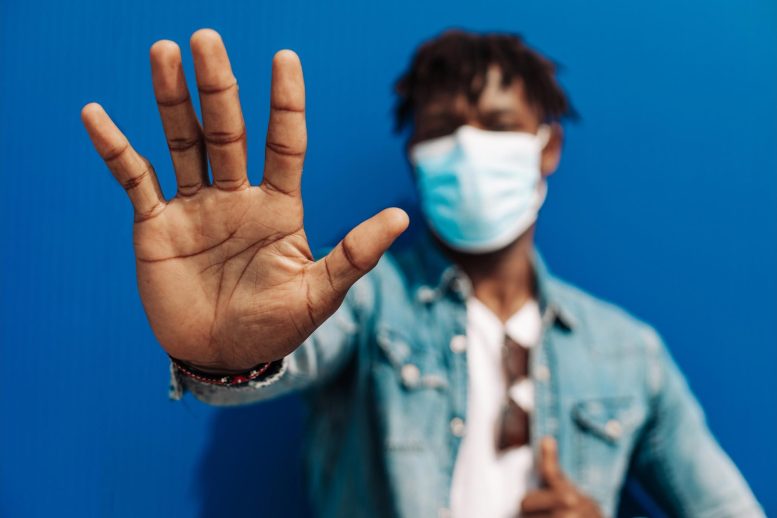
Study finds racial and ethnic disparities in COVID-19 vaccine uptake.
Racial and ethnic minorities were more hesitant or unwilling to receive a COVID-19 vaccine compared to whites. But inequitable distribution of the vaccine in the U.S. also contributed to lower levels of vaccine uptake by minorities.
Racial Disparities in Vaccine Hesitancy and Access
People from racial and ethnic minorities in the United States and the United Kingdom were up to three times as likely to report being unsure or unwilling to get a COVID-19 vaccine during the initial vaccine rollout compared to white participants, found a study published in Nature Communications. But among those who wanted the vaccine, Blacks in the U.S. were less likely to receive the vaccine than whites, a disparity that wasn’t present in the U.K. “Our study suggests that lack of access to the COVID-19 vaccine among minority populations in the U.S., rather than lower willingness to receive the vaccine, may have played a greater role in the racial-ethnic disparities we experienced in the early phases of the U.S. vaccination campaign,” says senior author Andrew T. Chan, MD, MPH, director of Epidemiology at the Mass General Cancer Center.
Chan and his team at Massachusetts General Hospital (MGH), research collaborators at King’s College London, and health science company Zoe Ltd. launched the Zoe COVID Study in March 2020, which was designed to capture real-time data on COVID-19 as the pandemic unfolded. Approximately 4.7 million participants in the U.S., U.K., and Sweden have reported daily information about their experiences with COVID-19 via a smartphone application. The data have given the researchers insight into COVID-19 symptoms and risk factors related to the severity of infection as well as the willingness to receive the vaccine once it became available.
Challenges and Insights from Vaccine Distribution
This study assessed vaccine hesitancy and vaccine receipt from 1,254,294 individuals in the U.K. and 87,388 individuals in the U.S. between December 2020 and February 2021. “We wanted to compare attitudes toward vaccines and how racial and ethnic minorities experienced receipt of vaccination in these two countries, both of which have racially and ethnically diverse populations that have been disproportionately affected by the COVID-19 pandemic,” says Chan. “From the outset, it was clear that the strategy for vaccine delivery was quite different in the U.K. than in the U.S. The U.K. relied on a centralized vaccine distribution system through the National Health Service, while the U.S. resorted to a fragmented approach, leading to widely uneven approaches by individual states and counties.”
Minority populations in both the U.K. and the U.S. expressed more hesitancy or unwillingness to get the vaccine than did white participants. “The more cautious view of the new vaccines among people of color may reflect a greater longstanding mistrust of the medical system and skepticism of clinical trials, which historically have lacked adequate representation from people of diverse races and ethnicities,” says Chan.
Yet minority participants who overcame their hesitancy still faced a barrier in receiving the vaccine in the U.S., he says. Black participants in the U.S. were less likely to report that they had received a vaccine dose than white participants, even if they indicated that they were willing to get vaccinated. This racial and ethnic disparity was not observed among U.K. participants. “The centralized, national vaccine distribution in the U.K. appeared better able to deliver vaccines in a more equitable manner than our fragmented approach in the U.S.,” says Chan.
Strategies to Overcome Vaccine Hesitancy
Access to the COVID-19 vaccine in the U.S. is currently less of a problem than it was earlier, when a shortage of vaccines plagued the initial vaccine mass campaign rollout. But there is still a need for continued outreach to overcome vaccine hesitancy among those who are unvaccinated, says Chan. “An effective strategy is to enlist trusted messengers, such as members of the communities who are more skeptical of vaccines, to encourage vaccination and help overcome mistrust.”
The study’s results also demonstrated that the U.S. needs a more effective strategy for getting vaccines out quickly and efficiently. “Our experience with COVID-19 boosters taught us that vaccine delivery is still very inefficient in the U.S., with considerable confusion over who should get them and where,” says Chan. “Going forward, we need to be more thoughtful about vaccine distribution. If we can eliminate the access barrier, we can focus our energy on minimizing the greater challenge of vaccine hesitancy.” The next step for the researchers is to study the effectiveness of various strategies that can overcome vaccine hesitancy.
Reference: “Self-reported COVID-19 vaccine hesitancy and uptake among participants from different racial and ethnic groups in the United States and United Kingdom” by Long H. Nguyen, Amit D. Joshi, David A. Drew, Jordi Merino, Wenjie Ma, Chun-Han Lo, Sohee Kwon, Kai Wang, Mark S. Graham, Lorenzo Polidori, Cristina Menni, Carole H. Sudre, Adjoa Anyane-Yeboa, Christina M. Astley, Erica T. Warner, Christina Y. Hu, Somesh Selvachandran, Richard Davies, Denis Nash, Paul W. Franks, Jonathan Wolf, Sebastien Ourselin, Claire J. Steves, Tim D. Spector, Andrew T. Chan and COPE Consortium, 1 February 2022, Nature Communications.
DOI: 10.1038/s41467-022-28200-3
Chan is professor of Medicine at Harvard Medical School (HMS) and chief of the Clinical and Translational Epidemiology Unit at MGH. Other key authors include Long H. Nguyen, MD, MS, an investigator in the Departments in Medicine, Gastroenterology and Hepatology at MGH and assistant professor of Medicine at HMS; David A Drew, PhD, director of Biobanking, Clinical and Translational Epidemiology Unit at MGH, and instructor of Medicine at HMS; and Tim D. Spector, MD, MSc, chief of the Department of Twin Research and Genetic Epidemiology and professor of Genetic Epidemiology at King’s College London.
The work was funded by the Massachusetts Consortium on Pathogen Readiness and the Stuart and Suzanne Steele MGH Research Scholars Award.
Never miss a breakthrough: Join the SciTechDaily newsletter.
Follow us on Google and Google News.
3 Comments
“longstanding mistrust of the medical system and skepticism of clinical trials, which historically have lacked adequate representation from people of diverse races and ethnicities,” says Chan.” I’m sorry but these “scientific conclusions” don’t ring true. In the US White people have no idea about the conduct of medical research and what racial groups are or are not “represented.” This is a broad brush wokie indictment of White people – not the medical system in America.
Medical mistrust happens in all sorts of directions. White people are timid of Indian or Filipino doctors, black people are timid of Korean doctors, and if a US doctor is sloppy then he gets slurred as a “doctor in the keys” in the belief that all doctors in Key West are bunch of parrotheads operating without license.
I don’t know how long it takes for those premises to fade. The only two things I check for are cleanliness and broad insight for accurate diagnosis.
This study is laughable in its faulty, politically biased construction and the complete absence of Asians.
Indeed, it is ironic the east Asian author completely ignores the higher rate of Asian vaccine compliance over all other American ethnicities.