
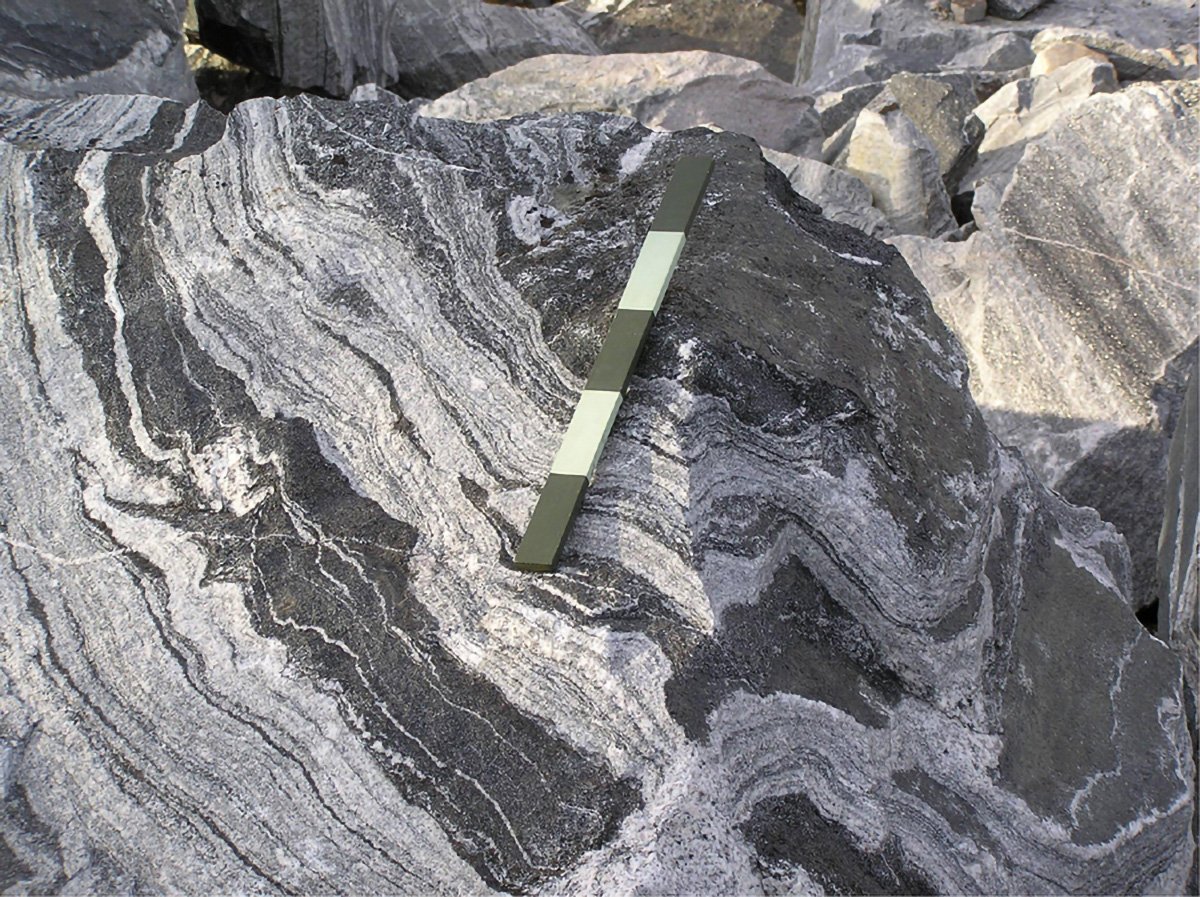
Geoscientists have uncovered a missing link in the enigmatic story of how the continents developed—a revised origin story that doesn’t require the start of plate tectonics or any external factor to explain their formation. Instead, the findings recently published in Nature Communications, rely solely on internal geological forces that occurred within oceanic plateaus that formed during the first few hundred million years of Earth’s history.
A major hurdle in understanding how the continents formed during the Archean Eon (four to 2.5 billion years ago) has been identifying the building blocks of Earth’s early crust. Much of the “new” Archean crust formed during this period comprised a very distinct association of three types of granitoid rocks—tonalite, trondhjemite, and granodiorite (TTG).
Understanding what went into making TTGs and the magmas they formed from has been difficult, because so many geological processes occurred between their initial melting and ultimate crystallization. Earlier researchers focused on the trace element composition of these rocks, hoping to find clues about TTG magmas and their source.
Breakthrough in TTG Research
“We tracked a specific set of trace elements that aren’t affected by alteration and pristinely preserve signatures from the original magma that made new TTG crust,” said Dr. Matthijs Smit, associate professor and Canada Research Chair at the University of British Columbia’s (UBC) Department of Earth, Ocean and Atmospheric Sciences. “These elements allowed us to look back through the chemical changes that TTG magmas go through and trace the melt compositions back to their initial state and source—most likely a sort of gabbro.”
“Funnily enough, many people have varieties of this type of rock as a kitchen countertop,” Dr. Smit says. “In a way, many people are preparing their dinner on the type of rock that was responsible for making our modern continents.”
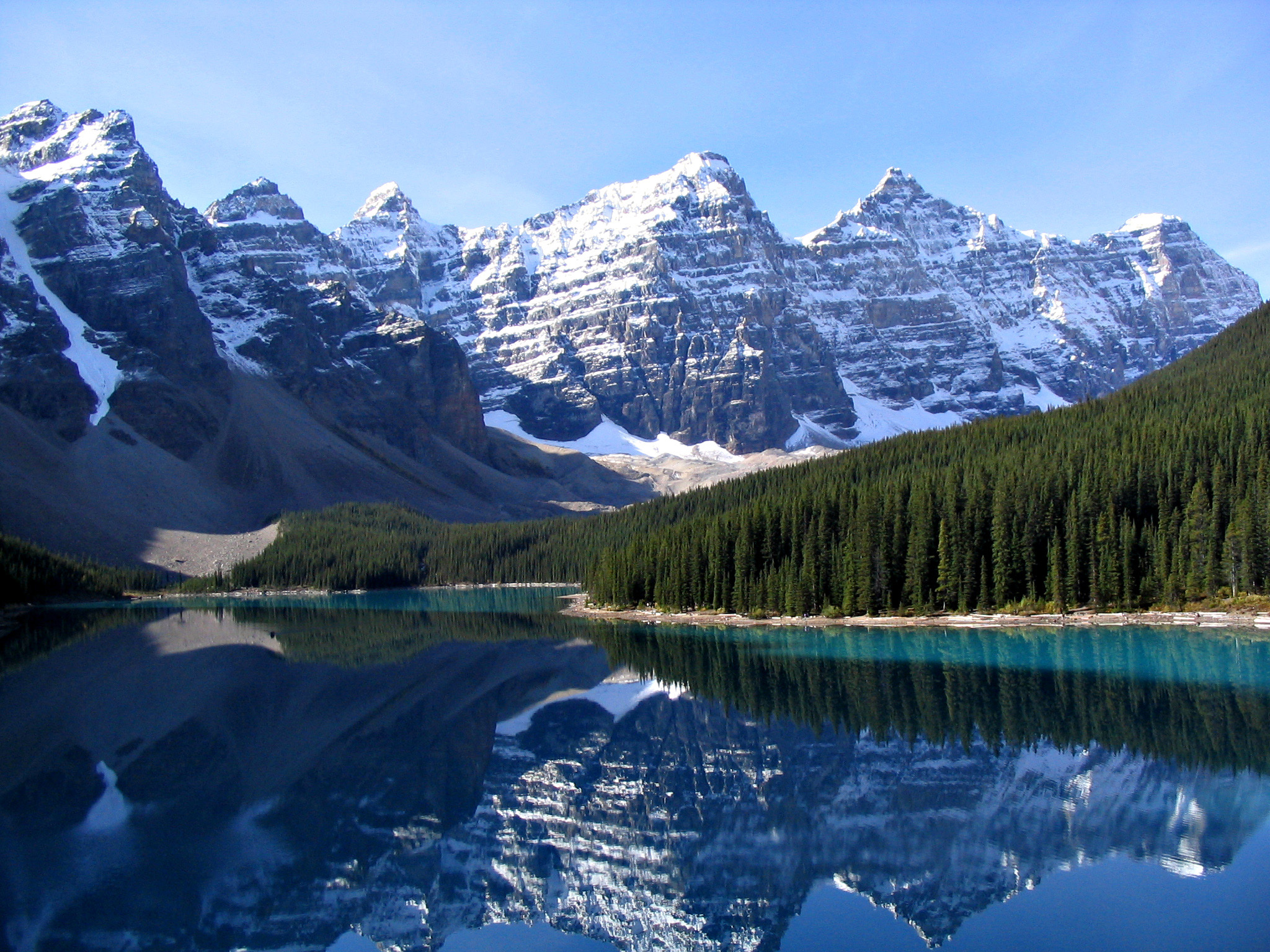
The Archean TTG crust is still part of the continents today. For instance, in North America, they make up much of the Canadian Interior between the Cordillera mountain belt in the west and the Grenville and Appalachian mountain belts in the east. The majority of Ontario, Quebec, Manitoba, Saskatchewan, Northwest Territories, and Nunavut is made up of Archean crustal fragments that are dominated by TTGs and their slightly younger and more evolved granite counterparts.
“All of these rocks—and especially their combination—can be explained by the model we present,” said Dr. Smit. “Ours is a simple model in which TTGs, as well as the younger rocks that TTGs are typically associated with, resulted from the slow burial, thickening and melting of precursor crust that likely resembled oceanic plateaus. The continental crust was destined to develop the way it did, because it kept getting buried further and the rocks at its base had no choice but to melt. In doing so, they made the TTGs that proved a winning recipe for continental survival and growth.”
Dispelling Old Theories
The UBC researchers’ discovery of a stand-alone “intra-crustal” mechanism to make TTGs dispels the long-standing theory that Archean TTGs are formed in Earth’s first subduction zones and mark the start of plate tectonics.
“There’s always been a ‘chicken-and-egg’ question of which came first—the start of plate tectonics or TTG magmatism to make new continental crust,” says Dr. Smit. “We show that these things may actually not be directly related. The recognition of the type of source rock makes this leap possible and also takes away the need to have other mechanisms, such as meteorite impact, explain the growth of the first real continents.”
The study by Dr. Smit and his UBC-based team used data from all the TTG samples ever analyzed—samples from Archean cratonic fragments exposed worldwide scrutinized by researchers over the past 30 years. This allowed Dr. Smit and his team to filter out local anomalies and analytical issues, and get at the actual trends in composition that the rocks capture. The study used a huge volume of data, now available in the open-source Geochemistry of Rocks of the Oceans and Continents geochemical data repository hosted by the Georg-August-Universität, Göttingen.
Reference: “Archaean continental crust formed from mafic cumulates” by Matthijs A. Smit, Kira A. Musiyachenko and Jeroen Goumans, 24 January 2024, Nature Communications.
DOI: 10.1038/s41467-024-44849-4
Never miss a breakthrough: Join the SciTechDaily newsletter.
Follow us on Google and Google News.