
Close Menu
    Facebook X (Twitter) Instagram
    SciTechDaily
    • Biology
    • Chemistry
    • Earth
    • Health
    • Physics
    • Science
    • Space
    • Technology
    Facebook X (Twitter) Pinterest YouTube RSS
    SciTechDaily
    Home»Science»“Missing Link” Uncovered: The Secret History of Corn Revealed Through RNA
    Science

    “Missing Link” Uncovered: The Secret History of Corn Revealed Through RNA

    By Cold Spring Harbor LaboratoryAugust 7, 20241 Comment4 Mins Read
    Facebook Twitter Pinterest Telegram LinkedIn WhatsApp Email Reddit
    Share
    Facebook Twitter LinkedIn Pinterest Telegram Email Reddit
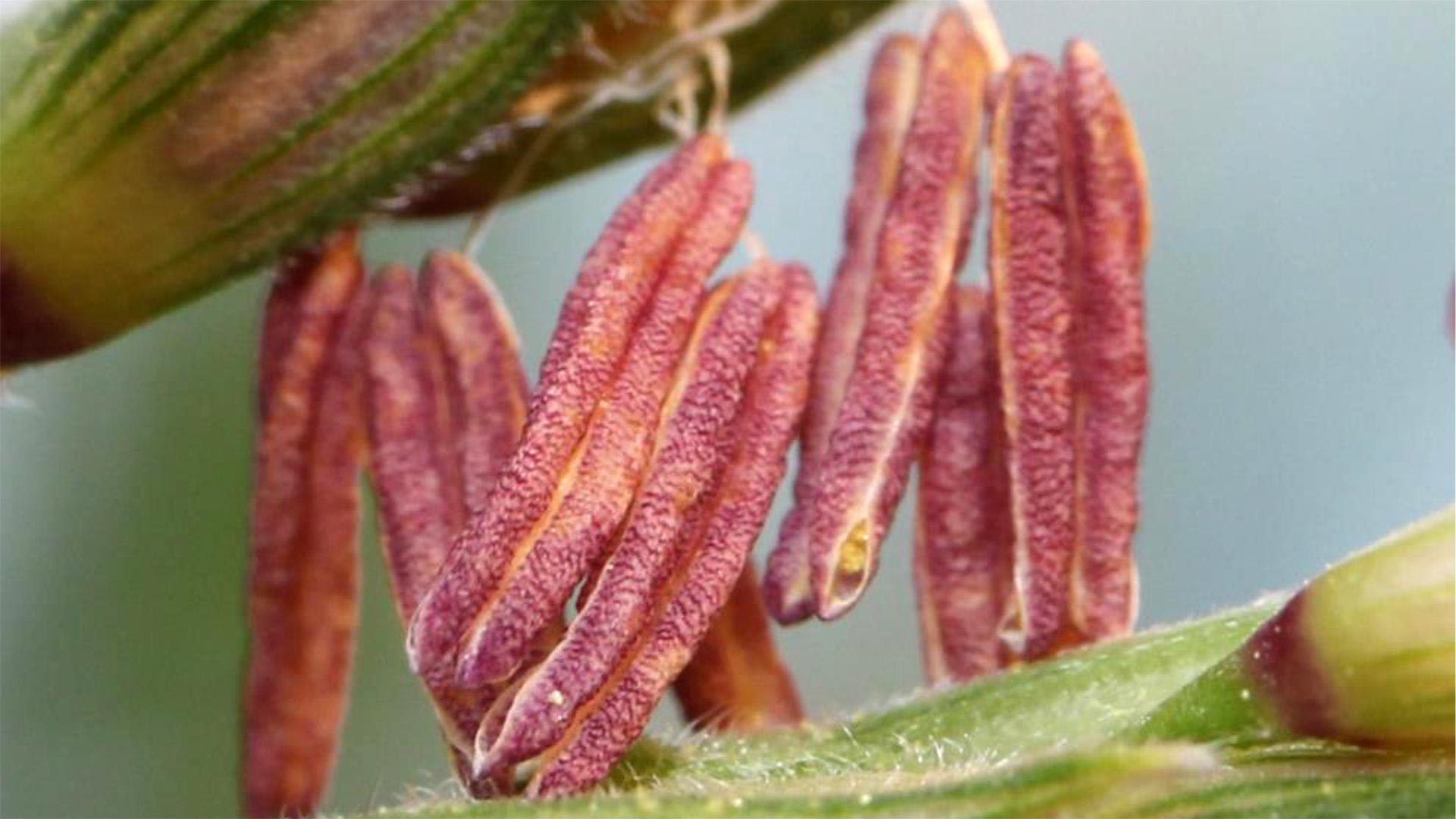
    Maize-Teosinte Hybrid
    Teosinte Pollen Drive (TPD) is a selfish genetic system in maize-teosinte hybrids, which allows only pollen with both toxin and antidote to survive. Here, we see the pollen-producing part of the maize-teosinte hybrid. Credit: Jon Cahn/Martienssen lab

    Researchers at Cold Spring Harbor Laboratory have traced the domestication of maize back to its origins 9,000 years ago, highlighting its crossbreeding with teosinte mexicana for cold adaptability.

    The discovery of a genetic mechanism known as Teosinte Pollen Drive by Professor Rob Martienssen provides a critical link in understanding maize’s rapid adaptation and distribution across America, shedding light on evolutionary processes and potential agricultural applications.

    Cold Spring Harbor Laboratory (CSHL) scientists have begun to unravel a mystery millennia in the making. Our story begins 9,000 years ago. It was then that maize was first domesticated in the Mexican lowlands. Some 5,000 years later, the crop crossed with a species from the Mexican highlands called teosinte mexicana. This resulted in cold adaptability. From here, corn spread across the continent, giving rise to the vegetable that is now such a big part of our diets. But how did it adapt so quickly? What biological mechanisms allowed the highland crop’s traits to take hold? Today, a potential answer emerges.

    Genetic Insights From an Unusual Hybrid

    CSHL Professor and HHMI Investigator Rob Martienssen had been studying RNA interference, the process of small RNAs silencing genes, for more than 20 years when University of Wisconsin researcher Jerry Kermicle reached out with a curious observation. His experiments crossing semi-sterile teosinte hybrids with traditional maize had caused their offspring to behave very unusually. With normal inheritance, the offspring should have eventually become completely sterile or fertile. But no matter how many times Kermicle crossed the hybrids with maize, all the offspring were semi-sterile, too. What was happening?
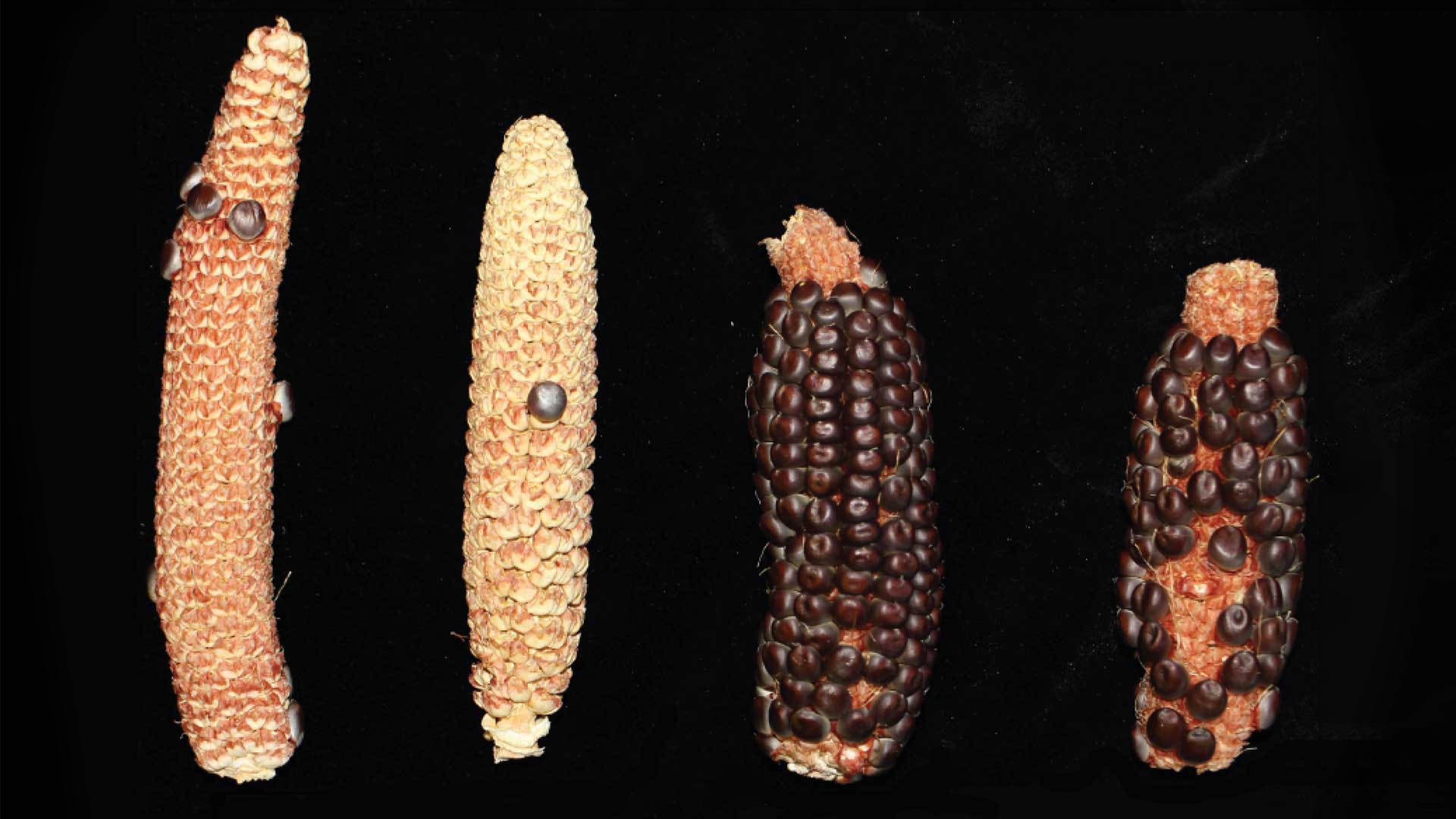
    Corn Toxin Antidote
    TPD ensures certain traits are always passed down by poisoning some reproductive cells with a toxin and giving the antidote to others. Left: Semi-sterile corn with only the toxin. Right: Viable corn with both the toxin and the antidote. Credit: Martienssen lab/Cold Spring Harbor Laboratory

    The Discovery of Teosinte Pollen Drive

    To figure it out, Martienssen and graduate student Ben Berube sequenced the genomes from hundreds of pollen grains of the semi-sterile offspring. They discovered the same sections from the teosinte genome were present in each.

    “There were two pieces of the genome, one on chromosome 5 and one on chromosome 6, that were always inherited. That told us the genes responsible must be in those regions,” says Martienssen.

    Implications for Agriculture and Evolution

    On chromosome 5, they found that a gene called Dicer-like 2 makes a group of small RNAs that are always in semi-sterile hybrids but not traditional maize. With that finding, the Martienssen lab was able to pinpoint what they call Teosinte Pollen Drive (TPD). This “selfish” genetic system eliminates competing pollen grains that lack the gene drive. It causes maize-teosinte hybrids to pass certain traits through males more often than females. The discovery could have significant implications for the agriculture industry. But in Martienssen’s eyes, the finding is even bigger than its potential weed control applications.

    “I’m more excited by the evolutionary aspects, what it might mean for the process of domestication, and how it could have been much quicker than we thought,” says Martienssen.

    Connecting Corn’s Past to Present

    If teosinte mexicana is “the Neanderthal of maize,” Martienssen may have found in TPD corn’s “missing link.” The breakthrough could explain how corn came to thrive across America—but also why certain small RNAs are so common in plant and animal sperm cells, including ours.

    Reference: “Teosinte Pollen Drive guides maize diversification and domestication by RNAi” by Benjamin Berube, Evan Ernst, Jonathan Cahn, Benjamin Roche, Cristiane de Santis Alves, Jason Lynn, Armin Scheben, Daniel Grimanelli, Adam Siepel, Jeffrey Ross-Ibarra, Jerry Kermicle and Robert A. Martienssen, 7 August 2024, Nature.
    DOI: 10.1038/s41586-024-07788-0

    Funding: National Institutes of Health, National Science Foundation Plant Genome Research Program, Howard Hughes Medical Institute, National Science Foundation

    Never miss a breakthrough: Join the SciTechDaily newsletter.
    Follow us on Google and Google News.

    Agriculture Cold Spring Harbor Laboratory Corn Genetics Plant Science
    Share. Facebook Twitter Pinterest LinkedIn Email Reddit

    Related Articles

    The Secret History of Corn – And Its “Jumping Genes” – Revealed in Its Genome

    Tackling Food Allergies at the Source: Developing a Non-GMO Soybean Without the Allergenic Protein

    Predicting Effects of Genetic Mutations: For Tomato Genes, One Plus One Doesn’t Always Make Two

    Breeding Better Seeds: Sustainable, More Nutritious Food Production Under the Specter of Global Warming

    Ancient DNA Continues to Rewrite the 9,000-Year Society-Shaping History of Corn

    Genetic Heritage: Rice Has Many Fathers but Only Two Mothers

    Fighting “Hidden Hunger” With Plant Genetic Engineering and Molecular Breeding

    Genetics of the Tree of Life – Understanding the African Baobab Tree

    New Tomato Ideal for Urban Gardens and Even Outer Space Created Through Genetic Editing

    1 Comment

    1. Eric M. Jones on August 8, 2024 8:03 am

      Wasn’t this done 50 years ago?

      Reply
    Leave A Reply Cancel Reply

    • Facebook
    • Twitter
    • Pinterest
    • YouTube

    Don't Miss a Discovery

    Subscribe for the Latest in Science & Tech!

    Trending News

    Bone-Strengthening Discovery Could Reverse Osteoporosis

    Scientists Uncover Hidden Trigger Behind Stem Cell Aging

    Scientists Find Way to Reverse Fatty Liver Disease Without Changing Diet

    Could Humans Regrow Limbs? New Study Reveals Promising Genetic Pathway

    Scientists Reveal Eating Fruits and Vegetables May Increase Your Risk of Lung Cancer

    Scientists Reverse Brain Aging With Simple Nasal Spray

    Scientists Uncover Potential Brain Risks of Popular Fish Oil Supplements

    Scientists Discover a Surprising Way To Make Bread Healthier and More Nutritious

    Follow SciTechDaily
    • Facebook
    • Twitter
    • YouTube
    • Pinterest
    • Newsletter
    • RSS
    SciTech News
    • Biology News
    • Chemistry News
    • Earth News
    • Health News
    • Physics News
    • Science News
    • Space News
    • Technology News
    Recent Posts
    • Europe’s Most Active Volcano Just Got Stranger – Here’s Why Scientists Are Rethinking It
    • Why Are Giant Ants Letting Tiny Ants Crawl All Over Them?
    • Revolutionary Technique Sends Healthy Mitochondria Exactly Where They’re Needed
    • This Student Recreated the Universe in a Bottle. What She Discovered Could Help Reveal How Life Started on Earth
    • Alzheimer’s Symptoms May Start Outside the Brain, Study Finds
    Copyright © 1998 - 2026 SciTechDaily. All Rights Reserved.
    • Science News
    • About
    • Contact
    • Editorial Board
    • Privacy Policy
    • Terms of Use

    Type above and press Enter to search. Press Esc to cancel.