

A slow drug-release system has proven highly effective in treating certain bladder cancer patients whose tumors were previously unresponsive to therapy.
A new targeted drug delivery system known as TAR-200 has shown remarkable results in a phase 2 clinical trial involving patients with high-risk non-muscle-invasive bladder cancer that had not responded to previous therapies.
In most participants, the cancer vanished within just three months of treatment, and nearly half remained cancer-free after one year.
“Traditionally, these patients have had very limited treatment options. This new therapy is the most effective one reported to date for the most common form of bladder cancer,” said Sia Daneshmand, MD, director of urologic oncology with Keck Medicine of USC and lead author of a study detailing the clinical trial results published in the Journal of Clinical Oncology. “The findings of the clinical trial are a breakthrough in how certain types of bladder cancer might be treated, leading to improved outcomes and saved lives.”
How the drug delivery system works
TAR-200 is a small, pretzel-shaped device designed to deliver the chemotherapy drug gemcitabine directly into the bladder through a catheter. Once in place, it gradually releases the medication over a three-week period during each treatment cycle.
According to Daneshmand, who is also affiliated with the USC Norris Comprehensive Cancer Center, gemcitabine has traditionally been administered as a liquid that remains in the bladder for only a few hours, a method that has shown limited success in effectively eliminating cancer cells.
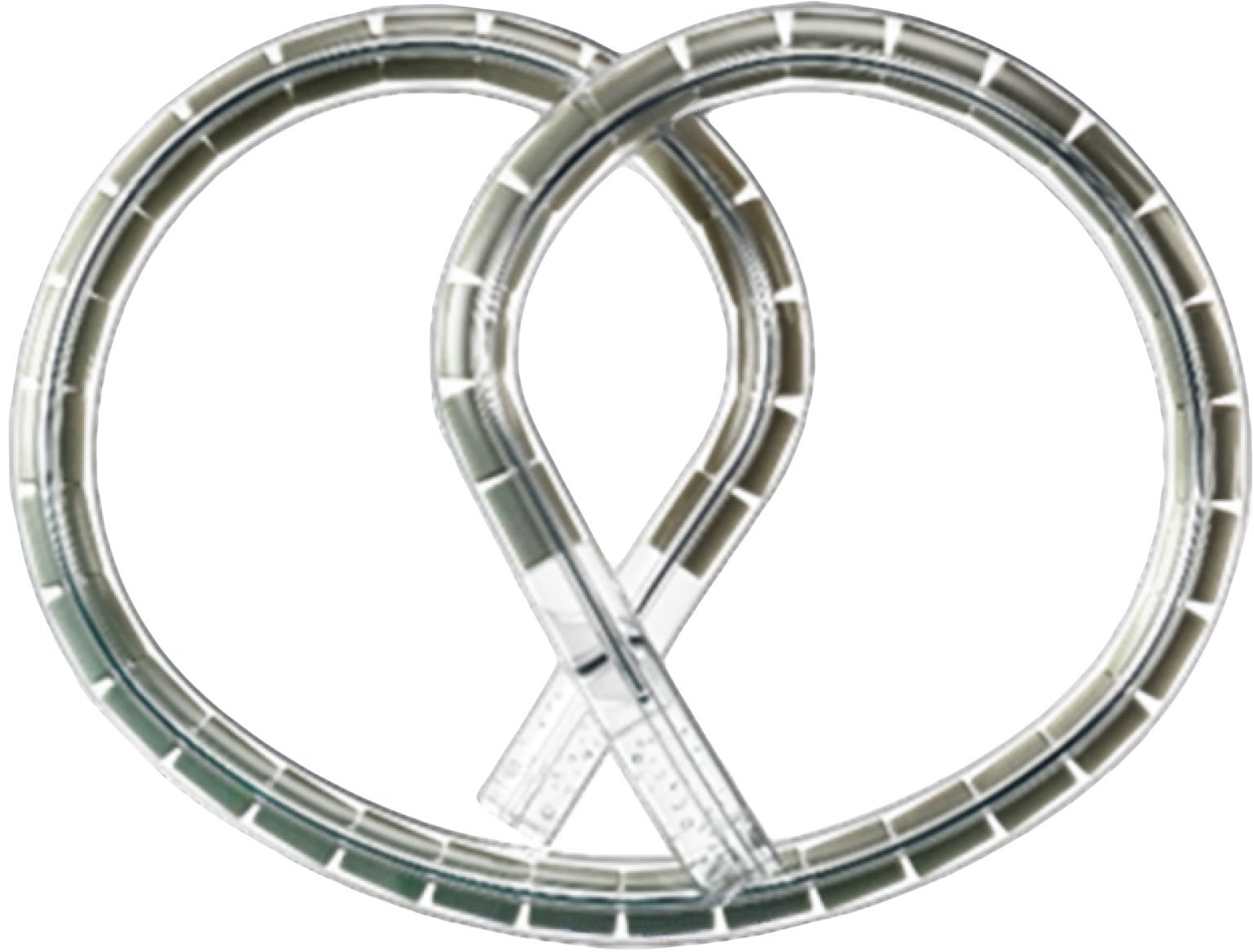
“The theory behind this study was that the longer the medicine sits inside the bladder, the more deeply it would penetrate the bladder and the more cancer it would destroy,” he said. “And it appears that having the chemotherapy released slowly over weeks rather than in just a few hours is a much more effective approach.”
The patient population in the clinical trial
The clinical trial, known as the SunRISe-1, was conducted at 144 locations globally, including at Keck Hospital of USC. It included 85 patients with high-risk non-muscle-invasive bladder cancer.
Non-muscle-invasive bladder cancer is the most common form of bladder cancer. The disease is considered high risk when, depending on the type and location of the tumors, the cancer carries a higher chance of recurrence and/or spreading to the bladder muscles or other parts of the body.

The standard treatment for this type of bladder cancer is an immunotherapy drug, Bacillus Calmette-Guérin, which may be ineffective in a percentage of patients. All the patients in the clinical trial had been previously treated with this drug, but their cancer had returned.
“The standard treatment plan for these patients was surgery to remove the bladder and surrounding tissue and organs, which has many health risks and may negatively impact patients’ quality of life,” said Daneshmand.
To offer patients a better option, urologic oncologists treated patients with TAR-200 every three weeks for six months, and then four times a year for the next two years. In 70 out of 85 patients, the cancer disappeared, and for almost half the patients, was still gone a year later. The treatment was well-tolerated, with minimal side effects.
The study also showed that administering TAR-200 along with another immunotherapy drug (cetrelimab) did not prove as effective as TAR-200 on its own and had more side effects.
While participants in the clinical trial will be followed for another year, the study is closed to new participants.
The future of slow-release cancer drugs
This clinical trial is one of several ongoing ones investigating the effect of TAR-200 and the slow release of cancer-fighting drugs into the bladder to fight cancer.
“We are at an exciting moment in history,” said Daneshmand, who has been researching this novel treatment since 2016. “Our mission is to deliver cancer-fighting medications into the bladder that will offer lasting remission from cancer, and it looks like we are well on our way toward that goal.”
The U.S. Food and Drug Administration has granted TAR-200 a New Drug Application Priority Review, which means the FDA plans to take quicker action on the application than other applications.
Reference: “TAR-200 for Bacillus Calmette-Guérin–Unresponsive High-Risk Non–Muscle-Invasive Bladder Cancer: Results From the Phase IIb SunRISe-1 Study” by Siamak Daneshmand, Michiel S. Van der Heijden, Joseph M. Jacob, Felix Guerrero-Ramos, Martin Bögemann, Giuseppe Simone, Christopher M. Pieczonka, Nelson Canales Casco, Daniel Zainfeld, Philipp Spiegelhalder, Evanguelos Xylinas, David Cahn, Yair Lotan, Katie S. Murray, Takashi Kawahara, Katharine Stromberg, Jason Martin, Abhijit Shukla, Christopher J. Cutie, Kristi Bertzos, Shalaka Hampras, Hussein Sweiti and Andrea Necchi, 30 July 2025, Journal of Clinical Oncology.
DOI: 10.1200/JCO-25-01651
The health care corporation Johnson & Johnson manufactures TAR-200.
Disclosure: Daneshmand has received grants/research funding and travel reimbursement from Johnson & Johnson and consulting payments from Johnson & Johnson Innovative Medicine (formerly Janssen Pharmaceuticals).
Never miss a breakthrough: Join the SciTechDaily newsletter.
Follow us on Google and Google News.
1 Comment
Another ‘Discovery Mill’. They research. Find positive indications and then disband with ‘we will study more later’. Then they ask for you to send money to the cancer foundations. We must stop being suckers to this. We must do an audit of successes that are abndoned while treatments get approved all the time. A cure is different from a treatment. RFK must investigate, Some research studies with successes are REPEATED more than 3, 4, or 5+ times and,,,disbanded again.
Cancer should be cured with us in the second decade of the 21st century. It’s the same idea as the 1960s of radiation and chemo. One problem is cancer is ‘considered’ to be a DNA mutation-caused disease. With with rare exception, IT IS AN EPIGENETIC MIS-EXPRESSION DISEASE as confessed scietiifically in 2017. Really ridiculous.