
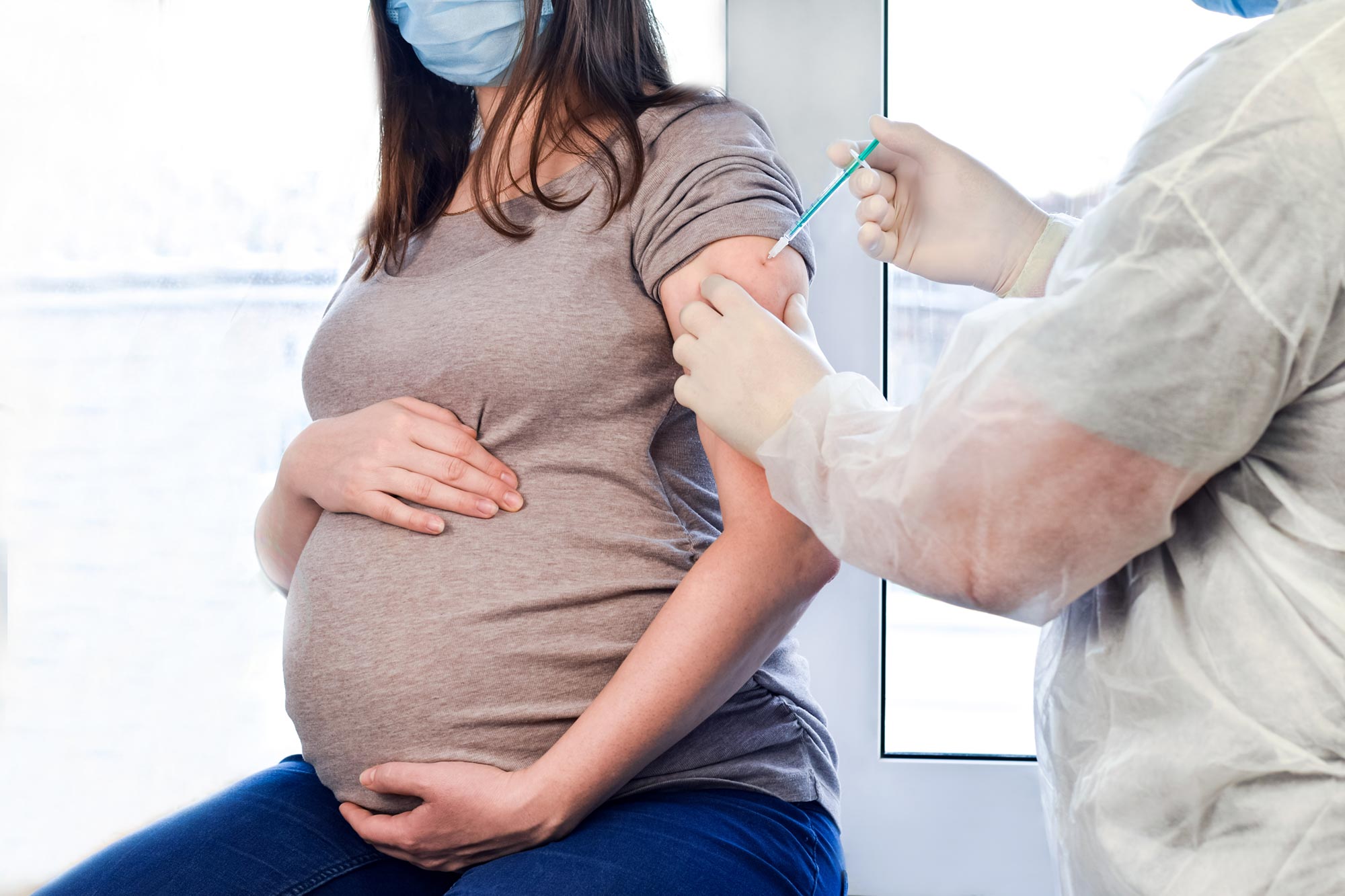
COVID-19 vaccination during pregnancy shows no link to autism or developmental delays in young children, according to new research.
New research presented at the Society for Maternal-Fetal Medicine (SMFM) 2026 Pregnancy Meeting reports that receiving an mRNA COVID-19 vaccine just before or during pregnancy is not linked to autism or other neurodevelopmental disorders in children. The findings add to growing evidence supporting the safety of COVID-19 vaccination during pregnancy.
In the United States, two types of COVID-19 vaccines are recommended: the messenger ribonucleic acid (mRNA) vaccine and a protein subunit vaccine. Both are considered safe at any point in pregnancy and are advised to help protect both the mother and the baby.
Study Design and Participants
The research was conducted by investigators in the Maternal-Fetal Medicine Units Network. They evaluated 434 children between 18 months and 30 months old for signs of autism or other developmental concerns.
The study took place from May 2024 through March 2025 and followed a prospective, multi-center observational design. Of the children included, 217 were born to mothers who received at least one dose of an mRNA COVID-19 vaccine either during pregnancy or within 30 days before becoming pregnant. The remaining 217 children were born to mothers who did not receive an mRNA vaccine during that same time frame.
“Neurodevelopment outcomes in children born to mothers who received the COVID-19 vaccine during or shortly before pregnancy did not differ from those born to mothers who did not receive the vaccine,“ said senior researcher George R. Saade, MD, Professor and Chair of Obstetrics and Gynecology, and Associate Dean for Women’s Health, at Macon & Joan Brock Virginia Health Sciences at Old Dominion University in Norfolk, VA.
How Researchers Measured Child Development
To ensure fair comparisons, vaccinated mothers were matched with unvaccinated mothers based on several factors, including delivery location (hospital, birth center, etc.), date of delivery, insurance coverage, and race. Researchers excluded participants if the baby was born before 37 weeks, if the pregnancy involved multiples, or if the child had a major congenital malformation.
Children in both groups were assessed between 1 ½ – 2 ½ years of age using the Ages and Stages Questionnaire Version 3. This tool evaluates five key areas of development: communication, gross motor skills, fine motor skills, problem solving, and personal social interaction. Researchers also analyzed results from the Child Behavior Checklist, Modified Checklist for Autism in Toddlers, and the Early Childhood Behavior Questionnaire to compare developmental and behavioral outcomes.
“This study, conducted through a rigorous scientific process in an NIH clinical trials network, demonstrates reassuring findings regarding the long-term health of children whose mothers received COVID-19 vaccination during pregnancy,” said Brenna L. Hughes, MD, MSc, Edwin Crowell Hamblen Distinguished Professor of Reproductive Biology and Family Planning and Interim Chair of the Department of Obstetrics and Gynecology at Duke University in Raleigh, NC.
The study was supported by the Eunice Kennedy Shriver National Institute of Child Health and Human Development. The authors noted that the findings reflect their analysis and do not necessarily represent the official views of the National Institutes of Health.
Oral abstract #8 “Association between SARS-CoV-2 vaccine in pregnancy and child neurodevelopment at 18-30 months” will be published in the February 2026 issue of PREGNANCY, the official peer-reviewed medical journal of the Society for Maternal-Fetal Medicine.
ABSTRACT
Association between SARS-CoV-2 vaccine in pregnancy and child neurodevelopment at 18-30 months
George R. Saade; Brenna L. Hughes
Objective:
To evaluate whether there is an association between SARS-CoV-2 vaccine in pregnancy and offspring neurodevelopmental measures.
Study Design:
Multi-center prospective observational study of 18-30 month old offspring of mothers who did (exposed) or did not (unexposed) receive at least one dose of an mRNA SARS-CoV-2 vaccine during or within 30 days prior to pregnancy. Exclusions included delivery < 37 weeks, multifetal pregnancy and major congenital malformations. Eligible participants were identified by electronic record review and contacted for consent. Unexposed women were matched with exposed women by delivery site, delivery date, insurance status, and race. The primary outcome was equivalence within an upper and lower margin of 10 points for the Ages and Stages Questionnaire version 3 (ASQ-3) total score. Secondarily, associations with domain-specific ASQ-3 scores as well as Child Behavior Checklist, Modified Checklist for Autism in Toddlers and Early Childhood Behavior Questionnaire scores were evaluated.
Results:
Of 3,956 mothers assessed, 271 exposed and 240 unexposed were enrolled. Matching to unexposed on all characteristics was possible in 217 pairs. The mothers in the exposed group were more likely to be nulliparous, and the children were more likely to be vaccinated and slightly younger at assessment than unexposed (median [IQR] months: 25.4 [24.5,28.1] vs 25.9 [24.7,28.5]; p = 0.03). There were no other significant differences in baseline characteristics. The primary outcome of ASQ score was equivalent between exposed and unexposed (255 vs 260, median difference -3.4, 95% CI: -9.7,3.0; Table 1). No significant differences were noted in secondary outcomes (Table 2).
Conclusion:
The primary neurodevelopmental outcome was equivalent between children of mothers who received and did not receive mRNA SARS-CoV-2 vaccination during or immediately prior to pregnancy. There was no association with secondary neurodevelopmental outcomes. Our results provide reassurance regarding the safety of mRNA SARS-CoV-2 vaccination in pregnancy.
Never miss a breakthrough: Join the SciTechDaily newsletter.
Follow us on Google and Google News.