
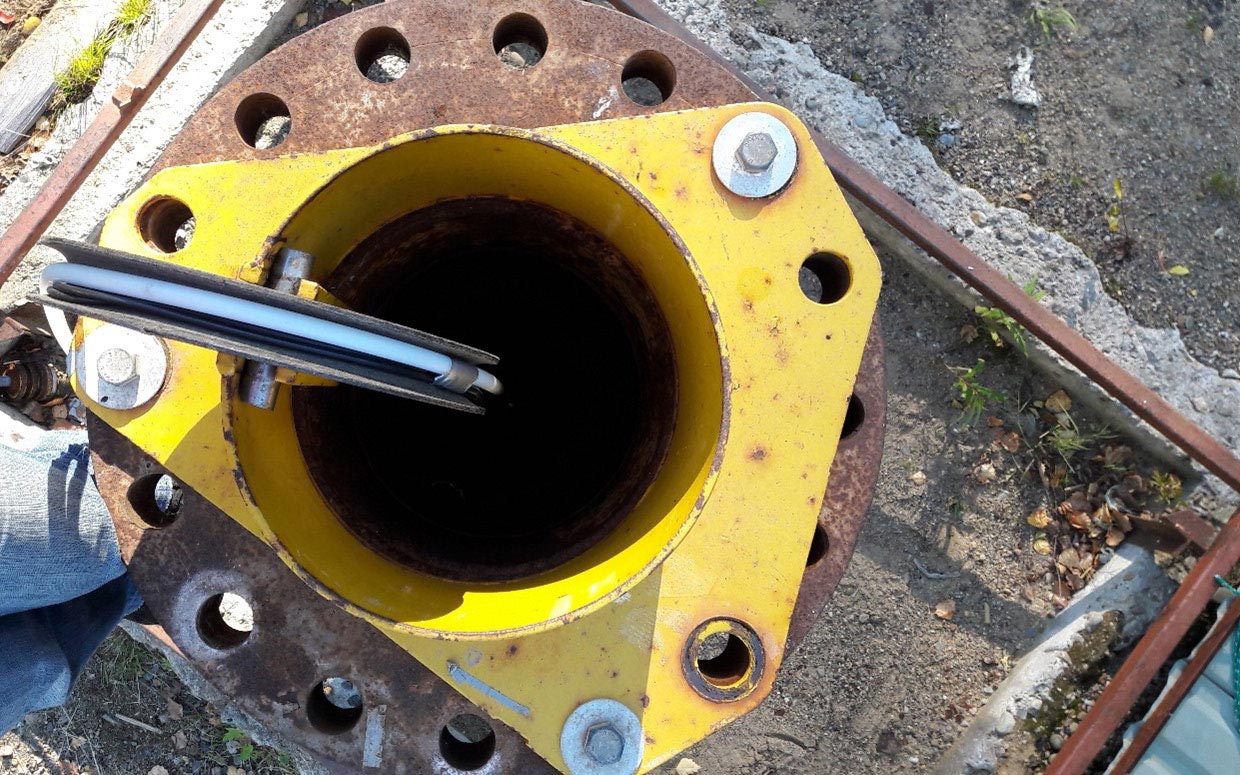
Volatile organic compounds were found in Finland within a borehole extending over two kilometers deep.
Volatile organic compounds (VOCs), commonly associated with poor indoor air quality and industrial pollution, have been discovered in a borehole more than two kilometers deep in Finland. This site had previously yielded groundwater estimated to be tens of millions of years old.
While VOCs are often linked to human activities, they also occur naturally in environments such as wetlands, forests, volcanoes, and hydrothermal vents.
Researchers from the University of Helsinki and VTT Technical Research Centre of Finland collected gas and microbial samples from the borehole, which was drilled by the Geological Survey of Finland (GTK) for research purposes in Outokumpu, a region known for its ore deposits.
A wide range of natural VOCs were found in bedrock groundwater from depths ranging between 500 and 2,300 meters.
Prior to this, little information was available on the VOCs detected in crystalline bedrock and its uncontaminated groundwater. The results were recently published in the Communications Earth & Environment journal.
Understanding the carbon cycle
The research findings may have an impact on understanding the global carbon cycle as well as on the air quality of underground facilities, such as mines.
The study demonstrated that microbes in the deep biosphere, particularly bacteria and fungi, play an important role in producing and breaking down VOCs. However, the concentration and composition of VOCs also reflect the characteristics of the local bedrock, such as carbon and sulfur content as well as oxidation-reduction conditions.
“We were guided to the volatile organic compounds by smell,” says Assistant Professor Riikka Kietäväinen from the University of Helsinki, who oversaw the geochemical section of the study.
Many of the compounds, such as aromatic hydrocarbons and sulfur compounds, are detectable by smell at very low concentrations.

“Depending on the sniffer, the smell of the bedrock groundwater in the Outokumpu drill hole was described as resembling the ocean or the sewer, even slightly sweet. Attempts to pinpoint the source of the smell more accurately were made through analytical techniques, using thermal desorption-gas chromatography mass spectrometry,” Kietäväinen adds.
The analyses revealed more than 40 VOCs, with butane, benzene, and dimethylsulfide prevailing. The compounds also included other hydrocarbons, alcohols, ketones, and aldehydes.
“We studied the possible role of microbes in the formation or degradation of these VOCs by analyzing genomic data on the microbial community,” says Senior Scientist Mari Nyyssönen of VTT.
“In the deep bedrock, microbes have few different sources of nutrients and carbon, and the results of the study show that these VOCs bring new kinds of opportunities to the microbial dinner table,” Nyyssönen adds.
Groundwater dating back tens of millions of years
The drilling of the Outokumpu deep drill hole was completed exactly 20 years ago, on 31 January 2005. So far, a research collaboration between the University of Helsinki, VTT, and GTK at the Outokumpu deep borehole has exposed, among other things, groundwater dating back tens of millions of years as well as a diverse microbial community living in the bedrock groundwater and rock surfaces.
“This study has moved us a step closer to understanding the interactions between the organic and inorganic domains. Research at the borehole will continue,” Kietäväinen and Nyyssönen state.
Facts about the Outokumpu deep borehole in Finland
- Drilled southeast of the town of Outokumpu, near the old Sysmäjärvi station in 2004 and 2005
- A 2,516-metre deep vertical window, 22 cm in diameter, to crystalline bedrock dating back 1.9 billion years
- The temperature at the bottom of the hole is approximately +40°C
- Part of the International Continental Scientific Drilling Program (ICDP). Further information on the Outokumpu ICDP project: https://www.icdp-online.org/projects/by-continent/europe/outo-finland/
Reference: “Naturally occurring volatile organic compounds in deep bedrock groundwater” by Riikka Kietäväinen, Mari Nyyssönen, Maija Nuppunen-Puputti and Malin Bomberg, 29 January 2025, Communications Earth & Environment.
DOI: 10.1038/s43247-025-02053-2
Never miss a breakthrough: Join the SciTechDaily newsletter.
Follow us on Google and Google News.