
Close Menu
    Facebook X (Twitter) Instagram
    SciTechDaily
    • Biology
    • Chemistry
    • Earth
    • Health
    • Physics
    • Science
    • Space
    • Technology
    Facebook X (Twitter) Pinterest YouTube RSS
    SciTechDaily
    Home»Biology»Mystery Solved: Scientists Discover Unique Evolutionary Branch of Snakes
    Biology

    Mystery Solved: Scientists Discover Unique Evolutionary Branch of Snakes

    By University of HelsinkiAugust 15, 2024No Comments3 Mins Read
    Facebook Twitter Pinterest Telegram LinkedIn WhatsApp Email Reddit
    Share
    Facebook Twitter LinkedIn Pinterest Telegram Email Reddit
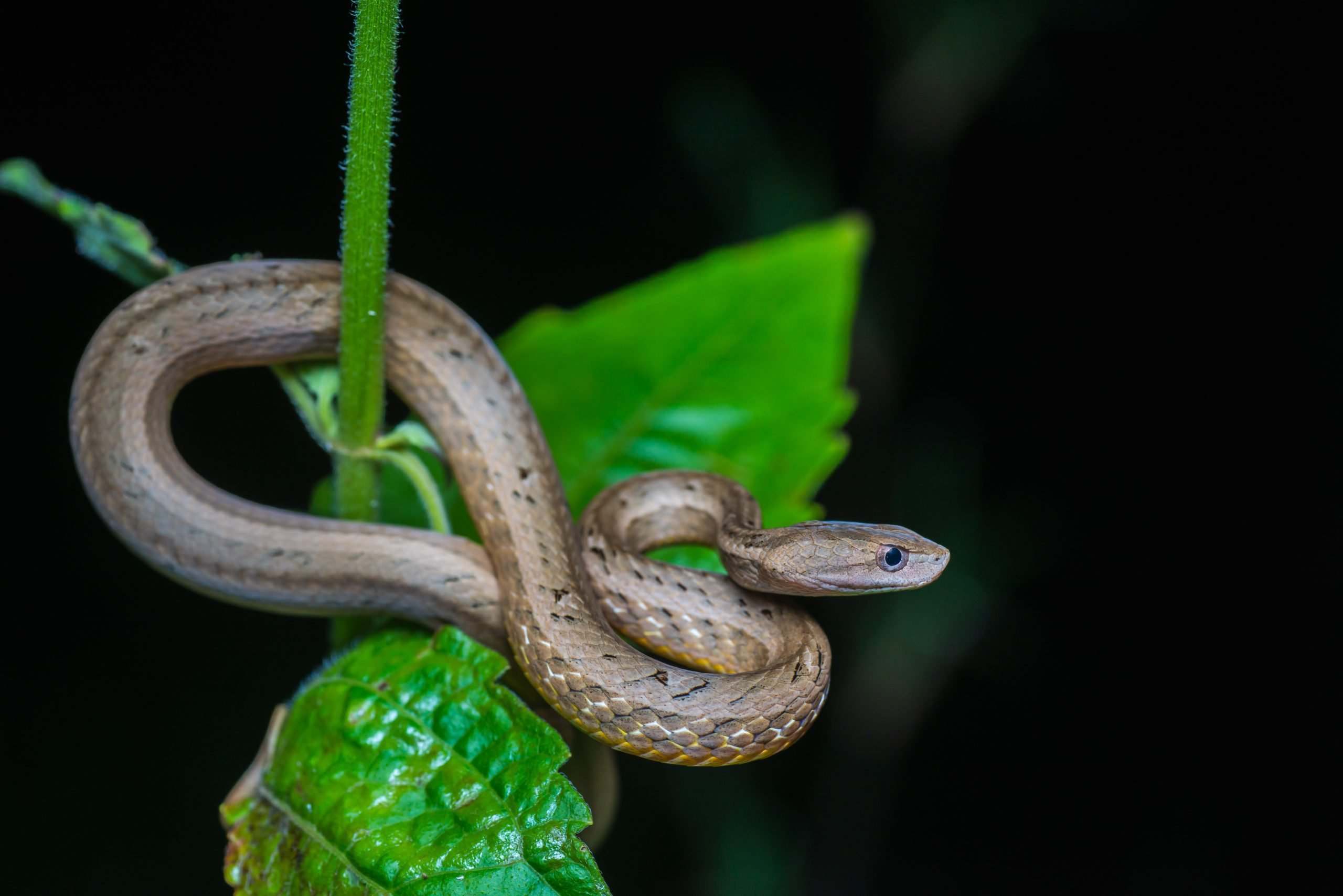
    Mock Viper
    An international research team has clarified the evolutionary history of the mock viper, a unique and mildly venomous snake that mimics more dangerous vipers. This discovery places the mock viper in its own new family, Psammodynastidae, acknowledging its distinct evolutionary path and contributing to both scientific understanding and conservation efforts. Credit: Rushen Jaihan

    Scientists have resolved the evolutionary history of the mock viper, placing it in a unique new snake family, Psammodynastidae, which aids in understanding and conserving this distinct species.

    An international team, spearheaded by researchers from the University of Helsinki, has unraveled the evolutionary history of the mock viper. This snake, which only mildly venomous and resembles a viper, represents a completely distinct lineage within the snake family tree.

    The evolutionary history of the mock viper, a mildly venomous, widely distributed Asian snake that mimics highly venomous vipers for self-defense, has been solved. The mock viper represents a completely unique branch in the tree of life of snakes, and hence, it has been allocated into its own new family named Psammodynastidae.

    This small, feisty snake has long presented a puzzle to evolutionary scientists due to its unresolved evolutionary history. To solve the puzzle, the researchers analyzed DNA sequences of over 4500 genes and several dozen high-resolution micro-computed tomographic scans.

    “Mock vipers are part of the superfamily Elapoidea, a major group of snakes to which one-fifth of global serpent diversity belongs. Evolutionary diversification within this superfamily happened very rapidly approximately 50 million years ago. Rapid evolutionary diversifications are probably the most challenging evolutionary scenario for a geneticist or evolutionary biologist to resolve”, says the lead researcher Sunandan Das from the University of Helsinki.

    Mimicry and Defense Mechanisms

    Mock vipers not only look like tree-dwelling vipers but also act like them. Intriguingly, they have a fake ‘fang’ in the front of their mouth, which befools a predator into thinking that they possess venom fangs during an open-mouthed threat display. However, there is also an actual fang in the back of the jaw, which carries a weak venom effective only on their lizard prey. The Elapoidea superfamily has multiple snake families with various types of venom and fangs, for example, cobras and mambas.

    Another completely new family-level lineage, Micrelapidae, within Elapoidea was discovered in 2023 by Sunandan and Professor Juha Merilä.

    “The discovery of a new family of any vertebrate animals is surprisingly rare, an almost once-in-a-century phenomenon. This is a lifetime achievement for an evolutionary biologist. You rarely, if ever, see descriptions of whole new families of well-studied vertebrate animals anymore.’’ says Sunandan.

    The inference of the phylogenetic position of mock vipers, along with that of other elapoid snakes, will pave the way for a much better understanding of snake venom fang origin and evolution. Long, unique branches in the phylogeny, like that of mock vipers, contain a high degree of evolutionary distinctiveness, an index used by biologists for prioritizing conservation. Hence, reinstating the mock viper or Psammodynastes into its own ‘dynasty’ also serves an important conservation goal.

    Reference: “Phylogenomics of Psammodynastes and Buhoma (Elapoidea: Serpentes), with the description of a new Asian snake family” by Sunandan Das, Eli Greenbaum, Jonathan Brecko, Olivier S. G. Pauwels, Sara Ruane, Stacy Pirro and Juha Merilä, 25 April 2024, Scientific Reports.
    DOI: 10.1038/s41598-024-60215-2

    Never miss a breakthrough: Join the SciTechDaily newsletter.
    Follow us on Google and Google News.

    Evolution Popular Snake University of Helsinki
    Share. Facebook Twitter Pinterest LinkedIn Email Reddit

    Related Articles

    Sss-eeing in Color: The Remarkable Vision Evolution of Sea Snakes

    Ravens in Prehistory: Scientists Unearth a 30,000-Year-Old Relationship With Humans

    Snakes Diversified Explosively After Mass Extinction Where Dinosaurs Were Wiped Out

    “Dental Origami” – How Snakes Got Their Fangs

    Snake Venom Complexity Is Driven by Prey Diet

    Remarkable New Species of Snake Found Hidden in a Biodiversity Collection – Occupies Its Own Branch on Snake Tree of Life

    Mystery of How Flying Snakes Move Solved by 3D Modeling and Motion Capture

    New Fossils of Ancient Snake With Hind Legs Reveals Tantalizing Details of Evolution

    This 100 Million-Year-Old Snake Had Legs, but Cheekbone Provides Critical Insight Into Evolution

    Leave A Reply Cancel Reply

    • Facebook
    • Twitter
    • Pinterest
    • YouTube

    Don't Miss a Discovery

    Subscribe for the Latest in Science & Tech!

    Trending News

    New “Nanozyme Hypothesis” Could Rewrite the Story of Life’s Origins

    Anatomy Isn’t Finished: The Human Body Still Holds Secrets

    “Pretty Close to Home”: The Hidden Earthquake Threat Beneath Seattle

    The Surprising Reason You Might Want To Sleep Without a Pillow

    Scientists Say This Natural Hormone Reverses Obesity by Targeting the Brain

    35-Million-Year-Old Mystery: Strange Arachnid Discovered Preserved in Amber

    Is AI Really Just a Tool? It Could Be Altering How You See Reality

    JWST Reveals a “Forbidden” Planet With a Baffling Composition

    Follow SciTechDaily
    • Facebook
    • Twitter
    • YouTube
    • Pinterest
    • Newsletter
    • RSS
    SciTech News
    • Biology News
    • Chemistry News
    • Earth News
    • Health News
    • Physics News
    • Science News
    • Space News
    • Technology News
    Recent Posts
    • Scientists Finally Crack the 100-Million-Year Evolutionary Mystery of Squid and Cuttlefish
    • This Algae Could One Day Pull Microplastics out of Your Drinking Water
    • Scientists Can Now Read Your Body Clock From a Single Hair
    • Beyond “Safe Levels”: Study Challenges What We Know About Pesticides and Cancer
    • Researchers Have Found a Dietary Compound That Increases Longevity
    Copyright © 1998 - 2026 SciTechDaily. All Rights Reserved.
    • Science News
    • About
    • Contact
    • Editorial Board
    • Privacy Policy
    • Terms of Use

    Type above and press Enter to search. Press Esc to cancel.