
Close Menu
    Facebook X (Twitter) Instagram
    SciTechDaily
    • Biology
    • Chemistry
    • Earth
    • Health
    • Physics
    • Science
    • Space
    • Technology
    Facebook X (Twitter) Pinterest YouTube RSS
    SciTechDaily
    Home»Space»NASA Curiosity Rover’s Scientific Stopover in Mars’ Jau Crater Cluster
    Space

    NASA Curiosity Rover’s Scientific Stopover in Mars’ Jau Crater Cluster

    By Alex Innanen, York UniversityJuly 26, 2023No Comments2 Mins Read
    Facebook Twitter Pinterest Telegram LinkedIn WhatsApp Email Reddit
    Share
    Facebook Twitter LinkedIn Pinterest Telegram Email Reddit
    NASA Mars Rover Curiosity Sol 3897
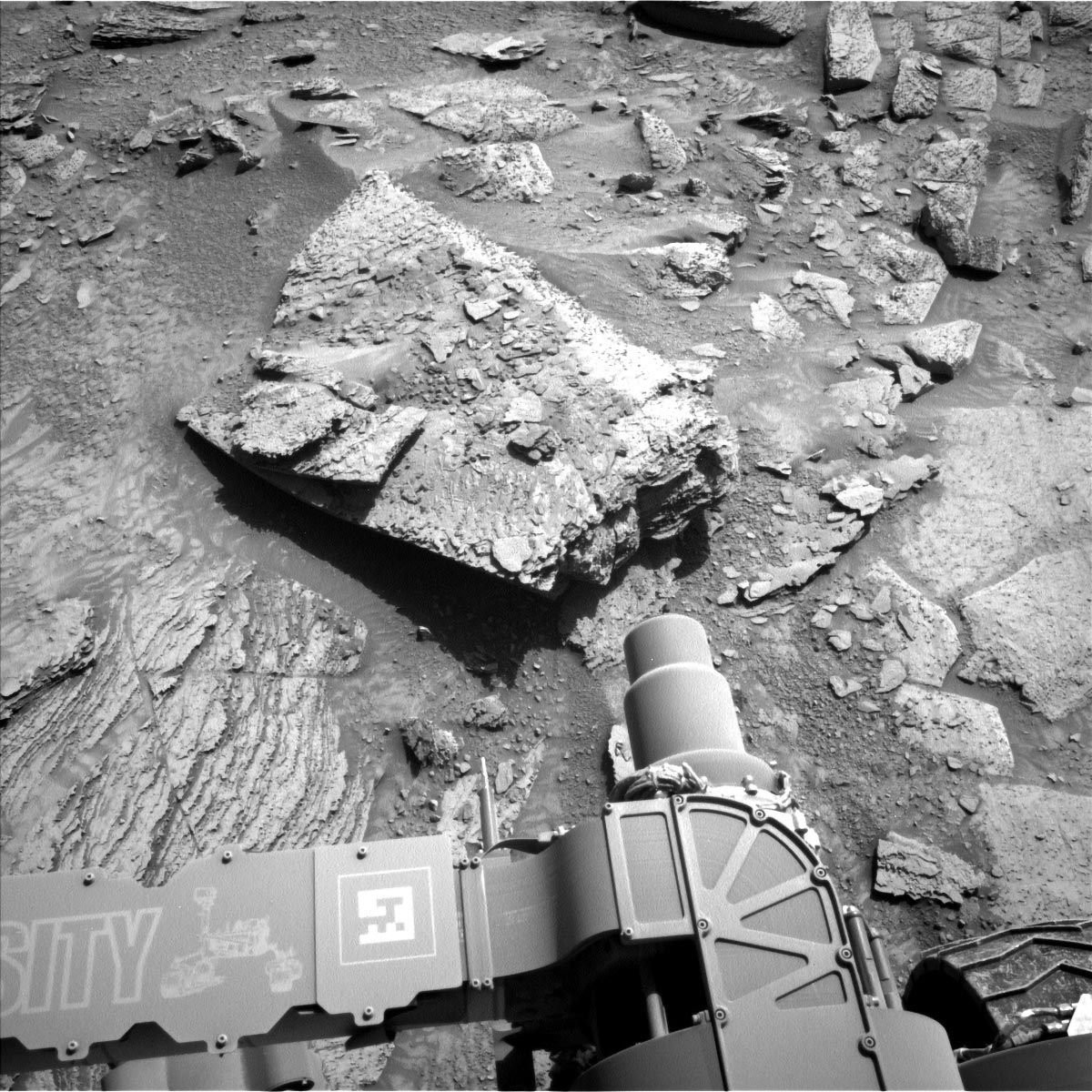
    This image was taken by Left Navigation Camera onboard NASA’s Mars rover Curiosity on Sol 3897 (2023-07-24 07:34:25 UTC). Credit: NASA/JPL-Caltech

    NASA’s Mars Curiosity Rover continues its exploration of the Jau crater cluster. The rover’s instruments are actively studying a rock named ‘Mamore,’ while also imaging two nearby craters and a distant rock, ‘Triunfo.’ The Environmental Monitoring Station (ENV) is assessing the Martian atmosphere for dust levels and signs of dust devils, before the rover resumes its journey towards more potential discoveries.

    The Sol 3897 single sol plan takes us further into our road trip through the Jau crater cluster. Like any road trip, we’re taking frequent stops to take in the sights, and at this spot, Curiosity gets to stretch its arm with a touch and go. It reminds me of being on family road trips with my geologist father – we were always pulling over to look at cool rocks!

    The image above shows one of today’s cool rocks. APXS and MAHLI are both investigating the bumpy, ridged surface on the side nearest the rover, a target named ‘Mamore,’ backed up with Mastcam images. ChemCam is also looking at this surface, particularly one of the ridges called ‘Jacunda.’ Slightly further afield, Mastcam is also looking at two of the craters in the cluster and a distant rock ‘Triunfo.’ ChemCam is also taking a long-distance mosaic of the Gediz Vallis ridge.

    ENV is also taking the chance to have a look around. We’re looking back over our metaphorical shoulder at a sand sheet for dust devils, and up towards the sun to see how much dust is in the atmosphere. After our brief and productive stop, it’s time for us to hit the road again, knowing that there are always more exciting sights ahead.

    Never miss a breakthrough: Join the SciTechDaily newsletter.
    Follow us on Google and Google News.

    Curiosity Rover JPL Mars NASA York University
    Share. Facebook Twitter Pinterest LinkedIn Email Reddit

    Related Articles

    This Martian “Stone Web” Could Rewrite Mars’ Geological History

    What Left This Long, Winding Trail Across Mars? NASA’s Orbiter Has the Answer

    Mars Kept a Secret for 3.5 Billion Years – NASA’s Curiosity Rover Finally Dug It Up

    Life on Mars? NASA’s Curiosity Rover Finds Prebiotic Clues in a 3.7-Billion-Year-Old Rock

    NASA’s Curiosity Rover Uncovers Mars’ Mysterious Spiderweb Rocks and Hidden Crystals

    Curiosity’s Wild Ride: How the Sky Crane Changed the Way NASA Explores Mars

    “Strange and Unexpected” – NASA’s Curiosity Rover Stumbles Upon Yellow Crystals on Mars

    NASA’s Curiosity Mars Rover Faces a Particularly Prickly Power Puzzle

    Dusty Dilemmas: NASA’s Curiosity Mars Rover Navigates Rocky Riddles

    Leave A Reply Cancel Reply

    • Facebook
    • Twitter
    • Pinterest
    • YouTube

    Don't Miss a Discovery

    Subscribe for the Latest in Science & Tech!

    Trending News

    Monster Storms on Jupiter Unleash Lightning Beyond Anything on Earth

    Scientists Create “Liquid Gears” That Spin Without Touching

    The Simple Habit That Could Help Prevent Cancer

    Millions Take These IBS Drugs, But a New Study Finds Serious Risks

    Scientists Unlock Hidden Secrets of 2,300-Year-Old Mummies Using Cutting-Edge CT Scanner

    Bread Might Be Making You Gain Weight Even Without Eating More Calories

    Scientists Discover Massive Magma Reservoir Beneath Tuscany

    Europe’s Most Active Volcano Just Got Stranger – Here’s Why Scientists Are Rethinking It

    Follow SciTechDaily
    • Facebook
    • Twitter
    • YouTube
    • Pinterest
    • Newsletter
    • RSS
    SciTech News
    • Biology News
    • Chemistry News
    • Earth News
    • Health News
    • Physics News
    • Science News
    • Space News
    • Technology News
    Recent Posts
    • Scientists Were Wrong About This Strange “Rule-Breaking” Particle
    • Webb Space Telescope Uncovers Unexpected Ice Clouds on a Jupiter-Like World
    • 289-Million-Year-Old Reptile Mummy Reveals Origin of Human Breathing System
    • New Brain Discovery Challenges Long-Held Theory of Teenage Brain Development
    • Sharks Are Overheating as Warming Oceans Push Them to the Edge
    Copyright © 1998 - 2026 SciTechDaily. All Rights Reserved.
    • Science News
    • About
    • Contact
    • Editorial Board
    • Privacy Policy
    • Terms of Use

    Type above and press Enter to search. Press Esc to cancel.