
Close Menu
    Facebook X (Twitter) Instagram
    SciTechDaily
    • Biology
    • Chemistry
    • Earth
    • Health
    • Physics
    • Science
    • Space
    • Technology
    Facebook X (Twitter) Pinterest YouTube RSS
    SciTechDaily
    Home»Space»NASA’s Gigantic Crawler on the Move As Rollout of Mega Moon Rocket Inches Closer
    Space

    NASA’s Gigantic Crawler on the Move As Rollout of Mega Moon Rocket Inches Closer

    By NASAMarch 12, 20229 Comments4 Mins Read
    Facebook Twitter Pinterest Telegram LinkedIn WhatsApp Email Reddit
    Share
    Facebook Twitter LinkedIn Pinterest Telegram Email Reddit
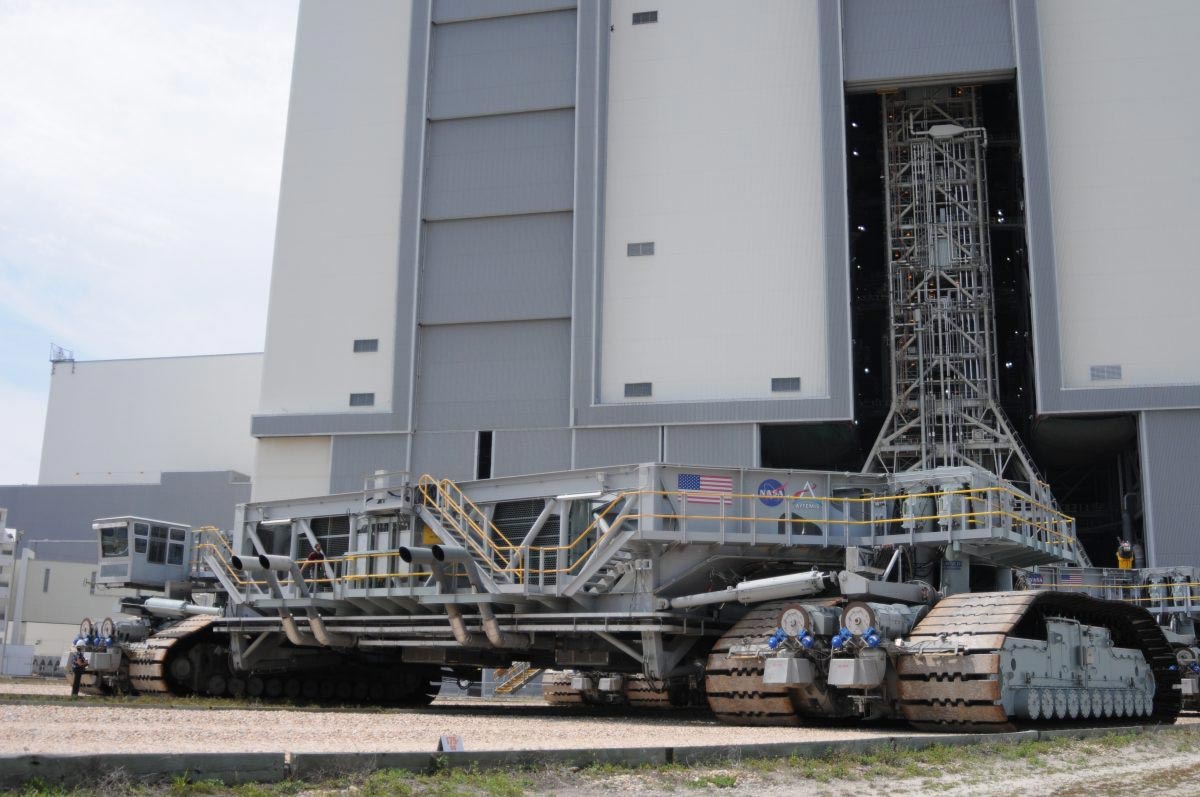
    NASA Crawler Transporter-2 Artemis I
    Engineers and technicians at NASA’s Kennedy Space Center in Florida drove Crawler Transporter-2 on March 11, 2022 to the doors of the Vehicle Assembly Building (VAB). Soon, it will go inside the VAB where it will carry the Artemis I Moon rocket to launch pad 39B. Credit: NASA/Chad Siwik

    Yesterday, engineers and technicians at NASA’s Kennedy Space Center in Florida drove Crawler Transporter-2, which will carry NASA’s Moon rocket to the launch pad, to the doors of the Vehicle Assembly Building (VAB). Soon, the 6.6-million-pound crawler will go inside the VAB and slide under the Space Launch System rocket and Orion spacecraft placed on the Mobile Launcher. Technicians will finish up preparations to transport the rocket traveling at a top speed of 1 mph (45 cm/s) to Launch Complex 39B for a wet dress rehearsal test ahead of the Artemis I launch.

    This week, the Kennedy team also completed painting the NASA worm logo on the Space Launch System solid rocket boosters. While painters added parts of the iconic logo before the segments were stacked, they had to wait until the boosters were fully assembled to finish the job.

    In addition, the team has continued to retract the 20 platforms that surround the Space Launch System rocket and Orion spacecraft ahead of rollout on March 17 for the wet dress rehearsal test. The wet dress rehearsal will be the final major test for the Artemis I mission and will ensure the rocket, spacecraft, ground equipment and launch team are “go” for launch.

    Coverage, Activities Set for First Rollout of NASA’s Mega Moon Rocket

    NASA will hold a media teleconference on Monday, March 14 to discuss the upcoming debut of the agency’s Mega Moon rocket and integrated spacecraft for the uncrewed Artemis I lunar mission.
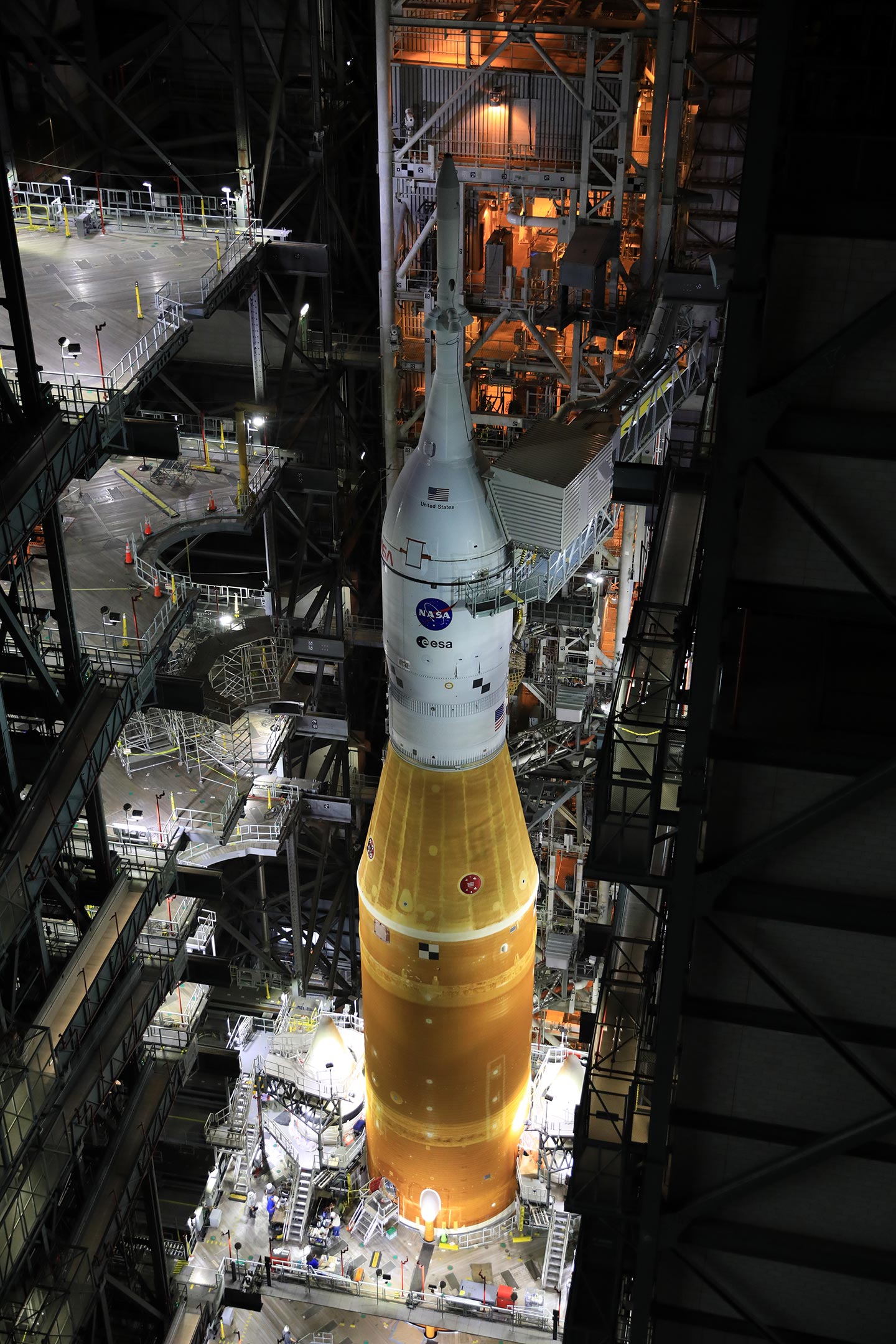
    VAB Artemis I Space Launch System Rocket and Orion Spacecraft
    Inside the Vehicle Assembly Building at NASA’s Kennedy Space Center in Florida, work platforms are being retracted from around the Artemis I Space Launch System rocket and Orion spacecraft in preparation to roll out for testing. Credit: NASA

    Roll out of the integrated Space Launch System rocket and Orion spacecraft to Launch Pad 39B at NASA’s Kennedy Space Center in Florida is slated for Thursday, March 17.

    The media call will begin at 5:30 p.m. EDT after completion of a test readiness review, which will determine if the agency is ready to move forward with mission activities. The call will air live on the agency’s website.

    Teleconference participants include:

    • Tom Whitmeyer, associate administrator for exploration systems development, NASA Headquarters in Washington
    • Mike Sarafin, Artemis mission manager, NASA Headquarters
    • Charlie Blackwell-Thompson, Artemis launch director, NASA Exploration Ground Systems program, Kennedy
    • John Honeycutt, manager, Space Launch System program, Marshall Space Flight Center in Huntsville, Alabama
    • Howard Hu, manager, Orion program, Johnson Space Center in Houston

    Live coverage for rollout begins at 5 p.m. EDT on Thursday, March 17 and will include live remarks from NASA Administrator Bill Nelson and other guests. Coverage will air on NASA Television, the NASA app, and the agency’s website. 

    At the pad, NASA will conduct a final prelaunch test known as a wet dress rehearsal, which includes loading the SLS propellant tanks and conducting a launch countdown.

    The rollout involves a 4-mile journey between the Vehicle Assembly Building and the launch pad, expected to take between six and 12 hours. Live, static camera views of the debut and arrival at the pad will be available starting at 4 p.m. EDT on the Kennedy Newsroom YouTube channel.

    Through Artemis missions, NASA will land the first woman and the first person of color on the Moon, paving the way for a long-term lunar presence and serving as a stepping stone on the way to Mars.

    Never miss a breakthrough: Join the SciTechDaily newsletter.
    Follow us on Google and Google News.

    ARTEMIS Mission Kennedy Space Center NASA Popular
    Share. Facebook Twitter Pinterest LinkedIn Email Reddit

    Related Articles

    NASA Seeks New Astronaut Lunar Landers for Future Artemis Moon Missions

    NASA Artemis I Launch Countdown Commences, Team Assessing Lightning Strikes at Launch Pad

    Artemis I Launching to the Moon: Official NASA Launch Trailer

    NASA Identifies Lunar Landing Sites for Next Americans on Moon

    NASA Artemis I Moon Rocket Ready To Roll Out To Launch Pad

    NASA’s Lunar IceCube – Moon-Observing CubeSat Ready for Artemis Launch

    NASA Completes Artemis I Moon Rocket Test, Moves Forward Toward Launch

    NASA Artemis I Moon Rocket Test: SLS Fully Fueled for First Time Despite Leak

    NASA Priority Artemis Science on Moon To Investigate Mysterious Gruithuisen Domes

    9 Comments

    1. Sekar on March 12, 2022 12:15 pm

      Very Interesting.

      Some Thoughts.
      1. Inclusion of a fleet of Ingenuity helicopters.
      2. Making the Crawler into a speedster
      3. Exploring the option of launch of future missions from Space.

      Views expressed are personal and not binding on anyone.

      Reply
      • Jay V on March 13, 2022 11:28 am

        Seriously, helicopters on the moon? You might as well add parachutes and windmills!

        Reply
    2. Merlin on March 12, 2022 12:50 pm

      Cancel SLS.

      It is ludicrously expensive and already obsolete.

      Reply
    3. jim moss on March 12, 2022 1:27 pm

      Saw the first landing when I was 16. This one will be the best.

      Reply
    4. Jim Hall on March 13, 2022 1:14 am

      I saw the first landing when I was 22 on a summer job parking cars at the Carriage House Condominiums in Miami Beach. We watched on a very small, portable TV set in the garage office. After that came Woodstock in August. Wow, what a summer!

      Reply
    5. Paul G on March 13, 2022 2:39 pm

      Just another waste of money poisoning the atmosphere with its vapor trails and polluting Space with more junk! Fix Earth first.

      Reply
    6. Dan on March 13, 2022 8:18 pm

      I saw Apollo 15 launch live. Nothing has compared with that. Would love to see SLS launch.

      Reply
    7. Stephen on March 14, 2022 2:53 pm

      Only $4billion to shoot it off. And for what, exactly? What did Apollo do again? Let Musk build his big rocket thing or Bezos or whomever. They will do it better and much cheaper.

      Reply
    8. kamir bouchareb st on March 15, 2022 12:10 am

      goooooooooooood

      Reply
    Leave A Reply Cancel Reply

    • Facebook
    • Twitter
    • Pinterest
    • YouTube

    Don't Miss a Discovery

    Subscribe for the Latest in Science & Tech!

    Trending News

    Scientists Discover Cheap, Natural Remedy for High Blood Pressure

    Earth’s Upper Atmosphere Is Cooling Fast and Scientists Finally Know Why

    32,000 Olympic Pools of Magma Nearly Erupted Beneath Atlantic Island

    Exercise Changes the Heart in a Way Researchers Never Expected

    Too Much Sleep May Age Your Body Faster, New Study Warns

    Scientists Uncover Promising New Strategy To Stop Parkinson’s in Its Tracks

    Experts Reveal the Surprising Cancer Link Behind a Common Vitamin

    This Strange “Golden Orb” Found 2 Miles Deep Stumped Scientists for Years

    Follow SciTechDaily
    • Facebook
    • Twitter
    • YouTube
    • Pinterest
    • Newsletter
    • RSS
    SciTech News
    • Biology News
    • Chemistry News
    • Earth News
    • Health News
    • Physics News
    • Science News
    • Space News
    • Technology News
    Recent Posts
    • Canada’s Billion-Year-Old Rocks Could Hold the Future of Clean Energy
    • Climate Change Is Quietly Choking Rivers Across the Planet
    • Scientists Finally Solve the Mystery of “Clockwork” Earthquakes
    • Your Immune System Remembers Obesity for up to a Decade, Study Finds
    • Breakthrough Parkinson’s Drug Targets Disease at Its Genetic Roots
    Copyright © 1998 - 2026 SciTechDaily. All Rights Reserved.
    • Science News
    • About
    • Contact
    • Editorial Board
    • Privacy Policy
    • Terms of Use

    Type above and press Enter to search. Press Esc to cancel.