
Close Menu
    Facebook X (Twitter) Instagram
    SciTechDaily
    • Biology
    • Chemistry
    • Earth
    • Health
    • Physics
    • Science
    • Space
    • Technology
    Facebook X (Twitter) Pinterest YouTube RSS
    SciTechDaily
    Home»Space»NASA TROPICS Constellation: Rocket Lab Successfully Launches Final CubeSat Duo
    Space

    NASA TROPICS Constellation: Rocket Lab Successfully Launches Final CubeSat Duo

    By NASAMay 27, 2023No Comments3 Mins Read
    Facebook Twitter Pinterest Telegram LinkedIn WhatsApp Email Reddit
    Share
    Facebook Twitter LinkedIn Pinterest Telegram Email Reddit
    Rocket Lab TROPICS CubeSats
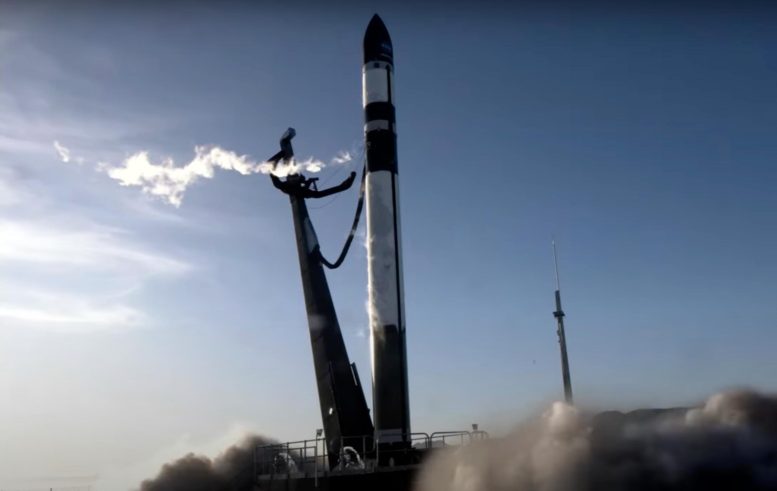
    Rocket Lab’s Electron rocket lifts off from Launch Complex 1 at Mahia, New Zealand at 11:46 a.m, May 25, 2023, carrying two TROPICS CubeSats for NASA. Credit: Rocket Lab

    NASA successfully launched the final pair of satellites for its TROPICS mission from New Zealand. The four CubeSats in the mission will provide hourly updates on tropical cyclones, improving upon the current six-hour intervals, to enhance the understanding and forecasting of hurricanes and typhoons.

    The final pair of NASA’s TROPICS (Time-Resolved Observations of Precipitation structure and storm Intensity with a Constellation of Smallsats) are in orbit after successfully launching at 11:46 p.m. EDT, May 25, (3:46 p.m. NZST Friday, May 26th), completing the constellation.

    TROPICS launched aboard an Electron rocket from Rocket Lab’s Launch Complex 1 Pad B in Mahia, New Zealand. The smallsats were deployed at 12:20 am EDT on May 26. Signal for the first CubeSat was acquired at 1:16 a.m. EDT and at 2:19 a.m. for the second.

    Through this mission, NASA will study tropical cyclones and aims to improve forecasting for hurricanes and typhoons.

    “As a lifelong Floridian, I know firsthand how critical it is for millions of Americans to have timely and accurate forecasts for hurricanes. More intense rainfall and increased coastal flooding are devastating livelihoods and taking lives, demonstrating the importance of NASA’s cutting-edge science to help answer questions that nobody else can,” said NASA Administrator Bill Nelson. “With missions like TROPICS, NASA continues to lead the way in getting satellite data more quickly to our partners like the National Hurricane Center and Joint Typhoon Warning Center, providing vital forecasts that help our communities before, during, and after landfall.”
    NASA TROPICS Satellite
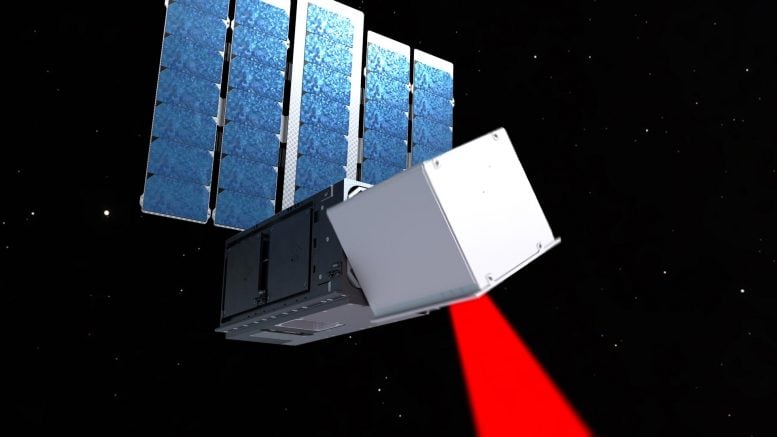
    The NASA Time-Resolved Observations of Precipitation structure and storm Intensity with a Constellation of Smallsats (TROPICS) mission is a constellation of state-of-the-science observing platforms that will measure temperature and humidity soundings and precipitation with spatial resolution comparable to current operational passive microwave sounders but with unprecedented temporal resolution (median revisit time of 50 minutes). Credit: NASA

    This launch follows a previous successful TROPICS launch with two other small satellites earlier this month.

    “As we move into hurricane season for 2023, TROPICS will be in position to provide unprecedented detail on these storms, helping us better understand how they form, intensify, and move across the ocean,” said Karen St. Germain, lead of NASA’s Earth Science Division. “We rely on targeted, innovative missions like this to help create a robust Earth science portfolio.”

    TROPICS is a constellation of four identical CubeSats designed to observe tropical cyclones in a unique, inclined low Earth orbit over Earth’s tropics – an orbit that allows them to travel over any given storm about once an hour. Current weather tracking satellites have a timing of about once every six hours.

    “We are very excited to have the four satellites launched. We expect the new observing capabilities from TROPICS will improve our understanding of tropical cyclones and our ability to predict their track and intensity,” said William Blackwell, the mission’s principal investigator at MIT’s Lincoln Laboratory in Lexington, Massachusetts.

    In addition to Blackwell, the TROPICS team includes researchers from NASA, the National Oceanic and Atmospheric Administration, and several universities and commercial partners. NASA’s Launch Services Program, based at the agency’s Kennedy Space Center in Florida, is managing the launch service.

    Never miss a breakthrough: Join the SciTechDaily newsletter.
    Follow us on Google and Google News.

    NASA Rocket Rocket Lab
    Share. Facebook Twitter Pinterest LinkedIn Email Reddit

    Related Articles

    Liftoff for PREFIRE and Ice! Rocket Lab Launches Second Polar Heat CubeSat

    NASA PREFIRE Postponed: Arctic Heat Mission Launch Delayed Due to Severe Storms

    Liftoff! NASA’s Next-Generation Solar Sail Boom Technology Launched

    Storm Chasers of the Future: NASA, Rocket Lab Launch First Pair of TROPICS CubeSats

    NASA Readies for Future Artemis Moon Missions With SLS Rocket Engine Test Series

    Innovative Propulsion System Gets Ready to Study Moon Orbit for NASA’s Artemis Program

    FORTIS Rocket Ready for Launch, Set to Study Extra-Galactic Dust

    Unmanned Orbital Sciences Corp Spacecraft Explodes During Launch

    NASA Confiscates Stolen Rocket Engine

    Leave A Reply Cancel Reply

    • Facebook
    • Twitter
    • Pinterest
    • YouTube

    Don't Miss a Discovery

    Subscribe for the Latest in Science & Tech!

    Trending News

    First-of-Its-Kind Discovery: Homer’s Iliad Found Embedded in a 1,600-Year-Old Egyptian Mummy

    Beyond Inflammation: Scientists Uncover New Cause of Persistent Rheumatoid Arthritis

    A Simple Molecule Could Unlock Safer, Easier Weight Loss

    Scientists Just Built a Quantum Battery That Charges Almost Instantly

    Researchers Unveil Groundbreaking Sustainable Solution to Vitamin B12 Deficiency

    Millions of People Have Osteopenia Without Realizing It – Here’s What You Need To Know

    Researchers Discover Boosting a Single Protein Helps the Brain Fight Alzheimer’s

    World-First Study Reveals Human Hearts Can Regenerate After a Heart Attack

    Follow SciTechDaily
    • Facebook
    • Twitter
    • YouTube
    • Pinterest
    • Newsletter
    • RSS
    SciTech News
    • Biology News
    • Chemistry News
    • Earth News
    • Health News
    • Physics News
    • Science News
    • Space News
    • Technology News
    Recent Posts
    • New Research Challenges Long-Held Beliefs About How the Brain Makes Decisions
    • Breakthrough Technology Reveals New Treatment Targets for Cancer
    • Scientists Discover New Way To Make Drug-Resistant Cancer Treatable Again
    • This Simple Exercise Trick Builds Muscle With Less Effort, Study Finds
    • Middle Age Is Becoming a Breaking Point in America, Study Reveals
    Copyright © 1998 - 2026 SciTechDaily. All Rights Reserved.
    • Science News
    • About
    • Contact
    • Editorial Board
    • Privacy Policy
    • Terms of Use

    Type above and press Enter to search. Press Esc to cancel.