
Close Menu
    Facebook X (Twitter) Instagram
    SciTechDaily
    • Biology
    • Chemistry
    • Earth
    • Health
    • Physics
    • Science
    • Space
    • Technology
    Facebook X (Twitter) Pinterest YouTube RSS
    SciTechDaily
    Home»Space»NASA Unveils Prototype Telescope for First Space-Based Gravitational Wave Detector
    Space

    NASA Unveils Prototype Telescope for First Space-Based Gravitational Wave Detector

    By Francis Reddy, NASA’s Goddard Space Flight CenterOctober 28, 2024No Comments4 Mins Read
    Facebook Twitter Pinterest Telegram LinkedIn WhatsApp Email Reddit
    Share
    Facebook Twitter LinkedIn Pinterest Telegram Email Reddit
    LISA Telescope Prototype in NASA Goddard Clean Room
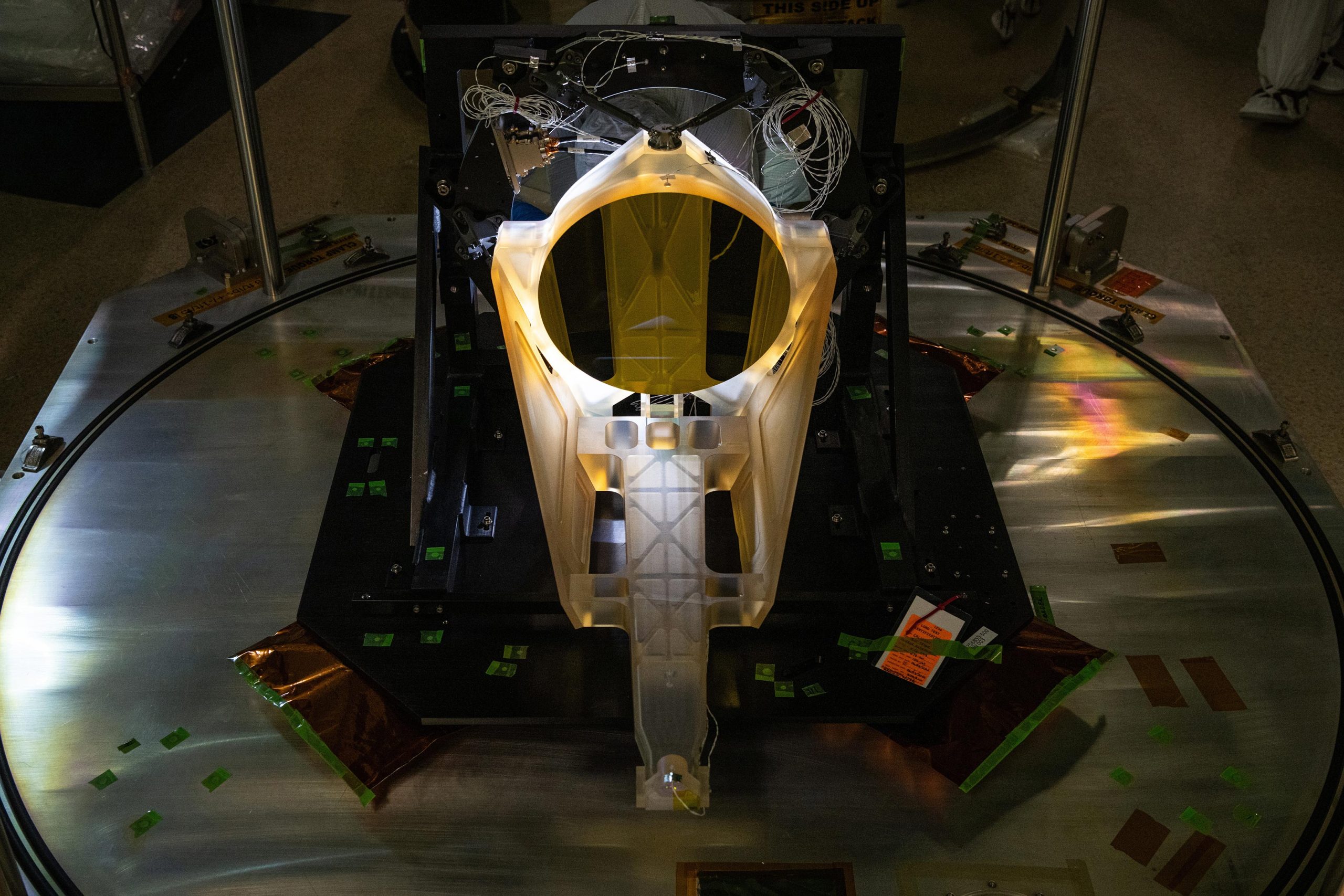
    A close view of the full-scale prototype LISA telescope in a clean room at NASA Goddard. The telescope’s translucent, amber-colored material glows as an engineer behind it inspects the structure with a flashlight. A gold-coated mirror, near center, reflects a magnified image of part of the telescope. Credit: NASA/Dennis Henry

    The LISA mission, a joint venture between NASA and ESA, will explore gravitational waves via a space-based array of laser-equipped spacecraft. A prototype telescope has been revealed, signaling a significant step toward the mission’s anticipated 2030s launch.

    NASA has unveiled a full-scale prototype for six telescopes, marking a significant step toward detecting gravitational waves from space within the next decade. These waves, or ripples in space-time, are produced by cosmic events like merging black holes.
    Engineering Development Unit Telescope for LISA
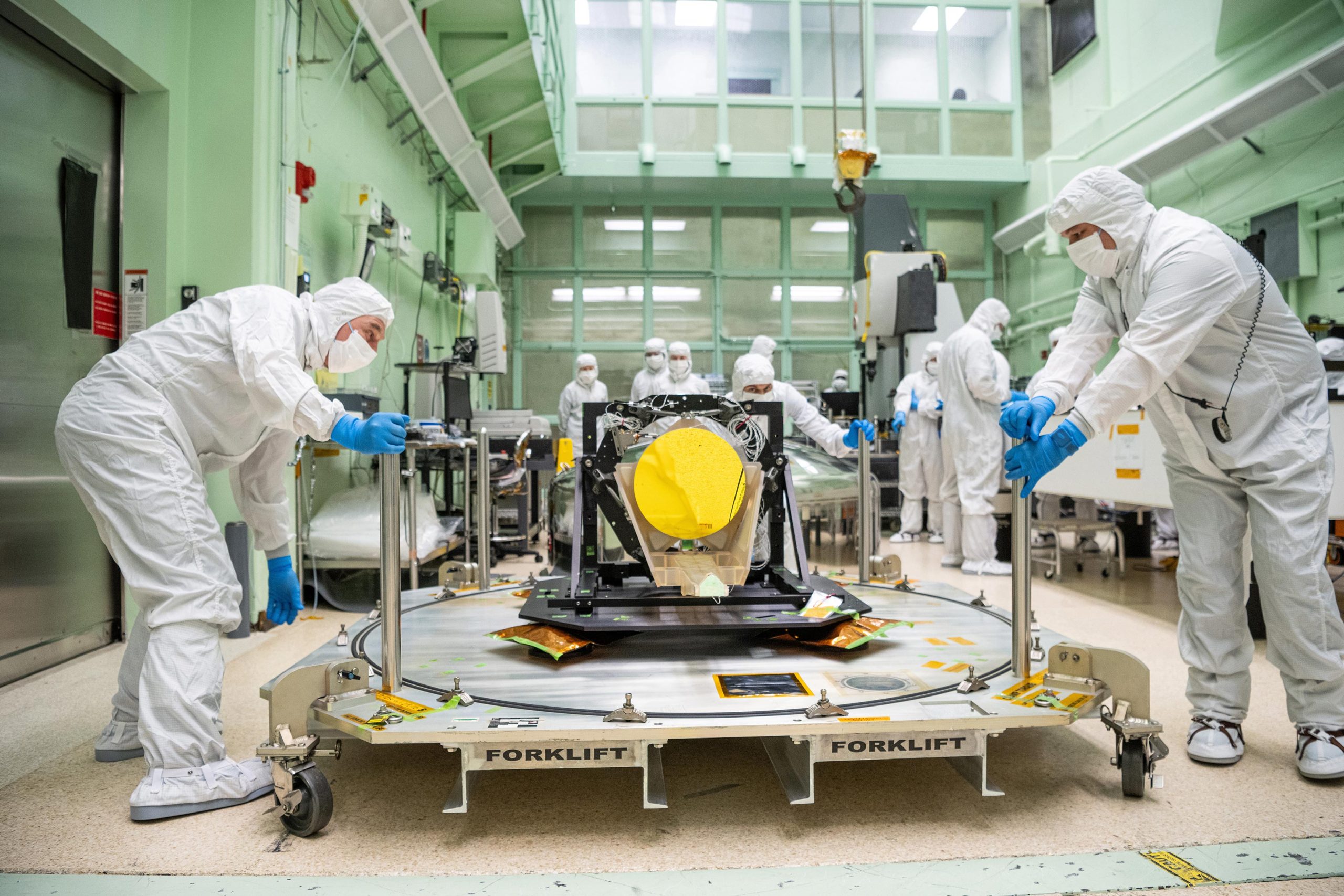
    On May 20, the full-scale Engineering Development Unit Telescope for the LISA (Laser Interferometer Space Antenna) mission, still in its shipping frame, was moved within a clean room at NASA’s Goddard Space Flight Center in Greenbelt, Maryland. Credit: NASA/Dennis Henry

    This project, known as the Laser Interferometer Space Antenna (LISA), is a collaboration led by the European Space Agency (ESA) with NASA’s partnership. LISA will use lasers to measure extremely precise distances—down to picometers, or trillionths of a meter—between three spacecraft arranged in a massive triangular formation, with each side spanning about 1.6 million miles (2.5 million kilometers).

    The LISA (Laser Interferometer Space Antenna) mission is led by ESA (European Space Agency) in partnership with NASA to detect gravitational waves by using lasers to measure precise distances — down to picometers, or trillionths of a meter — between a trio of spacecraft distributed in a vast configuration larger than the Sun. Each side of the triangular array will measure nearly 1.6 million miles, or 2.5 million kilometers.

    LISA Telescope Prototype Undergoes Inspection
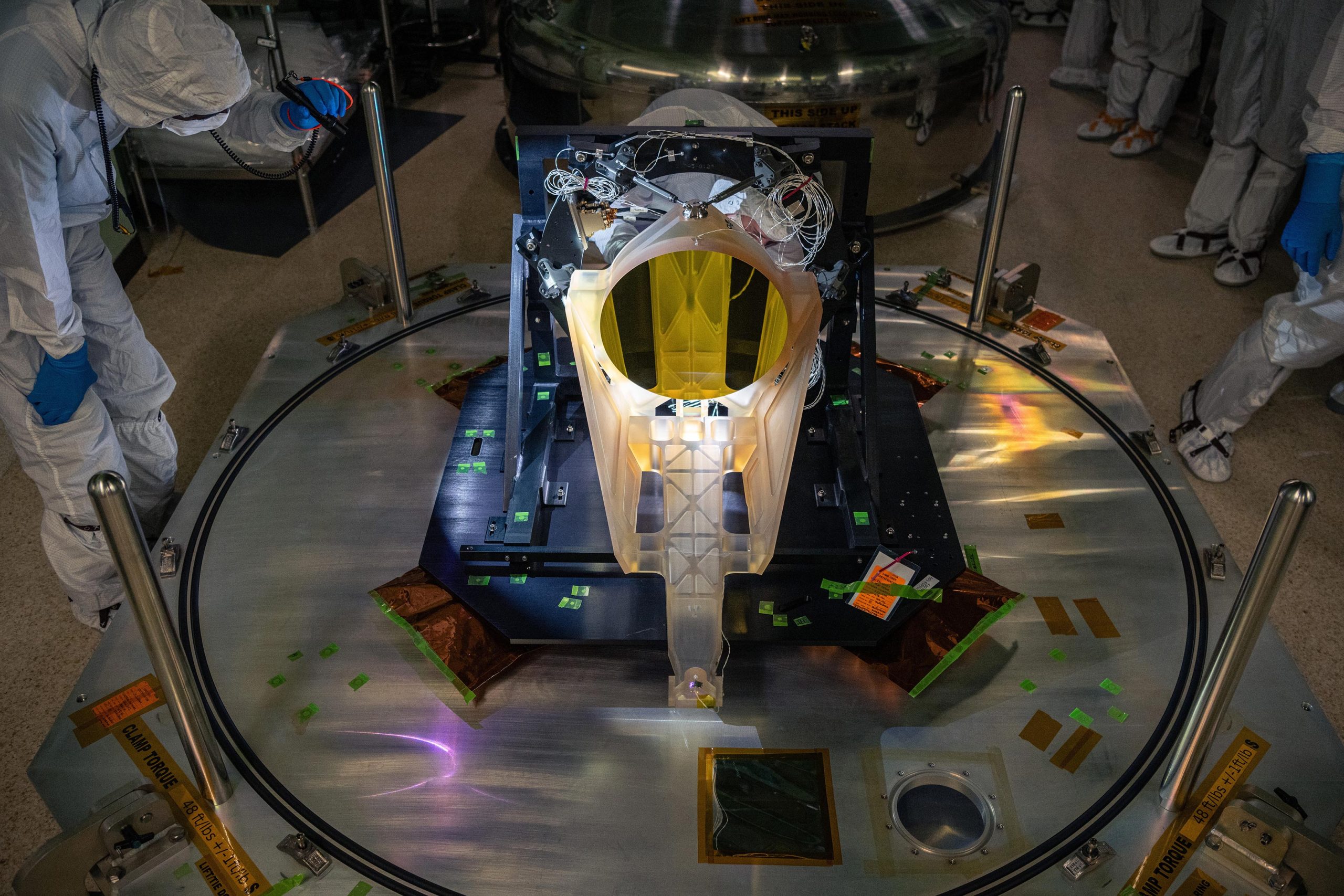
    The prototype LISA telescope undergoes post-delivery inspection in a darkened NASA Goddard clean room on May 20. The entire telescope is made from an amber-colored glass-ceramic that resists changes in shape over a wide temperature range, and the mirror’s surface is coated in gold. Credit: NASA/Dennis Henry

    “Twin telescopes aboard each spacecraft will both transmit and receive infrared laser beams to track their companions, and NASA is supplying all six of them to the LISA mission,” said Ryan DeRosa, a researcher at NASA’s Goddard Space Flight Center in Greenbelt, Maryland. “The prototype, called the Engineering Development Unit Telescope, will guide us as we work toward building the flight hardware.”

    The Engineering Development Unit Telescope, which was manufactured and assembled by L3Harris Technologies in Rochester, New York, arrived at Goddard in May. The primary mirror is coated in gold to better reflect the infrared lasers and to reduce heat loss from a surface exposed to cold space since the telescope will operate best when close to room temperature.
    LISA Telescope Prototype Inspection
    On May 20, technicians inspect the prototype LISA telescope in a darkened clean room at NASA Goddard. Illuminated by a flashlight, the telescope’s structure glows. The prototype is made from a translucent, amber-colored, glass-ceramic material called Zerodur, which is often used in high-precision applications because it resists changes in shape over a wide temperature range. The mirror, near center and coated in gold, reflects a magnified image of part of the telescope. Credit: NASA/Dennis Henry

    The prototype is made entirely from an amber-colored glass-ceramic called Zerodur, manufactured by Schott in Mainz, Germany. The material is widely used for telescope mirrors and other applications requiring high precision because its shape changes very little over a wide range of temperatures.

    The LISA mission is slated to launch in the mid-2030s.

    Never miss a breakthrough: Join the SciTechDaily newsletter.
    Follow us on Google and Google News.

    Astronomy Astrophysics Gravitational Waves NASA NASA Goddard Space Flight Center
    Share. Facebook Twitter Pinterest LinkedIn Email Reddit

    Related Articles

    How LISA – A Gravitational Wave Observatory in Space – Will Transform Our Cosmic Understanding

    NASA’s Cosmic Vision: Simulating Our Galaxy Through Gravitational Waves

    Dozens of ‘Comet Crumbs’ Detected by LISA Pathfinder [Video]

    NASA’s Interstellar Boundary Explorer Provides New Details on Solar System Boundary

    GALEX Data Reveals NGC 6872 as the Largest-Known Spiral Galaxy

    Astronomers Discover a Super-Jupiter Around a Massive Star

    NASA Discovers a Surprising Trend in Galaxy Evolution

    Satellites Monitor the Colliding Winds of O-Type Stars

    Pair of Eclipsing White Dwarfs Produce Gravitational Waves

    Leave A Reply Cancel Reply

    • Facebook
    • Twitter
    • Pinterest
    • YouTube

    Don't Miss a Discovery

    Subscribe for the Latest in Science & Tech!

    Trending News

    AI Could Detect Early Signs of Alzheimer’s in Under a Minute – Far Before Traditional Tests

    What if Dark Matter Has Two Forms? Bold New Hypothesis Could Explain a Cosmic Mystery

    This Metal Melts in Your Hand – and Scientists Just Discovered Something Strange

    Beef vs. Chicken: Surprising Results From New Prediabetes Study

    Alzheimer’s Breakthrough: Scientists Discover Key Protein May Prevent Toxic Protein Clumps in the Brain

    Quantum Reality Gets Stranger: Physicists Put a Lump of Metal in Two Places at Once

    Scientists May Have Found the Key to Jupiter and Saturn’s Moon Mystery

    Scientists Uncover Brain Changes That Link Pain to Depression

    Follow SciTechDaily
    • Facebook
    • Twitter
    • YouTube
    • Pinterest
    • Newsletter
    • RSS
    SciTech News
    • Biology News
    • Chemistry News
    • Earth News
    • Health News
    • Physics News
    • Science News
    • Space News
    • Technology News
    Recent Posts
    • Simple and Cheap Blood Test Could Detect Cancer and Other Diseases Before Symptoms Appear
    • Century-Old Cleaning Chemical Linked to 500% Increased Risk of Parkinson’s Disease
    • What if Your Memories Never Happened? Physicists Take a New Look at the Boltzmann Brain Paradox
    • Students Found an Ancient Star That Shouldn’t Be in the Milky Way
    • Astronomers Solve 50-Year Mystery and Reveal Hidden Culprit Behind Strange X-Ray Emissions
    Copyright © 1998 - 2026 SciTechDaily. All Rights Reserved.
    • Science News
    • About
    • Contact
    • Editorial Board
    • Privacy Policy
    • Terms of Use

    Type above and press Enter to search. Press Esc to cancel.