
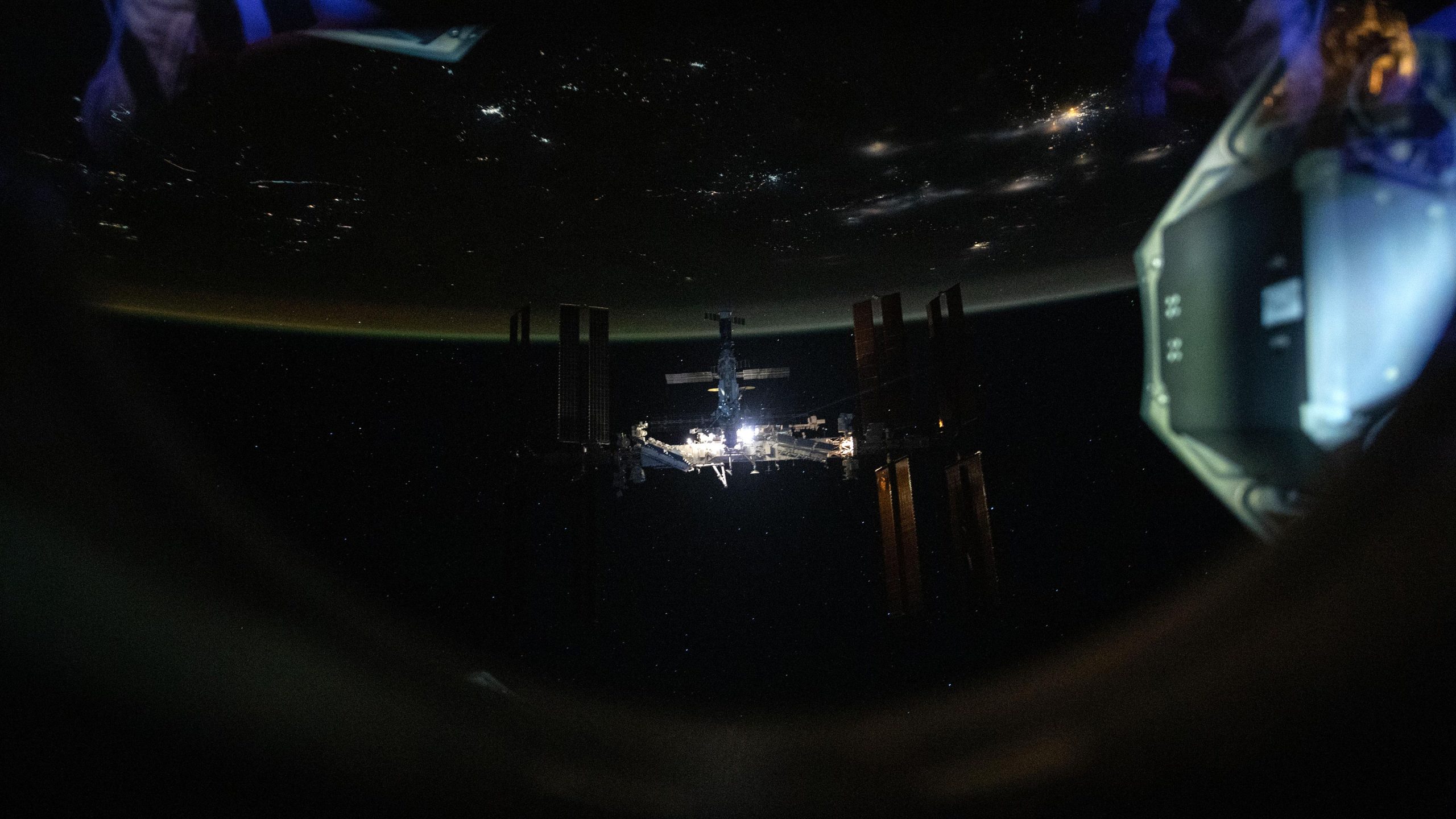
NASA is working on transitioning ISS operations to commercial services by 2030. This includes collaborating with U.S. industry to develop commercial space stations, ensuring that new capabilities meet the needs of the U.S. and its partners.
The International Space Station is a unique laboratory that is returning enormous scientific, educational, and technological developments to benefit people on Earth and is enabling our ability to travel into deep space. The Biden-Harris Administration’s commitment to extend space station operations until 2030 will enable the United States to continue to reap these benefits for the next decade while U.S. industry develops commercial destinations and markets for a thriving space economy.
Strategic Transition Planning
As NASA looks forward to a decade of results from research and technology development aboard the International Space Station, the agency is taking steps to ensure a successful transition of operations to commercial services. In response to Congressional direction, NASA has now provided an updated International Space Station Transition Report that details the goals for the next decade of station operations leading to a smooth transition to commercial services, the steps being taken to develop both the supply and demand side of the low-Earth orbit commercial economy, and the technical steps and budget required for transition.
“The International Space Station is entering its third and most productive decade as a groundbreaking scientific platform in microgravity,” said Robyn Gatens, director of the International Space Station at NASA Headquarters. “This third decade is one of results, building on our successful global partnership to verify exploration and human research technologies to support deep space exploration, continue to return medical and environmental benefits to humanity, and lay the groundwork for a commercial future in low-Earth orbit. We look forward to maximizing these returns from the space station through 2030 while planning for transition to commercial space destinations that will follow.”
Commercial Sector Development
Today, with U.S. commercial crew and cargo transportation systems online, the station is busier than ever. The ISS National Laboratory, responsible for utilizing 50 percent of NASA’s resources aboard the space station, hosts hundreds of experiments from other government agencies, academia, and commercial users to return benefits to people and industry on the ground. Meanwhile, NASA’s research and development activities aboard are advancing the technologies and procedures that will be necessary to send the first woman and first person of color to the Moon and the first humans to Mars.
The extension of operations to 2030 will continue to return these benefits to the United States and to humanity as a whole while preparing for a successful transition of capabilities to one or more commercially-owned and -operated LEO destinations (CLDs). NASA has entered into a contract for commercial modules to be attached to a space station docking port and awarded space act agreements for design of three free-flying commercial space stations. U.S. industry is developing these commercial destinations to begin operations in the late 2020s for both government and private-sector customers, concurrent with space station operations, to ensure these new capabilities can meet the needs of the United States and its partners.
“The private sector is technically and financially capable of developing and operating commercial low-Earth orbit destinations, with NASA’s assistance. We look forward to sharing our lessons learned and operations experience with the private sector to help them develop safe, reliable, and cost-effective destinations in space,” said Phil McAlister, director of commercial space at NASA Headquarters. “The report we have delivered to Congress describes, in detail, our comprehensive plan for ensuring a smooth transition to commercial destinations after retirement of the International Space Station in 2030.”
Future of Space Exploration and Commercialization
It is NASA’s goal to be one of many customers of these commercial destination providers, purchasing only the goods and services the agency needs. Commercial destinations, along with commercial crew and cargo transportation, will provide the backbone of the low-Earth orbit economy after the International Space Station retires.
The decision to extend operations and NASA’s recent awards to develop commercial space stations together ensure uninterrupted, continuous human presence and capabilities; both are critical facets of NASA’s International Space Station transition plan.
Never miss a breakthrough: Join the SciTechDaily newsletter.
Follow us on Google and Google News.
4 Comments
Did anything of any actual significance come out of the entire ISS operation so far? I can’t think of a single thing. What a colossal waste of money that could have been used for something actually useful, like combatting hunger and providing clean water for countries that don’t have it (including our own draught plagued West). But we don’t care about anyone but ourselves, so screw that. Let’s see if a microscopic creature can survive in space instead! It’s just loads more fun, right?
Meanwhile, I still can’t expect an accurate weather forecast more than a day or so ahead of time. They just change the snow amounts to make it look like they knew all along when they weren’t even close three days earlier. Some days I think hanging a rope outside would give me a more accurate forecast. My electronic clock with barometer combined with an outdoor temperature sensor gives me oddly similar forecasts within 12 hours and that’s about all I can expect from the various weather sites out there anyway save radar of a large storm coming (hard to miss when it’s moving straight East). It cost $30 instead of $300 Billion.
At the end of it’s expected lifetime, they plan to let the space station burn up in the atmosphere, with any remnants coming down in the ocean. Considering the billions of dollars it cost us just to get this material into space, it would be ridiculous to waste it by deliberately letting it be destroyed.
Hopefully this plan will be changed to one where they put the station into a parking orbit so that it’s raw materials can be used at a later date.
There are so many structural members and panels on it that it would be an insane waste of resources to simply destroy it just so we can launch other, almost identical, structural members into space.
Struts, beams, solar panels, module panels – a whole slew of things that could be easily reused and/or repurposed.
If nothing else, park it in orbit around the moon. It could then serve as a great observation platform there.
@HenryE They don’t have the means to change the orbit of the ISS significantly. Even maintaining its current orbit takes regular boosts from spacecrafts docked with it. Also, with upcoming commercial spacecraft like the SpaceX Starship and the Blue Origins New Glenn it will make the current ISS outdated and too costly to maintain over launching newer technology. One Starship alone will have more internal volume than the entire ISS
Seems the plan is to crash it into the sea, quite wasteful, can spacex buy for a nominal sum or are there international cross treaties forbidding the use of the materials after the service life?