
Close Menu
    Facebook X (Twitter) Instagram
    SciTechDaily
    • Biology
    • Chemistry
    • Earth
    • Health
    • Physics
    • Science
    • Space
    • Technology
    Facebook X (Twitter) Pinterest YouTube RSS
    SciTechDaily
    Home»Space»NASA’s Dawn Spacecraft Delivers Sharper Images Ceres
    Space

    NASA’s Dawn Spacecraft Delivers Sharper Images Ceres

    By Elizabeth Landau, Jet Propulsion LaboratoryAugust 25, 20155 Comments2 Mins Read
    Facebook Twitter Pinterest Telegram LinkedIn WhatsApp Email Reddit
    Share
    Facebook Twitter LinkedIn Pinterest Telegram Email Reddit
    Dawn Takes Sharper Images of Ceres
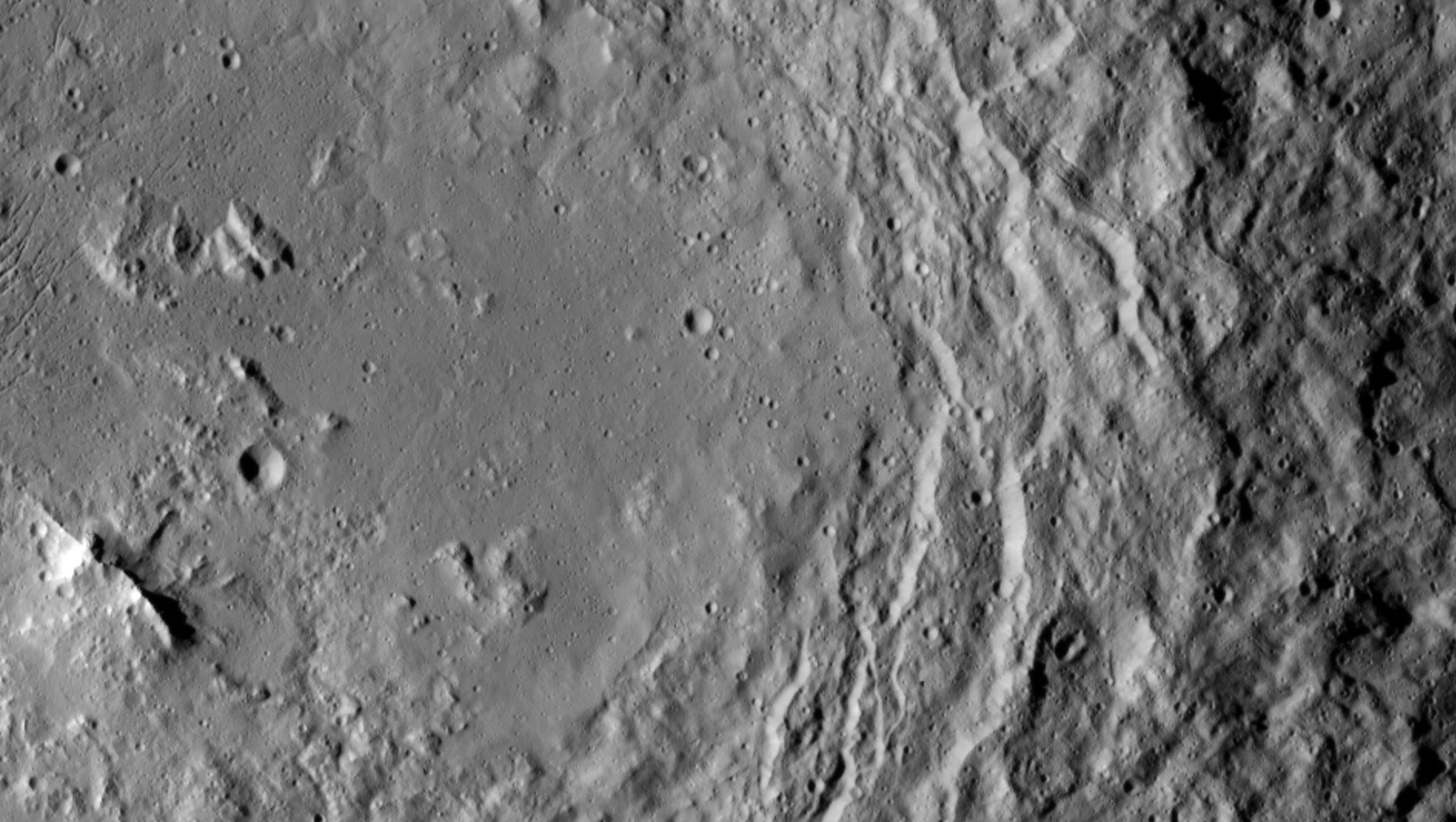
    NASA’s Dawn spacecraft took this image that shows a mountain ridge, near the lower left, that lies in the center of the Urvara crater on Ceres. Credit: NASA/JPL-Caltech/UCLA/MPS/DLR/IDA

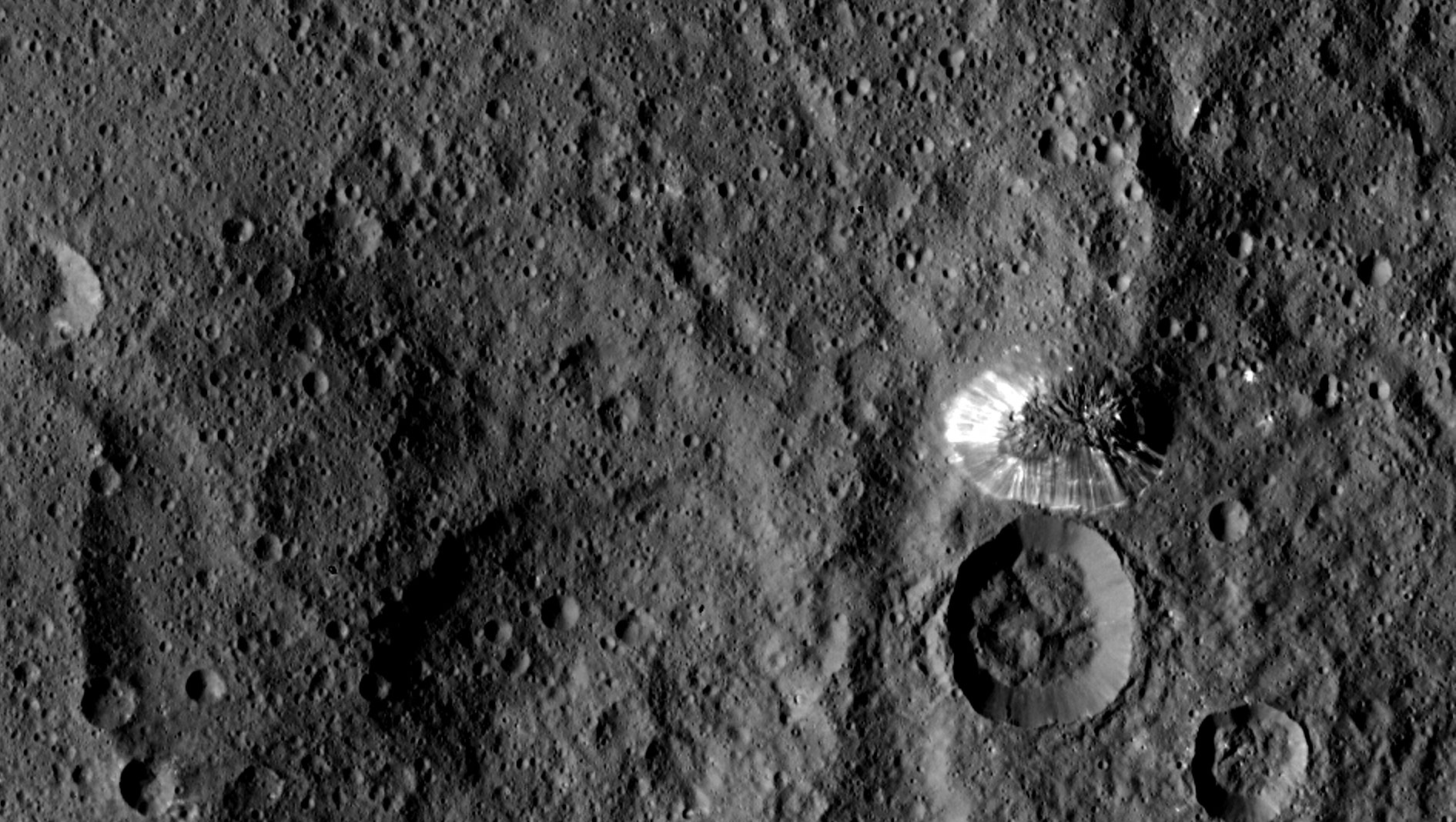
    New images from NASA’s Dawn Spacecraft reveal the small world’s features in unprecedented detail, including Ceres’ tall, conical mountain, crater formation features and narrow, braided fractures.

    “Dawn is performing flawlessly in this new orbit as it conducts its ambitious exploration. The spacecraft’s view is now three times as sharp as in its previous mapping orbit, revealing exciting new details of this intriguing dwarf planet,” said Marc Rayman, Dawn’s chief engineer and mission director, based at NASA’s Jet Propulsion Laboratory, Pasadena, California.

    At its current orbital altitude of 915 miles (1,470 kilometers), Dawn takes 11 days to capture and return images of Ceres’ whole surface. Each 11-day cycle consists of 14 orbits. Over the next two months, the spacecraft will map the entirety of Ceres six times.
    NASA's Dawn Spacecraft Takes New Images of Ceres
    NASA’s Dawn spacecraft took this image that shows a mountain ridge, near the lower left, that lies in the center of the Urvara crater on Ceres. Credit: NASA/JPL-Caltech/UCLA/MPS/DLR/IDA

    The spacecraft is using its framing camera to extensively map the surface, enabling 3-D modeling. Every image from this orbit has a resolution of 450 feet (140 meters) per pixel, and covers less than 1 percent of the surface of Ceres.

    At the same time, Dawn’s visible and infrared mapping spectrometer is collecting data that will give scientists a better understanding of the minerals found on Ceres’ surface.

    Engineers and scientists will also refine their measurements of Ceres’ gravity field, which will help mission planners in designing Dawn’s next orbit — its lowest — as well as the journey to get there. In late October, Dawn will begin spiraling toward this final orbit, which will be at an altitude of 230 miles (375 kilometers).

    Dawn is the first mission to visit a dwarf planet, and the first to orbit two distinct solar system targets. It orbited protoplanet Vesta for 14 months in 2011 and 2012, and arrived at Ceres on March 6, 2015.
    What's the Spot on World Ceres

    Never miss a breakthrough: Join the SciTechDaily newsletter.
    Follow us on Google and Google News.

    Astronomy Ceres Dawn Spacecraft NASA Planetary Science
    Share. Facebook Twitter Pinterest LinkedIn Email Reddit

    Related Articles

    What’s Creating Those Unusual Bright Spots on Ceres? Dawn Heads Toward Low-Altitude Mapping Orbit

    Dawn Spacecraft Reveals New Maps and Insights about Ceres

    New Up-Close View of the Bright Spots on Ceres

    New NASA Video Highlights Dwarf Planet Ceres

    NASA’s Dawn Reveals Topography of Dwarf Planet Ceres

    Ceres Spots Remain a Mystery in Latest Dawn Images

    New Fly Over Video Shows a Unique Perspective of Ceres

    A New View of Ceres, Dawn Shows Finer Detail

    New Images by NASA’s Dawn Spacecraft Show Mysterious Bright Spots on Ceres

    5 Comments

    1. gnappi on August 25, 2015 9:21 am

      Just one thing to say: put Dawn down!!! ;^)

      Reply
    2. katesisco on August 25, 2015 1:38 pm

      Superlatives exhaust themselves.

      Reply
    3. Madanagopal.V.C. on September 10, 2015 10:12 pm

      Hi! The fine gradient of white deposits looks like some salt deposits which were formed from a drying ocean that was there, since the surroundings of smooth landscape vouch for that. Thank You.

      Reply
    4. Mega Brain on September 30, 2015 12:46 pm

      Think maby the white stuff is from what impacted the thing?

      Reply
    5. Spock on December 23, 2015 12:19 am

      these are old photos

      Reply
    Leave A Reply Cancel Reply

    • Facebook
    • Twitter
    • Pinterest
    • YouTube

    Don't Miss a Discovery

    Subscribe for the Latest in Science & Tech!

    Trending News

    Millions Take These IBS Drugs, But a New Study Finds Serious Risks

    Scientists Unlock Hidden Secrets of 2,300-Year-Old Mummies Using Cutting-Edge CT Scanner

    Bread Might Be Making You Gain Weight Even Without Eating More Calories

    Scientists Discover Massive Magma Reservoir Beneath Tuscany

    Europe’s Most Active Volcano Just Got Stranger – Here’s Why Scientists Are Rethinking It

    Alzheimer’s Symptoms May Start Outside the Brain, Study Finds

    Millions Take This Popular Supplement – Scientists Discover a Concerning Link to Heart Failure

    The Universe Is Expanding Too Fast and Scientists Can’t Explain Why

    Follow SciTechDaily
    • Facebook
    • Twitter
    • YouTube
    • Pinterest
    • Newsletter
    • RSS
    SciTech News
    • Biology News
    • Chemistry News
    • Earth News
    • Health News
    • Physics News
    • Science News
    • Space News
    • Technology News
    Recent Posts
    • Simple Blood Test May Predict Alzheimer’s Years Before Brain Scans Show Signs
    • Scientists Say Adding This Unusual Seafood to Your Diet Could Reverse Signs of Aging
    • U.S. Waste Holds $5.7 Billion Worth of Crop Nutrients
    • Scientists Say a Hidden Structure May Exist Inside Earth’s Core
    • Doctors Surprised by the Power of a Simple Drug Against Colon Cancer
    Copyright © 1998 - 2026 SciTechDaily. All Rights Reserved.
    • Science News
    • About
    • Contact
    • Editorial Board
    • Privacy Policy
    • Terms of Use

    Type above and press Enter to search. Press Esc to cancel.