

NASA’s new technology, the Electrodynamic Dust Shield, is set to transform how we manage lunar dust, using electrical forces to keep Moon-bound spacecraft and equipment clean.
This innovation is critical for the success of future lunar missions by ensuring that delicate surfaces remain free from the highly abrasive lunar regolith.
Tackling Lunar Dust Challenges
Dust might seem like a minor issue here on Earth, but for astronauts and spacecraft heading to the Moon or Mars, it’s a serious challenge that must be addressed. To tackle this, researchers at NASA’s Kennedy Space Center in Florida are working on an innovative solution called the Electrodynamic Dust Shield (EDS).
As part of NASA’s Artemis program, the EDS will soon head to the Moon. This groundbreaking technology is designed to use electrical forces to lift and remove lunar regolith — commonly known as moon dust — from various surfaces.
The EDS is one of 10 payloads set to launch aboard Firefly Aerospace’s Blue Ghost Lander as part of NASA’s Commercial Lunar Payload Services (CLPS) initiative. The mission, launching from Kennedy Space Center on Wednesday, January 15, aims to showcase this dust-clearing technology in action on the lunar surface.
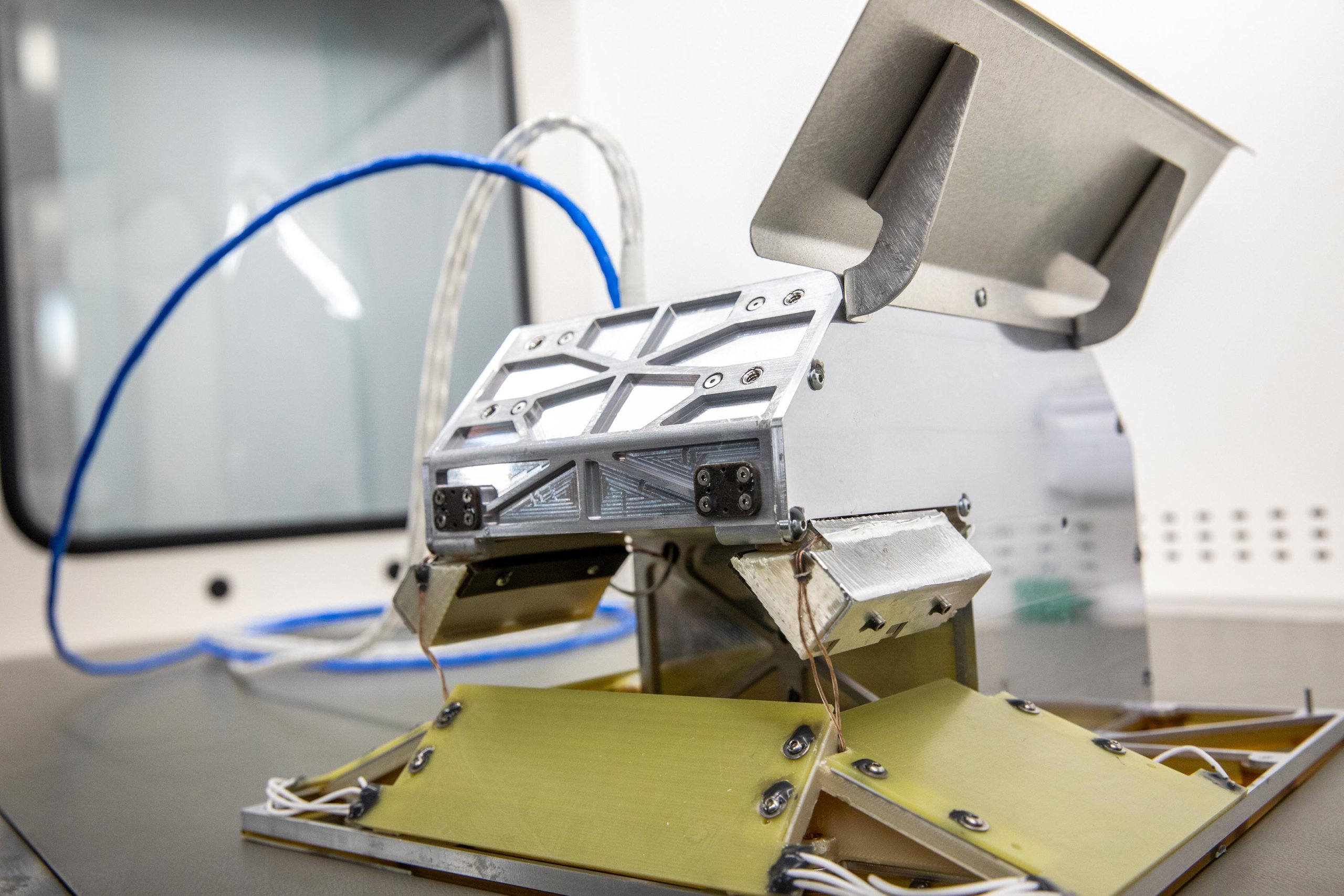
Advancements in Dust Removal Technology
Using transparent electrodes and electric fields, EDS technology can lift and remove dust from a variety of surfaces for space applications ranging from thermal radiators, solar panels, and camera lenses to spacesuits, boots, and helmet visors. Controlling and removing the charged dust will be critical to the success of Moon missions under the agency’s CLPS initiative and Artemis campaign.
“For these CLPS and Artemis missions, dust exposure is a concern because the lunar surface is far different than what we’re used to here,” said Dr. Charles Buhler, lead research scientist at the Electrostatics and Surface Physics Laboratory at Kennedy. “Lunar regolith dust can get into gaskets and seals, into hatches, and even into habitats, which can pose a lot of issues for spacecraft and astronauts.”
Unlike dust particles on Earth, dust on the Moon’s surface is sharp and abrasive – like tiny shards of glass – because it hasn’t been exposed to weathering and elements like water and oxygen.
“Simply brushing lunar regolith across surfaces can make the problem worse because it’s also very electrostatically charged and highly insulating,” Buhler said.
Collaborative Efforts for Lunar Exploration
Under the CLPS model, NASA is investing in commercial delivery services to the Moon to enable industry growth and support long-term lunar exploration. As a primary customer for CLPS deliveries, NASA aims to be one of many customers on future flights. EDS was funded by the Space Technology Mission Directorate (STMD) Game Changing Development Program (GCD).
Never miss a breakthrough: Join the SciTechDaily newsletter.
Follow us on Google and Google News.