
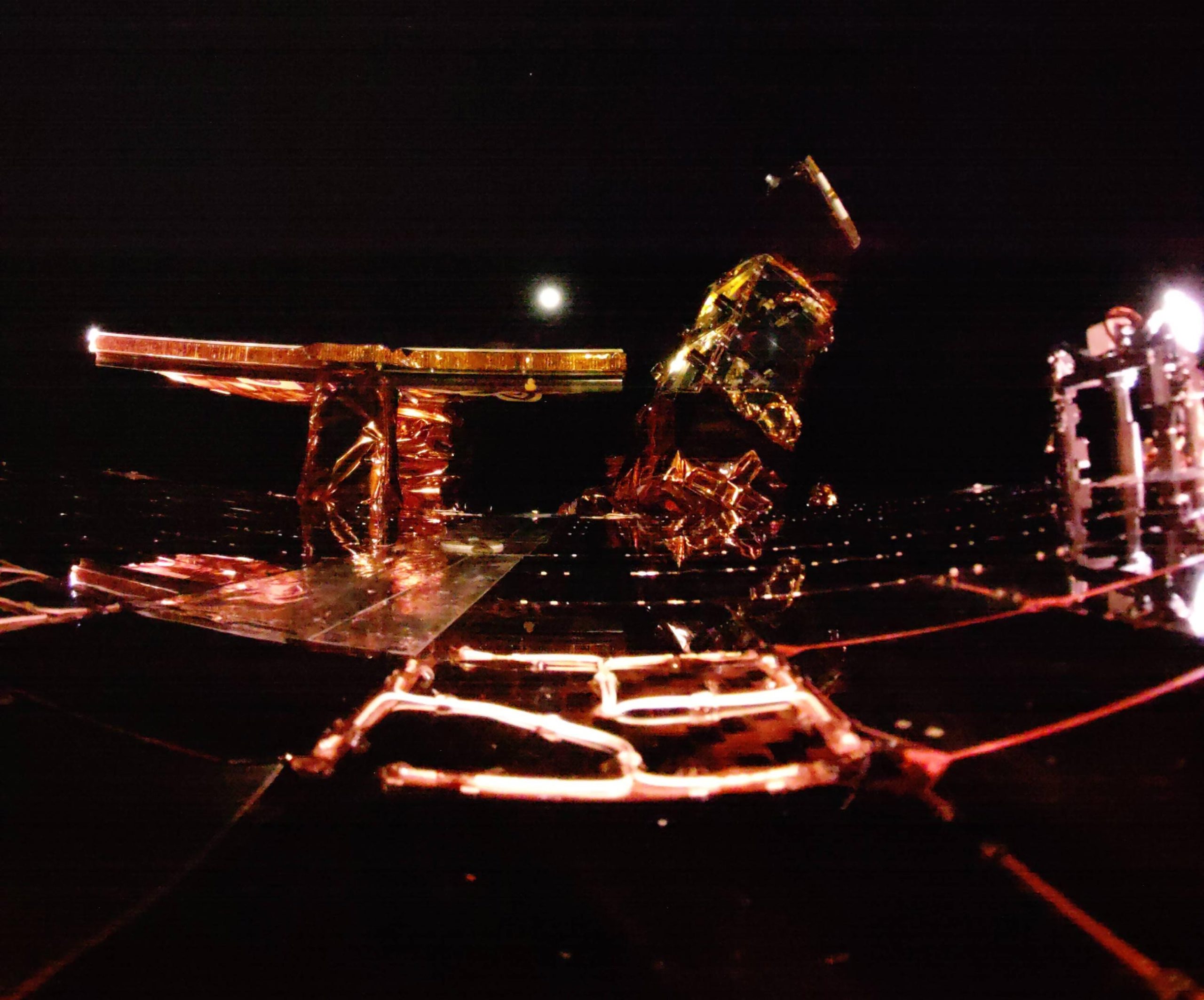
Firefly’s Blue Ghost Mission 1 has taken a significant leap toward the Moon, with its successful second engine burn positioning the spacecraft for lunar orbit.
NASA’s science and technology instruments aboard Firefly’s Blue Ghost Mission 1 are making steady progress toward the Moon. After spending nearly two weeks in Earth orbit, Firefly confirmed on January 23 that the spacecraft successfully completed its second engine burn. This critical maneuver positioned Blue Ghost to exit Earth’s orbit and continue its journey to the Moon. During this phase, the spacecraft also captured its first view of the Moon from Earth orbit.
Ongoing assessments indicate that all NASA payloads remain in excellent condition. In the coming weeks, Firefly and NASA teams will continue to perform routine health checks and operations for the payloads. These efforts include calibrating the Lunar Environment Heliospheric X-ray Imager (LEXI), managing transit operations for the Lunar GNSS Receiver Experiment (LuGRE), and analyzing radiation data collected by the Radiation Tolerant Computer (RadPC) technology demonstration.

The Firefly Blue Ghost Mission 1 is a collaborative lunar mission designed to deliver NASA science and technology payloads to the Moon. As part of NASA’s Commercial Lunar Payload Services (CLPS) initiative, the mission aims to advance lunar exploration by testing cutting-edge instruments and gathering valuable data about the Moon’s environment. The Blue Ghost spacecraft, developed by Firefly Aerospace, carries key payloads such as the Lunar Environment Heliospheric X-ray Imager (LEXI), the Lunar GNSS Receiver Experiment (LuGRE), and the Radiation Tolerant Computer (RadPC). These payloads will perform a variety of tasks, including imaging, navigation experiments, and radiation data collection, contributing to the development of future lunar and deep space missions.
Never miss a breakthrough: Join the SciTechDaily newsletter.
Follow us on Google and Google News.