

NASA’s NEO Surveyor, a spacecraft specifically designed to detect asteroids that could threaten Earth, is on track for a 2027 launch.
After passing environmental testing, its instrument enclosure returned to JPL for final assembly. The mission will use infrared technology to spot hard-to-see near-Earth objects, including those with dark surfaces. Once assembly at JPL is complete, the spacecraft’s core components will be united in Utah for final integration.
NEO Surveyor Targets 2027 Launch
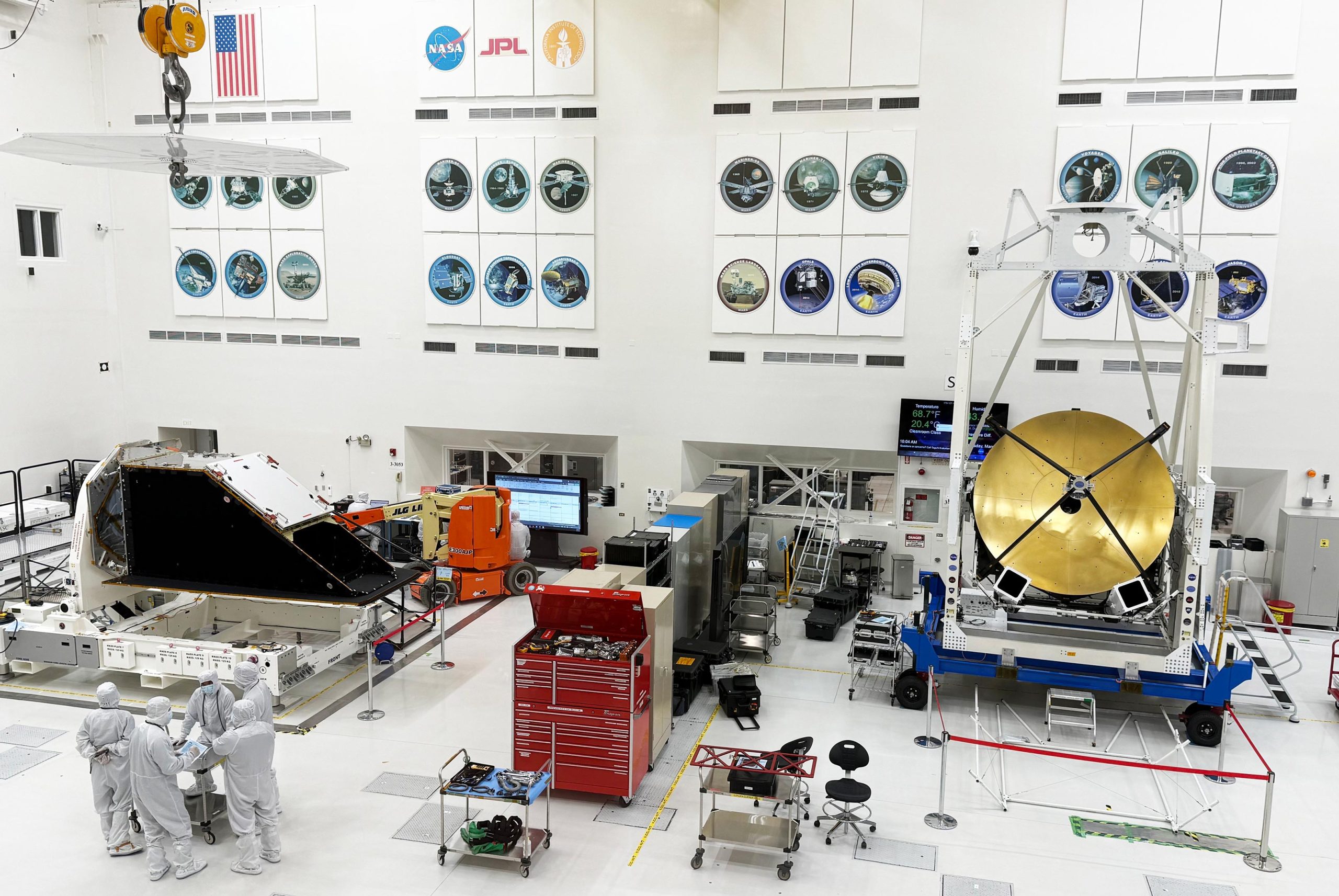
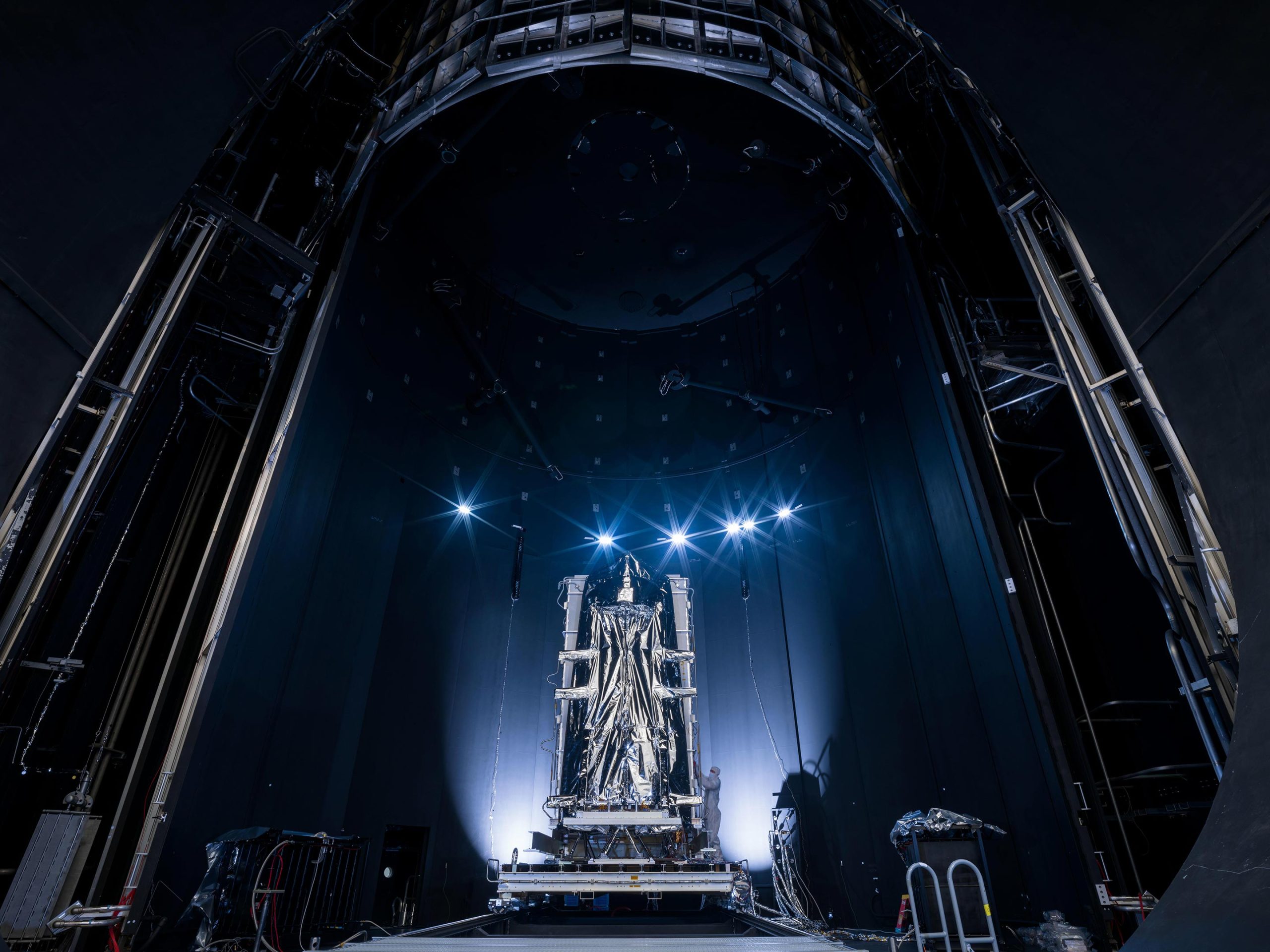
NASA’s asteroid-hunting mission, the Near-Earth Object (NEO) Surveyor, is on track for a planned launch in late 2027. In early March, a key piece of the spacecraft, the instrument enclosure, returned to NASA’s Jet Propulsion Laboratory (JPL) in Southern California after completing environmental testing at the Johnson Space Center in Houston.
The 12-foot-long (3.7-meter) enclosure, built at JPL, is designed to protect the spacecraft’s infrared telescope and help keep it cool during operations in space. Because infrared telescopes detect heat, they must stay cold to prevent their own systems from interfering with observations.
Spotting Hidden Asteroids
NEO Surveyor is NASA’s first space-based mission dedicated specifically to planetary defense. It will use infrared sensors to detect the heat given off by near-Earth objects that have been warmed by the Sun. This allows it to spot even dark, hard-to-see asteroids and comets that could potentially pose a threat to Earth.
Over the course of several weeks at JPL, engineers and technicians will reinstall cables and finish taping the edges of the instrument enclosure’s composite panels in the historic High Bay 1 clean room of the lab’s Spacecraft Assembly Facility. The work is viewable via a live camera feed. Sharing the room with NEO Surveyor’s hardware is the telescope for NASA’s ASTHROS (Astrophysics Stratospheric Telescope for High Spectral Resolution Observations at Submillimeter-wavelengths), an atmospheric balloon mission.
Telescope Assembly in Utah
Once work wraps up on NEO Surveyor’s instrument enclosure, it’ll be sent to the Space Dynamics Laboratory (SDL) in Logan, Utah, where it will be joined together with another piece of key hardware: the telescope’s aluminum body, called the optical telescope assembly, which JPL also built. The telescope itself already left JPL earlier in the month, arriving at SDL on March 13.

NEO Surveyor: Mission Overview
NEO Surveyor is NASA’s next-generation space telescope designed to detect and track near-Earth objects (NEOs) that could pose a threat to our planet. Led by Professor Amy Mainzer at UCLA for NASA’s Planetary Defense Coordination Office, the mission is managed by the Jet Propulsion Laboratory (JPL) under the Planetary Missions Program Office at NASA’s Marshall Space Flight Center in Huntsville, Alabama.
The spacecraft is being developed with contributions from key industry partners including BAE Systems, the Space Dynamics Laboratory (SDL), and Teledyne, who are building critical components and instrumentation. Once in space, mission operations will be supported by the Laboratory for Atmospheric and Space Physics at the University of Colorado Boulder. Caltech’s Infrared Processing and Analysis Center (IPAC) in Pasadena will generate and manage a portion of the mission’s data products. JPL, which is managed by Caltech for NASA, is leading the spacecraft’s development.
Never miss a breakthrough: Join the SciTechDaily newsletter.
Follow us on Google and Google News.
1 Comment
Wow!!!