
Close Menu
    Facebook X (Twitter) Instagram
    SciTechDaily
    • Biology
    • Chemistry
    • Earth
    • Health
    • Physics
    • Science
    • Space
    • Technology
    Facebook X (Twitter) Pinterest YouTube RSS
    SciTechDaily
    Home»Space»NASA’s NEOWISE Spacecraft Views Its First Comet
    Space

    NASA’s NEOWISE Spacecraft Views Its First Comet

    By DC Agle, Jet Propulsion Laboratory; NASSAMarch 3, 20141 Comment3 Mins Read
    Facebook Twitter Pinterest Telegram LinkedIn WhatsApp Email Reddit
    Share
    Facebook Twitter LinkedIn Pinterest Telegram Email Reddit
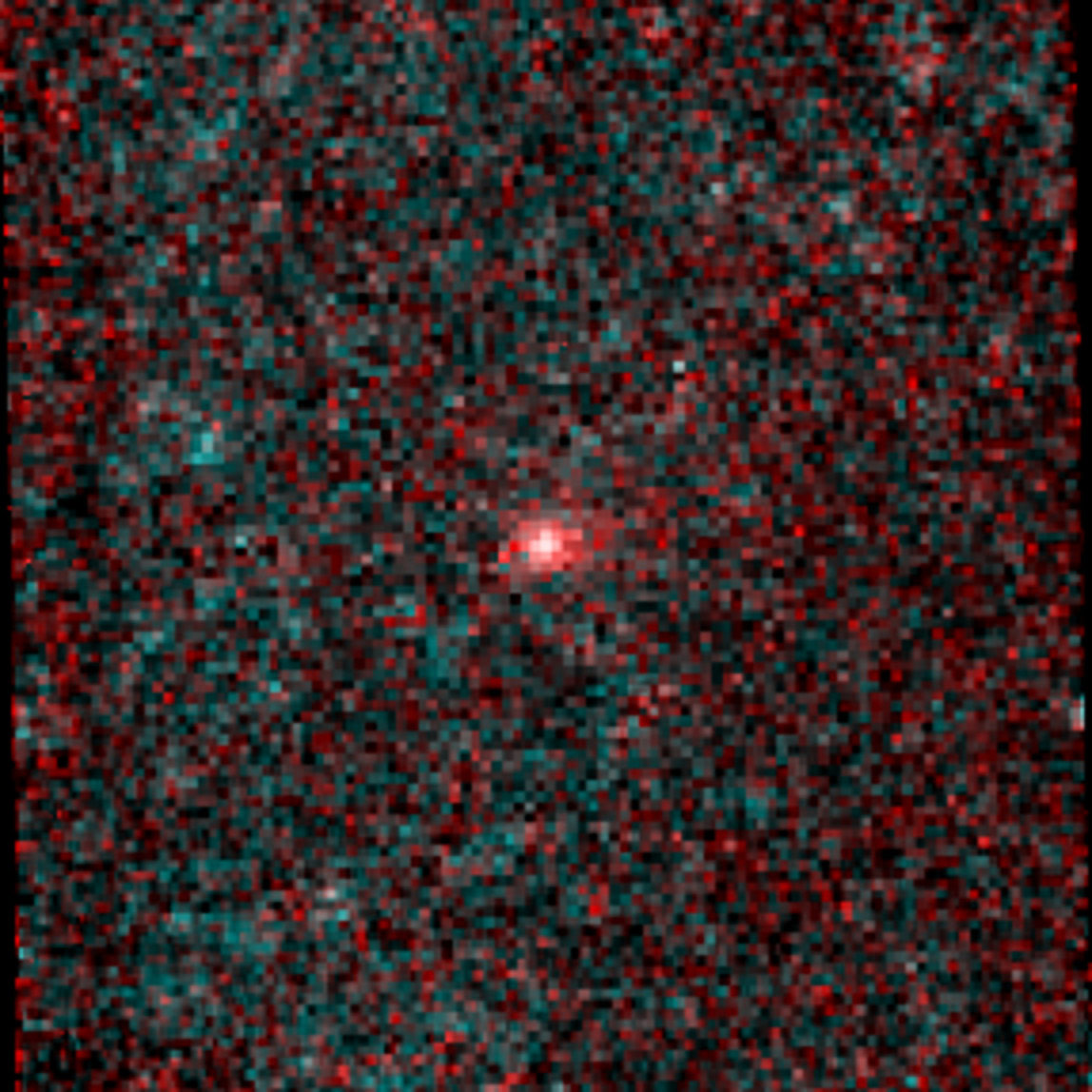
    Image of Comet NEOWISE C2014 C3
    Comet NEOWISE was first observed by NASA’s Near-Earth Object Wide-field Infrared Survey Explorer (NEOWISE) spacecraft on Valentine’s Day, 2014. Credit: NASA/JPL-Caltech

    NASA’s NEOWISE spacecraft has spotted its first comet. Officially named “C/2014 C3 (NEOWISE),” the comet was about 143 million miles (230 million kilometers) from Earth at the time of discovery.

    NASA’s Near-Earth Object Wide-field Infrared Survey Explorer (NEOWISE) spacecraft has spotted a never-before-seen comet – its first such discovery since coming out of hibernation late last year.

    “We are so pleased to have discovered this frozen visitor from the outermost reaches of our solar system,” said Amy Mainzer, the mission’s principal investigator from NASA’s Jet Propulsion Laboratory in Pasadena, California. “This comet is a weirdo – it is in a retrograde orbit, meaning that it orbits the sun in the opposite sense from Earth and the other planets.”

    Officially named “C/2014 C3 (NEOWISE)”, the first comet discovery of the renewed mission came on February 14 when the comet was about 143 million miles (230 million kilometers) from Earth. Although the comet’s orbit is still a bit uncertain, it appears to have arrived from its most distant point in the region of the outer planets. The mission’s sophisticated software picked out the moving object against a background of stationary stars. As NEOWISE circled Earth, scanning the sky, it observed the comet six times over half a day before the object moved out of its view. The discovery was confirmed by the Minor Planet Center, Cambridge, Massachusetts, when follow-up observations were received three days later from the Near Earth Object Observation project Spacewatch, Tucson, Arizona. Other follow-up observations were then quickly received. While this is the first comet NEOWISE has discovered since coming out of hibernation, the spacecraft is credited with the discovery of 21 other comets during its primary mission.

    Originally called the Wide-field Infrared Survey Explorer (WISE), the spacecraft was shut down in 2011 after its primary mission was completed. In September 2013, it was reactivated, renamed NEOWISE, and assigned a new mission to assist NASA’s efforts to identify the population of potentially hazardous near-Earth objects. NEOWISE will also characterize previously known asteroids and comets to better understand their sizes and compositions.

    JPL manages the NEOWISE mission for NASA’s Science Mission Directorate in Washington. The Space Dynamics Laboratory in Logan, Utah, built the science instrument. Ball Aerospace & Technologies Corporation of Boulder, Colorado, built the spacecraft. Science operations and data processing take place at the Infrared Processing and Analysis Center at the California Institute of Technology in Pasadena. Caltech manages JPL for NASA.

    Never miss a breakthrough: Join the SciTechDaily newsletter.
    Follow us on Google and Google News.

    Astronomy Comet JPL NASA NEOWISE WISE
    Share. Facebook Twitter Pinterest LinkedIn Email Reddit

    Related Articles

    NASA’s NEOWISE Space Telescope Takes 12-Year Time-Lapse Movie of Entire Sky

    An Accidental Discovery Hints at a Hidden Population of Cosmic Objects Lurking in Our Galaxy

    Comet NEOWISE Sizzles As It Slides by the Sun – A Treat for Observers on Earth and in Space

    Comet 2013 A1 to Make a Very Close Flyby of Mars

    NASA’s WISE Uncovers New Clues on Jovian Trojans

    NASA’s WISE Discovers Millions of Black Holes

    Flame Nebula Burns Bright in New WISE Image

    WISE Observations Provide Crucial Information on Brown Dwarfs

    WISE Views Aging Star Erupting With Dust

    1 Comment

    1. Divy on March 4, 2014 5:55 am

      wow

      Reply
    Leave A Reply Cancel Reply

    • Facebook
    • Twitter
    • Pinterest
    • YouTube

    Don't Miss a Discovery

    Subscribe for the Latest in Science & Tech!

    Trending News

    Scientists Discover Game-Changing New Way To Treat High Cholesterol

    This Small Change to Your Exercise Routine Could Be the Secret to Living Longer

    Scientists Discover 430,000-Year-Old Wooden Tools, Rewriting Human History

    AI Could Detect Early Signs of Alzheimer’s in Under a Minute – Far Before Traditional Tests

    What if Dark Matter Has Two Forms? Bold New Hypothesis Could Explain a Cosmic Mystery

    This Metal Melts in Your Hand – and Scientists Just Discovered Something Strange

    Beef vs. Chicken: Surprising Results From New Prediabetes Study

    Alzheimer’s Breakthrough: Scientists Discover Key Protein May Prevent Toxic Protein Clumps in the Brain

    Follow SciTechDaily
    • Facebook
    • Twitter
    • YouTube
    • Pinterest
    • Newsletter
    • RSS
    SciTech News
    • Biology News
    • Chemistry News
    • Earth News
    • Health News
    • Physics News
    • Science News
    • Space News
    • Technology News
    Recent Posts
    • Researchers Discover Unknown Beetle Species Just Steps From Their Lab
    • Jellyfish Caught Feasting on Exploding Sea Worms for the First Time
    • Ancient “Spaghetti” in Dogs’ Hearts Reveals Heartworm’s Shocking Origins
    • Milk Nanoparticles Could Revolutionize Treatment for Deadly Bile Duct Cancer
    • Largest-Ever Study Finds Medicinal Cannabis Ineffective for Anxiety, Depression, PTSD
    Copyright © 1998 - 2026 SciTechDaily. All Rights Reserved.
    • Science News
    • About
    • Contact
    • Editorial Board
    • Privacy Policy
    • Terms of Use

    Type above and press Enter to search. Press Esc to cancel.