
Close Menu
    Facebook X (Twitter) Instagram
    SciTechDaily
    • Biology
    • Chemistry
    • Earth
    • Health
    • Physics
    • Science
    • Space
    • Technology
    Facebook X (Twitter) Pinterest YouTube RSS
    SciTechDaily
    Home»Space»NASA’s Swift Observatory in Safe Mode – Team Investigating Possible Reaction Wheel Failure
    Space

    NASA’s Swift Observatory in Safe Mode – Team Investigating Possible Reaction Wheel Failure

    By NASAJanuary 20, 20224 Comments2 Mins Read
    Facebook Twitter Pinterest Telegram LinkedIn WhatsApp Email Reddit
    Share
    Facebook Twitter LinkedIn Pinterest Telegram Email Reddit
    NASA Swift Spacecraft
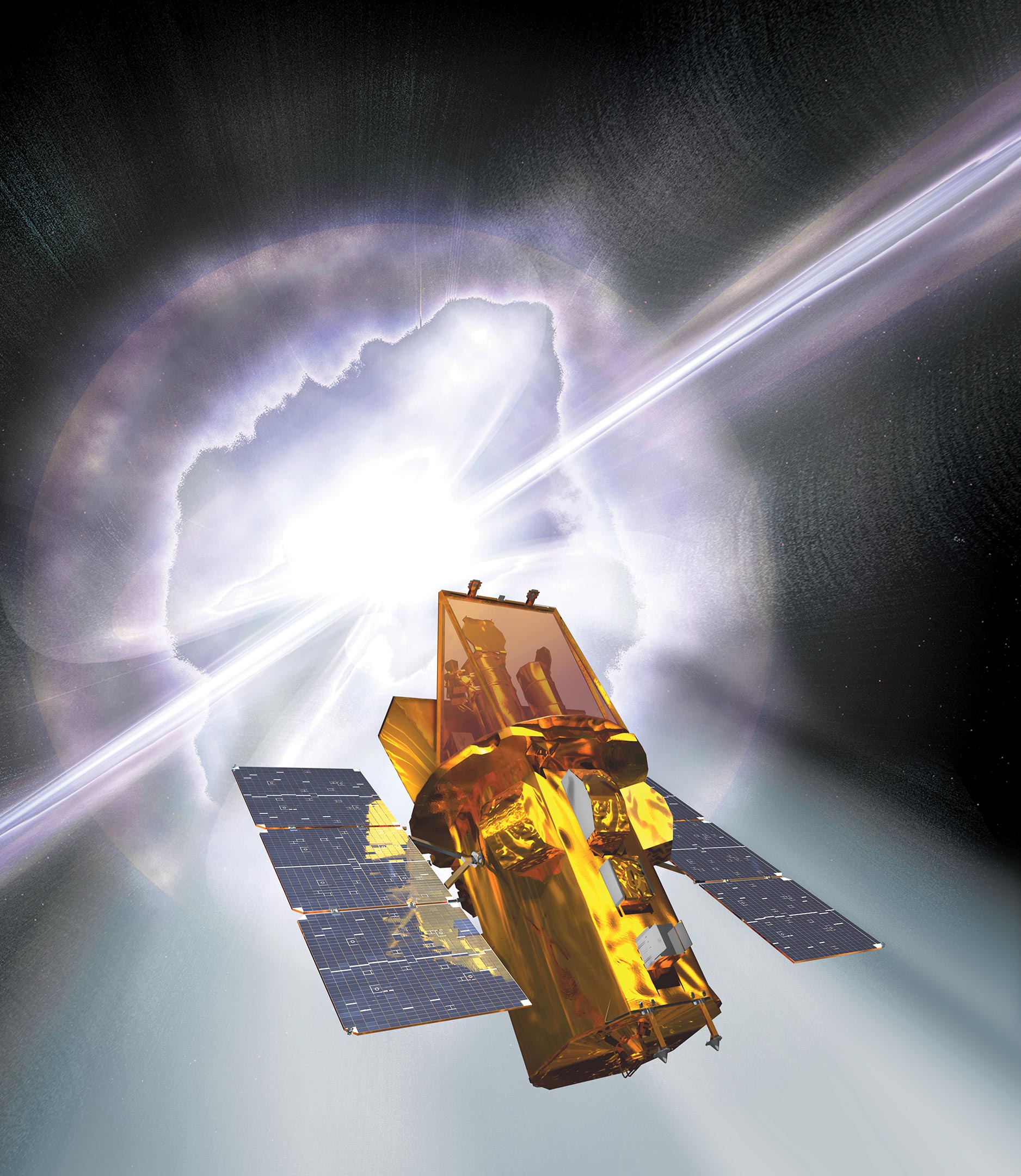
    An artist’s rendering of the Swift Observatory with a gamma-ray burst going off in the background. Credit: Spectrum and NASA E/PO, Sonoma State University, Aurore Simonnet

    NASA’s Swift Observatory entered safe mode on January 18, 2022, after a reaction wheel failure.

    While one wheel was deactivated, the remaining five are operational. The observatory, in its 17th year, continues to focus on studying high-energy cosmic events like gamma ray bursts.

    On the evening of Tuesday, January 18, 2022, NASA’s Neil Gehrels Swift Observatory entered into safe mode, suspending pointed science observations. The mission team is investigating a possible failure of one of the spacecraft’s reaction wheels as the cause.

    The team has powered off the suspected wheel. The observatory and all its instruments are otherwise healthy and operating as anticipated. The observatory will remain in safe mode as a precaution while the team further investigates the issue.

    Swift has a total of six reaction wheels onboard. The team is working to restore science operations using five reaction wheels. The remaining five wheels are all working as expected. This is the first time a reaction wheel has experienced a failure in Swift’s 17 years of operations.

    Swift studies high-energy events in the universe such as gamma ray bursts, which may come from black holes being born from dying stars.
    NASA Neil Gehrels Swift Observatory
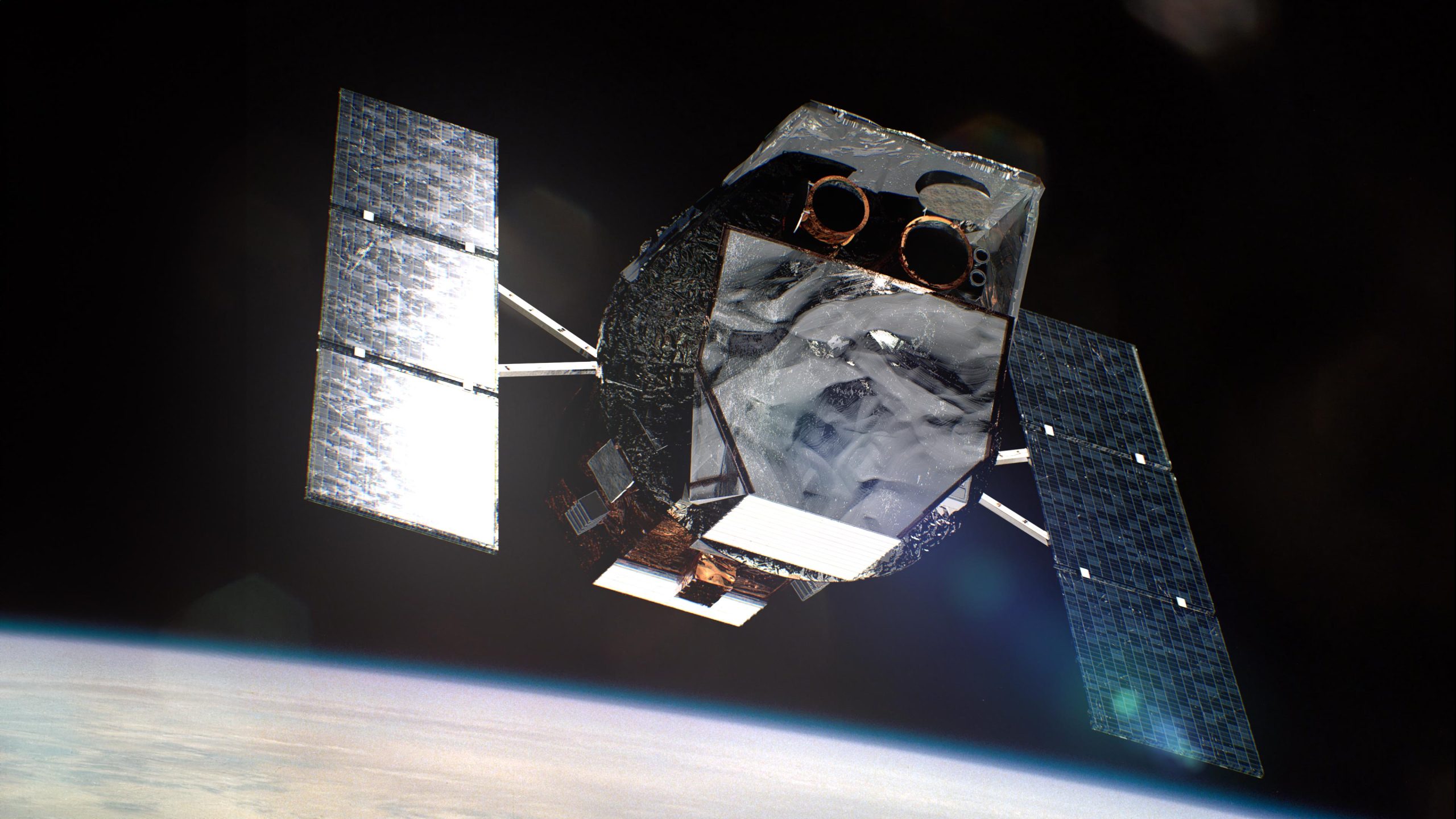
    Swift, illustrated here, is a collaboration between NASA’s Goddard Space Flight Center in Greenbelt, Maryland, Penn State in University Park, the Los Alamos National Laboratory in New Mexico, and Northrop Grumman Innovation Systems in Dulles, Virginia. Other partners include the University of Leicester and Mullard Space Science Laboratory in the United Kingdom, Brera Observatory in Italy, and the Italian Space Agency. Credit: NASA’s Goddard Space Flight Center/Chris Smith (KBRwyle)

    The Neil Gehrels Swift Observatory

    The Neil Gehrels Swift Observatory is a space-based observatory launched by NASA in November 2004, dedicated to studying high-energy phenomena in the universe, such as gamma-ray bursts and supernovae. Named after astrophysicist Neil Gehrels, the observatory is equipped with a suite of instruments including a Burst Alert Telescope, an X-ray Telescope, and an Ultraviolet/Optical Telescope, allowing it to rapidly detect and observe transient events across multiple wavelengths. Its ability to quickly pivot toward cosmic events, combined with multi-wavelength observations, makes it a key tool in the study of the most energetic processes in the cosmos.

    Never miss a breakthrough: Join the SciTechDaily newsletter.
    Follow us on Google and Google News.

    NASA NASA Swift Satellite Popular
    Share. Facebook Twitter Pinterest LinkedIn Email Reddit

    Related Articles

    Twin Titans: NASA Tracks Two Monster Black Holes Tearing Up a Distant Galaxy [Video]

    Cosmic Collision: Life-Essential Elements Forged in Massive Space Explosion

    Strange Long-Lasting Pulse of High-Energy Radiation Swept Over Earth

    Spontaneous Magnetic Reversal of Monster Black Hole Sparks Enigmatic Outburst

    New Era in Gamma-Ray Science with NASA Fermi, Swift Missions

    Swift Reveals Before and After Images of Supernova SN 2014J

    NASA’s Swift Discovers Magnetar SGR J1745-29

    Comet Survives after Close Brush With the Sun

    NASA Curiosity Heads to Mars

    4 Comments

    1. Sekar on January 20, 2022 11:11 pm

      Hmmnn..

      I am sure that Scintists and Technologiists will figure out what causedthe failure and fix it.

      Triggerred a thought on wheather itis possible to minimise the number of mechanical moving parts which are subject to wear and tear thanks to stress. This would automatically reduce the chances of failure.

      On other matters related to Black Holes , have always wondered about the handedness i.e. Chirality of these, and whether the same has a bearing on whether they repel each other or attarct each other, to merge and become a bigger Black Hole.

      Views expressed are personal and not binding on anyone.

      Reply
    2. Cynthia Binder on January 21, 2022 6:08 am

      🥼🤓🤭brake time there’s another telescope 🔭 Webb heard it.🎓💎🎼🗣football 🍕🍔🍟🥪🍻🏈playoffs 🎟🏈🗽🌞⛱swift someone will figure out the not working wheel🛴🛹🏎🚜🏍🛵🚲🛺🦼🦽🚘🚖🚔🚓🚛🚚

      Reply
    3. Chucker666 on January 21, 2022 6:59 pm

      We could surmise and guess what a reaction wheel is and what it does. Call me old school that a competent reporter might explain to his audience not that something failed, but describe what that thing is that failed and what it does. It sounds like the author knows what he is talking about, but I would think the audience is the point.
      Constructive criticism 🙂

      Reply
    4. kamir bouchareb st on January 24, 2022 12:01 am

      gooooooooooooooooood

      Reply
    Leave A Reply Cancel Reply

    • Facebook
    • Twitter
    • Pinterest
    • YouTube

    Don't Miss a Discovery

    Subscribe for the Latest in Science & Tech!

    Trending News

    Popular Sugar-Free Sweetener Linked to Liver Disease, Study Warns

    What Is Hantavirus? The Deadly Disease Raising Alarm Worldwide

    Scientists Just Discovered How the Universe Builds Monster Black Holes

    Scientists Unveil New Treatment Strategy That Could Outsmart Cancer

    A Simple Vitamin May Hold the Key to Treating Rare Genetic Diseases

    Scientists Think the Real Fountain of Youth May Be Hiding in Your Gut

    Ravens Don’t Follow Wolves, They Predict Them

    This Common Knee Surgery May Be Doing More Harm Than Good

    Follow SciTechDaily
    • Facebook
    • Twitter
    • YouTube
    • Pinterest
    • Newsletter
    • RSS
    SciTech News
    • Biology News
    • Chemistry News
    • Earth News
    • Health News
    • Physics News
    • Science News
    • Space News
    • Technology News
    Recent Posts
    • Why Are So Many New Fathers Dying? Scientists Say the U.S. Has a Dangerous Blind Spot
    • Scientists Identify Simple Supplement That Greatly Reduces Alzheimer’s Damage
    • You May Have a Dangerous Type of Cholesterol Even if Your Tests Look Normal
    • Study Reveals Dangerous Flaw in AI Symptom Checkers
    • New MRI Breakthrough Captures Stunningly Clear Images of the Eye and Brain
    Copyright © 1998 - 2026 SciTechDaily. All Rights Reserved.
    • Science News
    • About
    • Contact
    • Editorial Board
    • Privacy Policy
    • Terms of Use

    Type above and press Enter to search. Press Esc to cancel.