
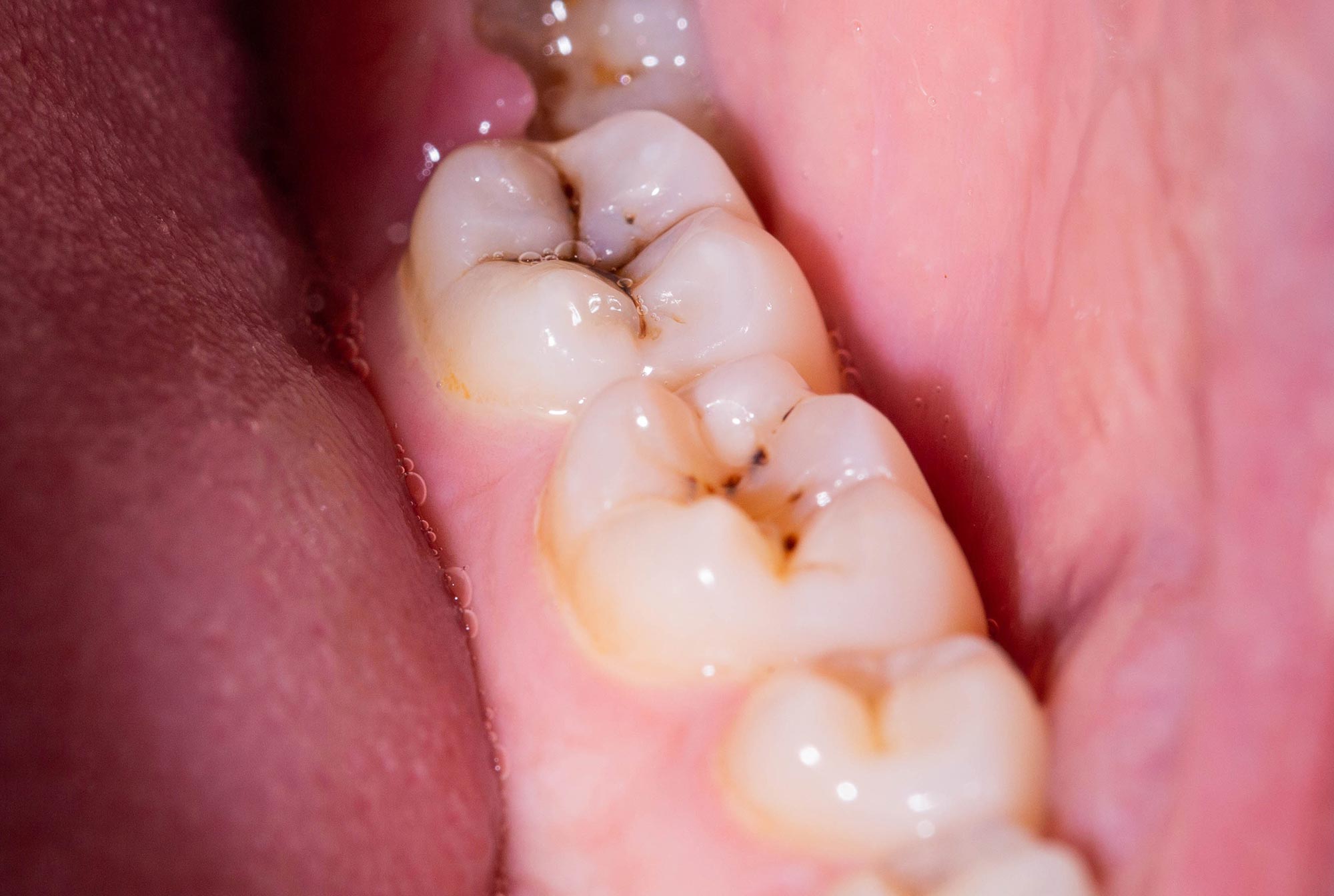
Scientists have uncovered a natural compound that can wipe out 90% of the sticky film behind plaque and cavities, potentially transforming everyday dental care. Found in certain vegetables, this low-toxicity molecule could one day be added to toothpaste and mouthwash to help keep teeth cleaner, stronger, and healthier.
A large portion of people around the globe either struggle with plaque and tooth decay on an ongoing basis or will experience them at some stage in life. While toothpaste, mouthwash, and routine dental visits help, there is still room for better solutions.
Researchers from Ben-Gurion University of the Negev, working with colleagues at Sichuan University and the National University of Singapore, have identified a naturally occurring compound called 3,3′-Diindolylmethane (DIM), also known as bisindole, that can cut down the biofilms responsible for plaque and cavities by 90%. This compound is also known to have anti-carcinogenic effects.
The team’s results were published in the journal Antibiotics.
Breakthrough Molecule Targets Plaque and Cavities
The human mouth provides an ideal environment for bacteria such as S. mutans, a key contributor to tooth decay. After eating, S. mutans thrives in the warm, sugary conditions inside the mouth, forming a sticky biofilm on the teeth. This biofilm leads to plaque buildup, erodes enamel, and causes cavities. In laboratory tests, bisindole (DIM) disrupted the biofilm by 90%, preventing the bacteria from multiplying.
How Oral Bacteria Cause Damage
“The molecule, which was found to have low toxicity, could be added to toothpastes and mouthwashes to greatly improve dental hygiene,” says lead author Prof. Ariel Kushmaro of the Avram and Stella Goldstein-Goren Department of Biotechnology Engineering. He is also a member of the Ilse Katz Institute for Nanoscale Science and Technology and the Goldman Sonnenfeldt School of Sustainability and Climate Change.
Reference: “3,3′-Diindolylmethane (DIM): A Potential Therapeutic Agent against Cariogenic Streptococcus mutans Biofilm” by Yifat Baruch, Karina Golberg, Qun Sun, Karina Yew-Hoong Gin, Robert S. Marks and Ariel Kushmaro, 6 June 2023, Antibiotics.
DOI: 10.3390/antibiotics12061017
The study was conducted with his student Yifat Baruch, and Dr. Karina Golberg, as well as Prof. Robert S. Marks of the same department and Qun Sun of Sichuan University, and Karina Yew-Hoong Gin of the National University of Singapore.
The research was supported by the International Research and Development Program of Sichuan (2019YFH0113) and SMART innovation grant ING-000398 (Singapore).
A version of this article was originally published in September 2023.
Since this research was first published in 2023, no human or clinical trials have been conducted to confirm the effectiveness of 3,3′-Diindolylmethane (DIM) in preventing dental plaque or cavities. The reported 90% reduction in Streptococcus mutans biofilm remains an in-vitro laboratory finding. At present, DIM is not an approved active ingredient for cavity prevention in over-the-counter dental products, and it is not found in commercially available toothpastes or mouthwashes making anticaries claims. While the molecule continues to attract research interest for other potential uses, including anti-carcinogenic properties, its role in dental care remains experimental.
Never miss a breakthrough: Join the SciTechDaily newsletter.
Follow us on Google and Google News.
49 Comments
It will now take decades of slow, plodding testing until this gets to market. If people were dying from cavities, they might get this product to market faster.
Not that it matters as there are a current of human trials on regrowing all your teeth underway.
The article says that the molecule has low toxicity buy more details are to be explored on this as short and longterm cumulative toxicity. Also the effect of the material on biofilm formation after brushing, for how many hours it will be actively resisting biofilm formation.
Jojo- We can only hope.
What are the possible implications to the digestive system? What are the actual ingredients and are they naturally derived from Virgin seed or are they GMO? Chemically Synthesized compounds are not always what they should be. If we find out things we should be going regulatory slow with meeting of human minds and come to meeting of minds with boards that are all not in agreement. The road is getting very slippery very fast. Incentivized comp. plans need attention and a true study of ethical behaviour and intent is warranted. God have mercy for those who look there first.
More research on this will help the population,do give healthy smile,younger generations who are persuing pg and phd should do more clinical studies on this molecule, regards dr.madhuri,periodontist and implantoligist,founder of oxy dental, hyderabad.
Sounds like it will be on the market after I’m gone.
Black seed oil works for me. I drink a teaspoon before bed and its been helping maintaining my healthy gums
Why would you swallow it in any kind of quantity if it’s in toothpaste or mouthwash? Most people don’t swallow toothpaste nor mouthwash…🤔🤷🏻
Why would anyone swallow it in any quantity since it’s going to be in toothpaste or mouthwash? 🤔 Most people don’t swallow those things…🤔🤷🏻
If you saw what was removed from my mouth recently after injury 06 and another after surgery chipped root canal tooth no dentist would crown
I’ve a picture after removed apparently it was split up the middle no 6 lower jaw the agony sufferer still ongoing other teeth I believe paracites was latched underneath causing all sorts of issues throughout my Mary immaculate body
No diagnosis many major surgeries untold
Tina, have tried researching Weston A. Price?
Also, have you tried oil pulling where you gargle coconut oil. Two very interesting things to research.
Why not say what those vegetables are do you think it’s dangerous for people to try eating them?
Because telling it won’t make them any money.
I too wondered why this article didn’t say what vegetables carry this wonderful natural compound named bisindole. Are the vegetables toxic? Or maybe certain processing is required to make the naturally occuring bisindole effective?
According to AI.
3,3′-Diindolylmethane (DIM) is a compound that is not found directly in vegetables but is produced in the body when you digest a substance called indole-3-carbinol (I3C). I3C is found in a specific family of vegetables known as cruciferous vegetables.
Cruciferous vegetables that contain the precursor to DIM include:
Broccoli
Brussels sprouts
Cabbage
Cauliflower
Kale
Bok choy
Collard greens
Kohlrabi
Arugula
Radishes
Turnips
Mustard greens
Horseradish
When you consume these vegetables, the I3C is converted into DIM in your body’s acidic environment, such as the stomach. This process is part of why these vegetables are thought to have potential health benefits.
Thank you! This important information should have been included in the article.
Kale…..*sigh*…of course it’s kale.
Thank you for adding this information SZ!
Those veggies would not help the teeth once it’s gone past the mouth. If the mouth environment is acidic, perhaps the I3C could be converted into DIM, if that’s all that’s needed.
Thank you for the list. My question is how much do you have to consume daily?
Oil pulling makes me gag.
To regrow our teeth would be fantastic but how on earth this could be done is beyond belief. Teeth are a necessity to our health, looks and though we get our second lot after our baby teeth have gone how wonderful it would be to have a third set
Great discoveries are devoured by the greedy. They won’t just share their findings…
Wisest comment yet
“greedy”, huh ?
and who invests the time to study? who invests the funds required to attend the Universities ? where do they live? who pays for their food, transportation and other services as may be required?
Life is free, right?
Thank you yes this should have been covered within the article since we’re all here for it.
When I read the original article back in 2023, I bought DIM powder and have been brushing my teeth with the powder and toothpaste together pretty much every day since then. Haven’t had a cavity since then and I have bad teeth.
Ya know i totally believe you & did u have cavities on any of your teeth that were like cavity holes right at the gum line?
Lol you’re a little late with this “daily” report. This paper was published over 2 years ago. So long, in fact, that there’s already multiple toothpastes with DIM as an active ingredient.
Where? I’m only seeing super sus ones on Amazon that don’t list full ingredients and just say they contain DIM.
Why would we want to use any product that is “low toxic” to the body??? Toxic is poison no matter what dosage!
Dose makes the poison.
Such as Flouride??
Which has a VERY HIGH toxicity to the body?
DIM comes from cruciferous vegetables, why is it considered low toxic? I used to take DIM to calm menstrual issues.
If they could stop plaque and cavities dental association would make sure it is never sold as they would be out of business.. so it will never be finished or cost will be prohibitive..
Thats already happened before, weve had the cure for cavities for a long time but dentists wont allow it to be sold. Its the most selfish thing they can do. Evil and greedy people.
Which vegetables are they??
Hi Tina, several years ago I had 2 molars in my lower jaw pulled in less than a years time, due to severe “root pain” under each molar. The dentist(s) that extracted the molars acknowledged my pain, but found no definitive evidence of decay or infection.
Since that time I have discovered that I most likely have had a chronic systemic Brucella bacterial infection since 1976. One of the symptoms of Chronic Brucellosis is severe tooth pain, leading to unnecessary extractions. If you have had episodes of eye stinging & red irritation, blurry/double vision, as well as episodes of irregular heartbeats & difficulty walking, you may have a chronic Brucella infection.
Especially if you consume unpasteurized milk & cheese products or have had exposures to hoofed, canine or aquatic mammals.
Brucellosis is one of the most common worldwide bacterial infections. Ask for a Brucella IgG/IgM with Reflex to Titers test. If you have ANY ANTIBODIES AT ALL, you most likely have a chronic Brucellosis infection.
The antibodies rise and fall over time with a chronic relapsing/remitting presentation, with episodes of unexplained fevers and slowly increasing joint & spinal issues….like scoliosis and arthritis.
It is a simple blood test, which doctors rarely, if ever test for.
Ever hear of Google? Damn, y’all is lazy.
Broccoli and that whole cabbage family, plus a dozen or so more.
Chat GPT will give you a weekly menu if you want one.
DIM has been available in the US as a supplement for quite a while. It’s most often used to aid in estrogen metabolism.
A few years ago a student from UW created the cure for cavities and he patented it. Before he started mass producing it the Dentist General (The equivalent of the surgeon general but for dentistry) bought the patent from him and buried it. He said it would put millions of dentists out of business overnight. 80% of dentists revenue is from cavity fillings. I dont have any faith in this ever being more than a news article.
This was discovered in 2023, two years ago.
Why wait until today to write an article about it?
There is a doctor in Japan who is doing clinical human trials that allows a person to regrow there mature set of teeth naturally by blocking some harmone. Should be main stream sometime in the text 5 years.
Can DIM be used to reduce plaque in our arteries, thus, reducing the chance for heart attacks?
DIM can be purchased easily online. It’s an extremely good supplement for many purposes.
Unfortunately it does have the rank fart smell of concentrated sulfur/cruciferous veggies turning bad. I still use it because of the health benefits, but I can’t imagine brushing my teeth with it
I still have a bottle I bought for menopausal symptoms & didn’t notice anything while taking it. So I still had some left. Guess I will add this to brushing my teeth now. 🙂
Fascinating research worth following up. Decades ago at a zoo lecture, I ran into a West African man who showed me a piece of a twig that had been twisted off to form a brush. He said such twigs from a particular bush were commonly used as toothbrushes and appeared to have antibiotic properties that prevented cavities and promoted dental health in a way that plastic toothbrushes do not. Tapping a cuspid with his fingernail, he added, “And we ALL have strong teeth.” If true, that sounds like a miracle product.
Is it possible this compound occurs in the cambium of certain plants? Certainly we need to move away from embedding more plastic in the human body––and within nature at large.
ADA will lobby against it. No way this will see the light of day within 5-10 years.
I have Parkinsons disease. I was diagnosed in 2012. One of the (many) symptoms of Parkinson is the excess saliva that accumulates in the mouth. The increased accumulation began to affect me around 2012. Until then when I would see dentist for a cleaning there was always some plaque on three of my teeth on lower jaw. I could scrape it off with my fingernail. After my saliva increased there was no more plaque..
I still have to follow good hygiene rules,but at least there’s something positive I’ve gotten out of my Parkinsons.
There is a product currently available in the US that contains a chelating agent that dissolves plaque. It is about $8-10 a tube so the cost is prohibitive for many. It is ADA approved. I have used it for about 10 years. It works. The dentists hate it because it cuts into their profits. It is called LivFresh. You can order it directly from the maker or places like amazon. I used to have plaque buildup. I get my teeth cleaned twice a year and the hygienists always comment about how little plaque I have.
You can go to the CDC website (or could before it was trashed) and search for chelating plaque to get the details of a study that Livfresh used to develop their product.
I have never used the Livfresh whitening stuff, just the original product.