
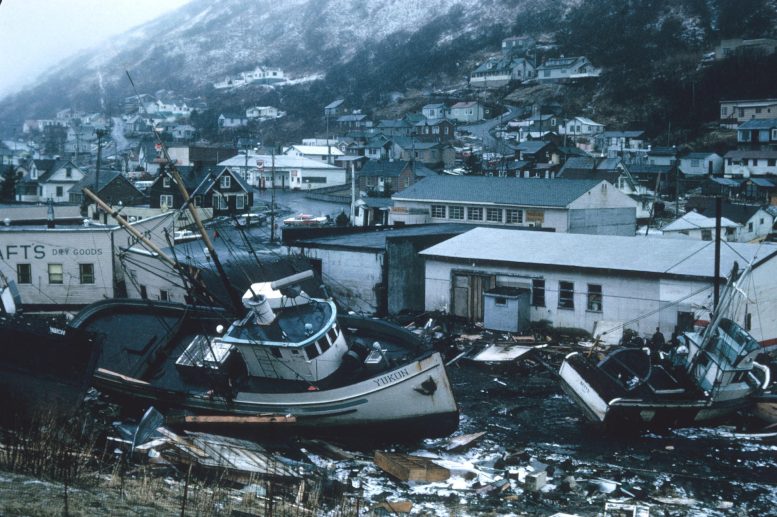
Reducing inequality and strengthening social cohesion are crucial for adapting to climate change and global crises.
The discussion around climate change has shifted from merely attempting to halt it to figuring out how we can coexist with its impacts. According to a recent study published in the Philosophical Transactions of the Royal Society B, we need to explore our cultures to discover pathways forward. The Complexity Science Hub has highlighted how historical events can offer guidance for our current predicament.
Currently, we are grappling with a global crisis convergence. Various types of threats intersect, intertwine, and test our collective resilience, from climate change and economic inequality to political polarization. Although the scale and global reach of these challenges present new hurdles, these threats have been faced and, sometimes, overcome in the past. Societies today barely have time to recover from one crisis to the next, but we possess a significant advantage: knowledge. The knowledge we can obtain from our history through new methods.
Data From More Than 150 Crises
CSH researchers Peter Turchin and Daniel Hoyer have pioneered fresh approaches to drawing lessons from history. Together with colleagues from different fields, they have compiled the Crisis Database (CrisisDB) as part of the Global History Databank Seshat, containing over 150 past crises spanning different time periods and regions.
When earthquakes shook the earth, droughts parched the land, or floods ravaged regions, some societies succumbed to social unrest, civil violence, or total collapse, while others exhibited resilience, maintaining essential social functions or even achieving improvement through systemic reforms that promoted well-being and increased democratic participation.
Daniel Hoyer remarks, “What we observe is that not every ecological shock or climatic anomaly leads to collapse or even a severe crisis, and not every crisis involves a major environmental stressor.” But what makes the difference? What drives collapse versus positive change?
Divergent Experiences in Different Times and Places
To illustrate the divergent dynamics experienced by past societies, and to highlight the comprehensiveness of their data, the researchers provide three examples. The Zapotec hilltop settlement of Monte Albán in southern Mexico emerged as the most significant settlement in the region. Extreme, persistent drought hit the region in the 9th century, and the once-great site of Monte Albán was entirely abandoned along with many other cities in Mesoamerica.
However, recent research presented here shows that this was hardly a case of ‘societal collapse’, as many former residents of Monte Albán resettled in smaller communities nearby, likely without massive mortality, but rather through an ideological and socio-economic reorientation that also preserved many aspects of their society.
On the opposite end of the spectrum, the immensely wealthy Qing Dynasty in China proved resilient to adverse ecological conditions – recurrent floods, droughts, swarms of locusts – during the early part of their reign, but by the 19th century, social pressures had built up leaving them more vulnerable to these same challenges. It was in this period that suffered the Taiping Rebellion, often seen as the bloodiest civil war in human history, and ultimately collapsed completely in 1912 after 250 years of rule.
In between, the researchers highlight the Ottoman Empire, which faced daunting environmental conditions during the 16th century, including recurrent droughts and the Little Ice Age, leading to social unrest and numerous rebellions led by disgruntled local officials and wealthy families, yet they managed to maintain key social and political structures and avoided collapse, ruling a large swath of territory for several hundreds of years more.
Generalizable to Multiple Cases
“Many studies typically concentrate on a single event or a specific society. However, it is only by exploring the responses of all, or at least many, societies affected by a particular climate ‘regime’ that we can ascertain the causal influence and overall effectiveness of the environmental stressor,” Peter Turchin says. With this objective in mind, the researchers have developed a methodological framework aimed at producing insights that can be applied to numerous cases across different regions and time periods, helping identify the underlying causes of divergent outcomes.
Understanding the Dynamics
“The course of a crisis hinges on numerous factors. Environmental forces are undeniably pivotal, but it’s not as straightforward as a specific climate event triggering a predetermined societal response,” asserts Turchin. Instead, these forces interact with cultural, political, and economic dynamics. Only by comprehending these dynamics can we fathom the interactions. Through their work on the CrisisDB program, the researchers and colleagues aim to unveil these patterns and pinpoint the key factors that either fortify or undermine resilience to contemporary climate shocks.
Reducing Social Inequality
One key initial finding is that slowly evolving structural forces, such as escalating social inequality, which also happens currently, can erode social resilience. Hoyer emphasizes, “Dealing with large-scale threats demands considerable societal cohesion.” As an example, he cites the Covid pandemic. Societies that showed higher levels of cohesion and the capacity for collective action before Covid broke out navigated the pandemic more effectively and successfully implemented the necessary distancing measures.
“Given that we reside in an era marked by increasing ecological shocks, economic disruptions, inequality, and major conflicts, our focus should be on reducing these structural pressures to build this kind of cohesion and resilience,” Hoyer underscores.
Reference: “Navigating polycrisis: long-run socio-cultural factors shape response to changing climate” by Daniel Hoyer, James S. Bennett, Jenny Reddish, Samantha Holder, Robert Howard, Majid Benam, Jill Levine, Francis Ludlow, Gary Feinman and Peter Turchin, 6 November 2023, Philosophical Transactions of the Royal Society B.
DOI: 10.1098/rstb.2022.0402
Never miss a breakthrough: Join the SciTechDaily newsletter.
Follow us on Google and Google News.