
Close Menu
    Facebook X (Twitter) Instagram
    SciTechDaily
    • Biology
    • Chemistry
    • Earth
    • Health
    • Physics
    • Science
    • Space
    • Technology
    Facebook X (Twitter) Pinterest YouTube RSS
    SciTechDaily
    Home»Science»New Analysis Sheds Light on Mystery of Turtle Remains Found in Ancient Roman Iron Age Grave
    Science

    New Analysis Sheds Light on Mystery of Turtle Remains Found in Ancient Roman Iron Age Grave

    By De GruyterOctober 31, 2023No Comments4 Mins Read
    Facebook Twitter Pinterest Telegram LinkedIn WhatsApp Email Reddit
    Share
    Facebook Twitter LinkedIn Pinterest Telegram Email Reddit
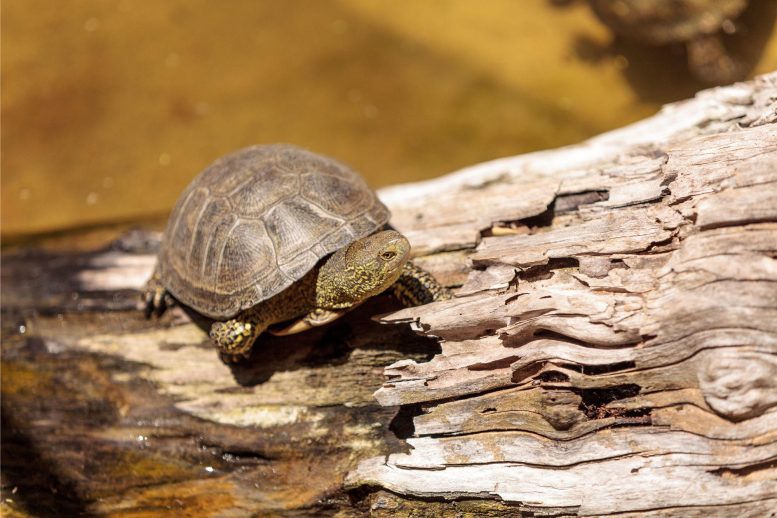
    European Pond Turtle
    Above is an image of a European pond turtle, similar to the one discovered in an ancient Wielbark culture grave in Poland. New research suggests that these turtles were not part of the culture’s burial rituals but might have entered graves post-burial, either accidentally or for hibernation.

    An examination of European pond turtle remains discovered at a burial site in Poland provides new insights into Wielbark culture burial custom.

    The discovery of a European pond turtle’s remnants in an ancient grave in northern Poland may provide new insights into the Wielbark culture. This culture flourished during the Roman Iron Age and is linked to the Goths and various Germanic tribes inhabiting the Barbaricum region — territories lying beyond the bounds of the Roman Empire from the 1st to the 5th century AD.

    Archaeological Study and Climate Indications

    In a paper published in Praehistorische Zeitschrift, Kalina Skóra of the Institute of Archaeology and Ethnology at the Polish Academy of Sciences analyzes the remains – discovered in 2010 in a cemetery in Czarnówko – in terms of the post-burial disturbance of the grave and in relation to other turtle finds from the central and eastern European Barbaricum.
    New Analysis Sheds Light on Mystery of Turtle Remains Found in a Roman Iron Age Grave in Poland Graphic
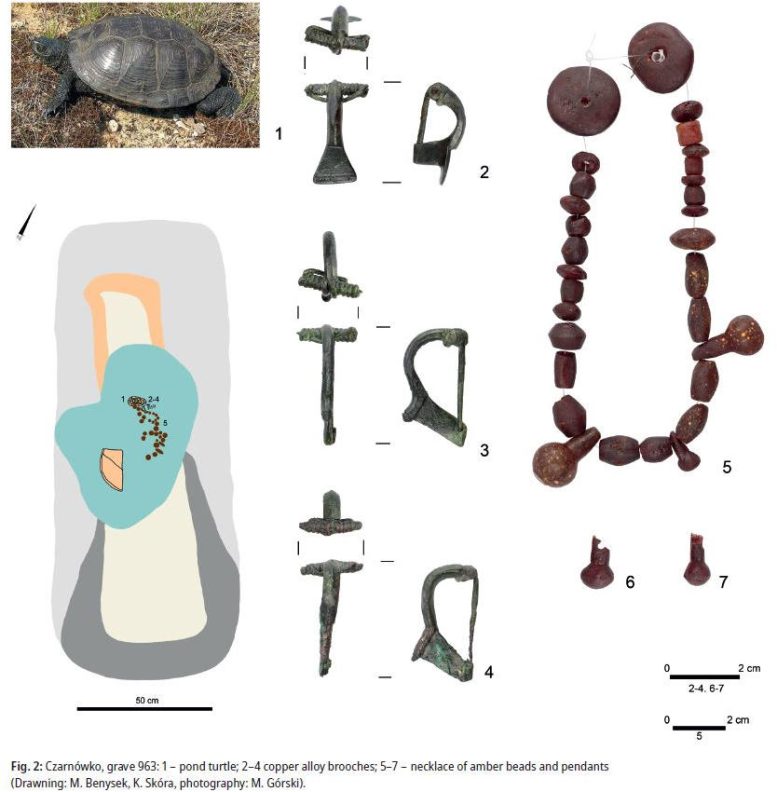
    Czarnówko, grave 963: 1 – pond turtle; 2–4 copper alloy brooches; 5–7 – necklace of amber beads and pendants. Credit: Drawing: M. Benysek, K. Skóra, photography: M. Górski, in Praehistorische Zeitschrift

    The remains are those of a European pond turtle (Emys orbicularis), a species of medium-sized freshwater turtle, found today in much of Europe. In the Roman Period, northern Poland would have provided a favorable habitat and the find indicates the kind of climatic conditions experienced in the area at that time as pond turtles require dry, warm summers to breed.

    Uncommon Find and Possible Explanations

    Pond turtles are rarely found at cemeteries in the central and eastern European Barbaricum, and this one was the first to be unearthed at the Czarnówko site. The remains were found in a secondary (or ‘robber’) trench, a type of pit created when a grave is opened for a variety of reasons, such as the removal of grave goods from the deceased or widespread post-burial practices. At Czarnówko, about 90% of the inhumation graves have been disturbed.

    While there is no evidence that turtles were eaten or were used in burial practices, it is known that they were sometimes kept as pets. Skóra notes that the turtle seemed to be near the skull of a child in a grave. It could have been placed there deliberately as part of the burial ritual or been moved there when the grave was disturbed. However, as secondary trenches often stayed unfilled for some time, it’s also possible that the turtle walked into the trench to hibernate or fell in accidentally and was unable to escape.

    Conclusions on the Significance of Turtles in Wielbark Culture

    “The analysis in this article clearly indicates that in most cases pond turtles entered the burial pits at some time after burial,” Skóra concludes. “Certainly, the pond turtle should be removed from the list of animal gifts involved in the rituals of the Wielbark culture, unless clear evidence of this should emerge. The same conclusion applies to other graves from the central and eastern Barbaricum. It is hardly a coincidental association that in all archaeologically recorded cases, the turtle remains were found in graves opened some time after burial, that is with traces of post-funeral interference.”

    Reference: “Opening graves and turtles. The pond turtle (Emys orbicularis L.) from the cemetery of the Wielbark Culture in Czarnówko and the question of post-funeral interferences in the past” by Kalina Skóra, 9 September 2023, Praehistorische Zeitschrift.
    DOI: 10.1515/pz-2023-2023

    Never miss a breakthrough: Join the SciTechDaily newsletter.
    Follow us on Google and Google News.

    Archaeology De Gruyter Reptiles Turtle
    Share. Facebook Twitter Pinterest LinkedIn Email Reddit

    Related Articles

    Spoons of Strength: Discover the Hidden Tools of Ancient Northern European Warriors

    From the Depths of Italy: Ancient Mysteries Unearthed in an Etruscan Bronze Lamp

    Hearing the Past: Psychoacoustics Unlocks Ancient Greek Sanctuary’s Secrets

    Surprising Diversity of Cretaceous Reptiles at Argentina Fossil Site – Revealed by Discovery of Ancient Teeth

    Paleontologist Trackers Discover Giant Crocodile That Walked on Two Legs

    Clues to Origin of Mysterious Tanystropheid Reptiles From New Brazilian Fossil

    Paleontologists Identify a New Species of Prehistoric Reptile, Colobops Noviportensis

    Turtle Eggs Communicate To Hatch At The Same Time

    Archaeologists Inch Closer to Understanding Stonehenge

    Leave A Reply Cancel Reply

    • Facebook
    • Twitter
    • Pinterest
    • YouTube

    Don't Miss a Discovery

    Subscribe for the Latest in Science & Tech!

    Trending News

    Largest-Ever Study Finds Medicinal Cannabis Ineffective for Anxiety, Depression, PTSD

    250-Million-Year-Old Egg Solves One of Evolution’s Biggest Mysteries

    Living With Roommates Might Be Changing Your Gut Microbiome Without You Knowing

    Century-Old Cleaning Chemical Linked to 500% Increased Risk of Parkinson’s Disease

    What if Your Memories Never Happened? Physicists Take a New Look at the Boltzmann Brain Paradox

    One of the Universe’s Largest Stars May Be Getting Ready To Explode

    Scientists Discover Enzyme That Could Supercharge Ozempic-Like Weight Loss Drugs

    Popular Sweetener Linked to DNA Damage – “It’s Something You Should Not Be Eating”

    Follow SciTechDaily
    • Facebook
    • Twitter
    • YouTube
    • Pinterest
    • Newsletter
    • RSS
    SciTech News
    • Biology News
    • Chemistry News
    • Earth News
    • Health News
    • Physics News
    • Science News
    • Space News
    • Technology News
    Recent Posts
    • Scientists Prove There Are Just Six Degrees of Separation in a Social Network
    • Bee Bacteria Could Fix a Major Flaw in Plant-Based Milk
    • Scientists Discover a Surprising Way To Make Bread Healthier and More Nutritious
    • Natural Compounds Boost Bone Implant Success While Killing Bacteria and Cancer Cells
    • After 60 Years, Scientists Uncover Unexpected Brain Effects of Popular Diabetes Drug Metformin
    Copyright © 1998 - 2026 SciTechDaily. All Rights Reserved.
    • Science News
    • About
    • Contact
    • Editorial Board
    • Privacy Policy
    • Terms of Use

    Type above and press Enter to search. Press Esc to cancel.