
Discovery brings nearly dead plants back to life.
Scientists have been aware of a specific organelle in plant cells for more than a hundred years. However, UC Riverside scientists have only now discovered the organelle’s key role in aging.
The researchers initially set out to understand more generally which parts of plant cells control plant responses to stress from things like infections, too much salt, or too little light. Serendipitously, they found this organelle, and a protein responsible for maintaining the organelle, control whether plants survive being left too often in the dark.
Because they had not expected this discovery, which is described in a Nature Plants journal article, the research team was thrilled.
“For us, this finding is a big deal. For the first time, we have defined the profound importance of an organelle in the cell that was not previously implicated in the process of aging,” said Katie Dehesh, distinguished professor of molecular biochemistry at UCR and co-author of the new article.
The Golgi Body and COG Protein: Key Players in Cellular Health
Sometimes described as appearing like a stack of deflated balloons or some dropped lasagna, the organelle called the Golgi body is composed of a series of cup-shaped membrane-covered sacs. It sorts various molecules in the cell and ensures they get to the right places.
“Golgi are like the post office of the cell. They package and send out proteins and lipids to where they’re needed,” said Heeseung Choi, a researcher in UCR’s Botany and Plant Sciences Department and co-author of the new study. “A damaged Golgi can create confusion and trouble in the cell’s activities, affecting how the cell works and stays healthy.”
If the Golgi is the post office, then the COG protein is the postal worker. This protein controls and coordinates the movement of small sac “envelopes” that transport other molecules around the cell.
Additionally, COG helps Golgi bodies attach sugars to other proteins or lipids before they are sent elsewhere in the cell. This sugar modification, called glycosylation, is crucial for many biological processes, including immune response.
Experimental Insights into the Role of COG
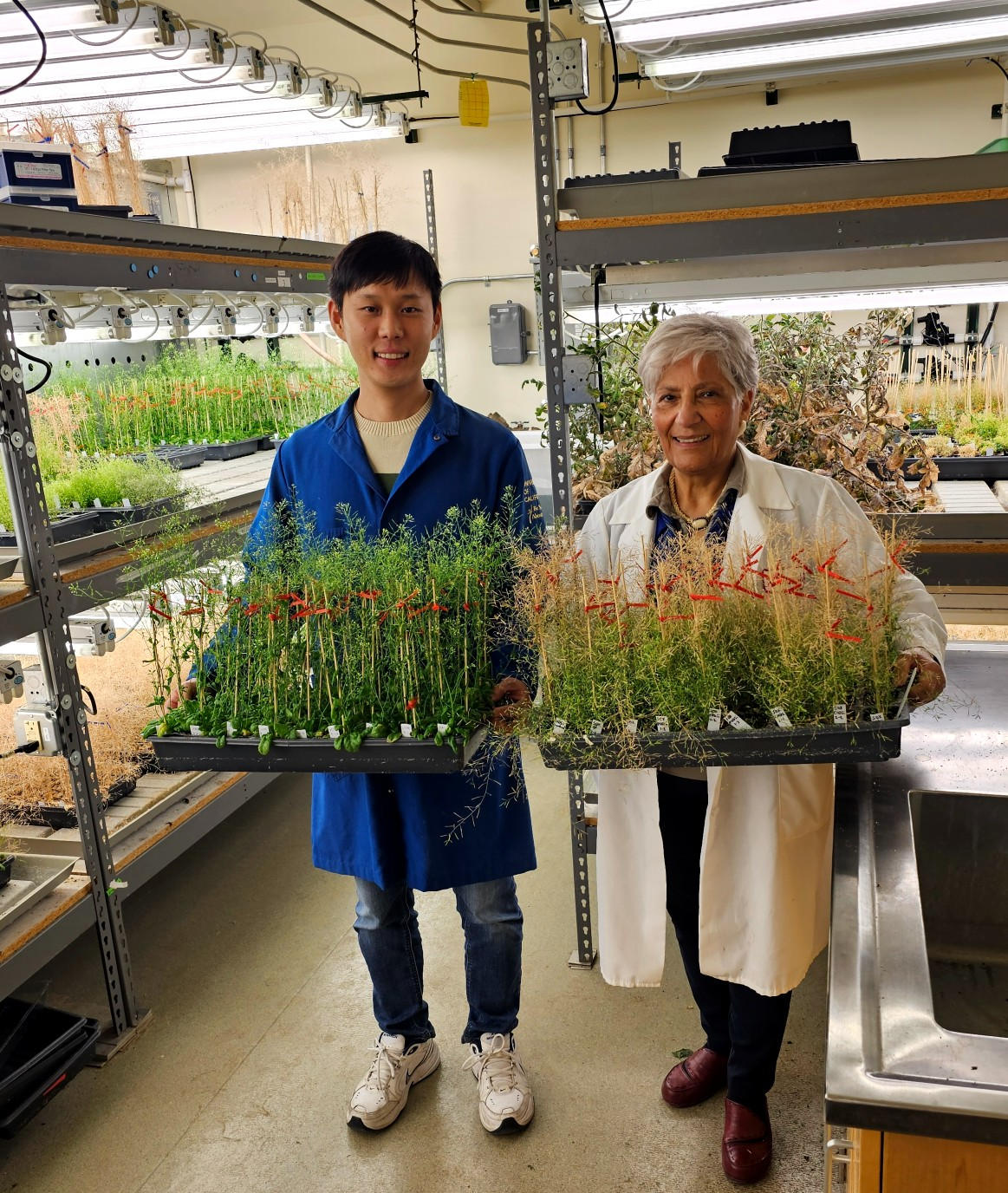
To learn more about how COG affects plant cells, the research team modified some plants so that they could not produce it. Under normal growing conditions, the modified plants grew just fine and were indistinguishable from unmodified plants.
However, depriving plants of light means plants are unable to make sugar from sunlight to fuel growth. When exposed to excessive darkness the leaves of the mutant, COG-free plants began to turn yellow, wrinkled, and thin — signs the plants were dying.
“In the dark, the COG mutants showed signs of aging that typically appear in wild, unmodified plants around day nine. But in the mutants, these signs manifested in just three days,” Choi said.
Reversing the mutation and returning the COG protein back into the plants rapidly brought them back to life. “It’s like nothing happened to them once we reversed the mutation,” Dehesh said. “These responses highlight the critical importance of the COG protein and normal Golgi function in stress management,” Choi added.
Part of the excitement surrounding this discovery is that humans, plants, and all eukaryotic organisms have Golgi bodies in their cells. Now, plants can serve as a platform to explore the intricacies of the Golgi’s role in human aging. For this reason, the research team is planning further studies of the molecular mechanisms behind the results from this study.
“Not only does our research advance our knowledge about how plants age, but it could also provide crucial clues about aging in humans,” Dehesh said. “When the COG protein complex doesn’t work properly, it might make our cells age faster, just like what we saw in plants when they lacked light. This breakthrough could have far-reaching implications for the study of aging and age-related diseases.”
Reference: “COG-imposed Golgi functional integrity determines the onset of dark-induced senescence” by Hee-Seung Choi, Marta Bjornson, Jiubo Liang, Jinzheng Wang, Haiyan Ke, Manhoi Hur, Amancio De Souza, Kavitha Satish Kumar, Jenny C. Mortimer and Katayoon Dehesh, 26 October 2023, Nature Plants.
DOI: 10.1038/s41477-023-01545-3
Never miss a breakthrough: Join the SciTechDaily newsletter.
Follow us on Google and Google News.
6 Comments
waters a dead plant as it comes back to life.
What?
If you take vivas or even better trees. They can live for hundreds of years. There is also the fact that trees and plants live in soil.
I didn’t read the article, but it’s water, right?
Great articles about science at the reach of everybody. I recommend.
I have two coffee trees about sixteen inches tall that look like they are near dying. When I saw this news article, I expected to see some specific details about how to keep them alive. I continue to water them and keep them indoors next to a patio door to provide them with sunlight. However, they do not seem to be recovering.