
Close Menu
    Facebook X (Twitter) Instagram
    SciTechDaily
    • Biology
    • Chemistry
    • Earth
    • Health
    • Physics
    • Science
    • Space
    • Technology
    Facebook X (Twitter) Pinterest YouTube RSS
    SciTechDaily
    Home»Space»New Horizons Spacecraft Captures Record-Breaking Images
    Space

    New Horizons Spacecraft Captures Record-Breaking Images

    By Bill Keeter, NASAFebruary 9, 2018No Comments3 Mins Read
    Facebook Twitter Pinterest Telegram LinkedIn WhatsApp Email Reddit
    Share
    Facebook Twitter LinkedIn Pinterest Telegram Email Reddit
    New Horizons Spacecraft Captures Record-Breaking Images in the Kuiper Belt
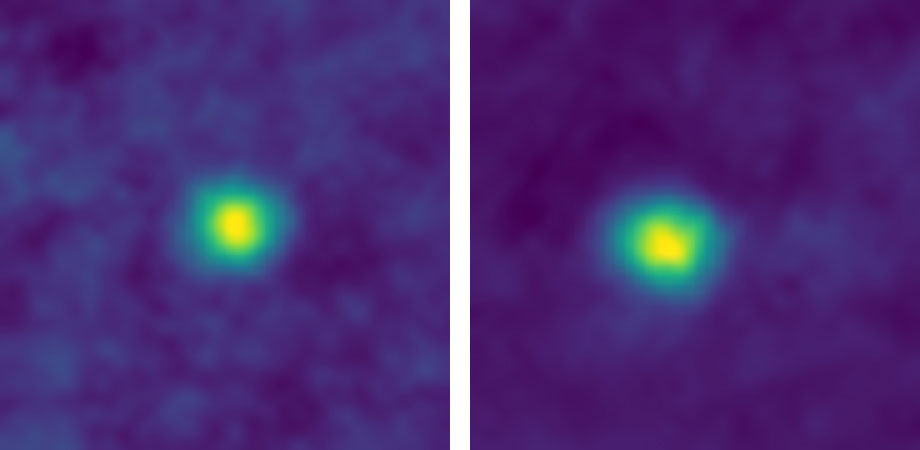
    With its Long Range Reconnaissance Imager (LORRI), New Horizons has observed several Kuiper Belt objects (KBOs) and dwarf planets at unique phase angles, as well as Centaurs at extremely high phase angles to search for forward-scattering rings or dust. These December 2017 false-color images of KBOs 2012 HZ84 (left) and 2012 HE85 are, for now, the farthest from Earth ever captured by a spacecraft. They’re also the closest-ever images of Kuiper Belt objects. Credit: NASA/JHUAPL/SwRI

    NASA’s New Horizons spacecraft recently turned its telescopic camera toward a field of stars, snapped an image – and made history.

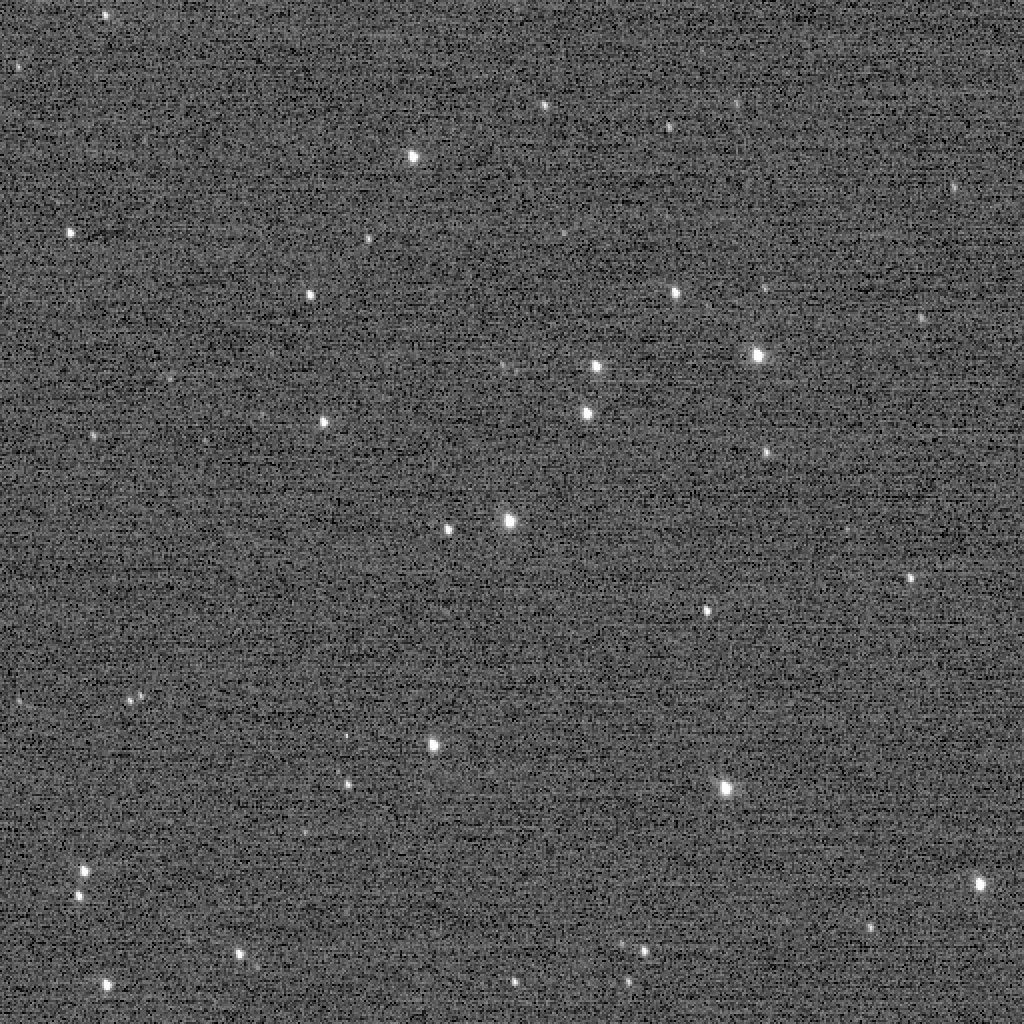
    The routine calibration frame of the “Wishing Well” galactic open star cluster, made by the Long Range Reconnaissance Imager (LORRI) on December 5, was taken when New Horizons was 3.79 billion miles (6.12 billion kilometers, or 40.9 astronomical units) from Earth – making it, for a time, the farthest image ever made from Earth.

    New Horizons was even farther from home than NASA’s Voyager 1 when it captured the famous “Pale Blue Dot” image of Earth. That picture was part of a composite of 60 images looking back at the solar system, on February 14, 1990, when Voyager was 3.75 billion miles (6.06 billion kilometers, or about 40.5 astronomical units [AU]) from Earth. Voyager 1’s cameras were turned off shortly after that portrait, leaving its distance record unchallenged for more than 27 years.

    LORRI broke its own record just two hours later with images of Kuiper Belt objects 2012 HZ84 and 2012 HE85 – further demonstrating how nothing stands still when you’re covering more than 700,000 miles (1.1 million kilometers) of space each day.

    Distance and Speed
    NASA Spacecraft Capture Record-Breaking Images
    For a short time, this New Horizons Long Range Reconnaissance Imager (LORRI) frame of the “Wishing Well” star cluster, taken December 5, 2017, was the farthest image ever made by a spacecraft, breaking a 27-year record set by Voyager 1. About two hours later, New Horizons later broke the record again. Credit: NASA/JHUAPL/SwRI

    New Horizons is just the fifth spacecraft to speed beyond the outer planets, so many of its activities set distance records. On December 9 it carried out the most-distant course-correction maneuver ever, as the mission team guided the spacecraft toward a close encounter with a KBO named 2014 MU69 on January 1, 2019. That New Year’s flight past MU69 will be the farthest planetary encounter in history, happening one billion miles beyond the Pluto system – which New Horizons famously explored in July 2015.

    During its extended mission in the Kuiper Belt, which began in 2017, New Horizons is aiming to observe at least two-dozen other KBOs, dwarf planets and “Centaurs,” former KBOs in unstable orbits that cross the orbits of the giant planets. Mission scientists study the images to determine the objects’ shapes and surface properties, and to check for moons and rings. The spacecraft also is making nearly continuous measurements of the plasma, dust and neutral-gas environment along its path. 

    The New Horizons spacecraft is healthy and is currently in hibernation. Mission controllers at the Johns Hopkins Applied Physics Laboratory in Laurel, Maryland, will bring the spacecraft out of its electronic slumber on June 4 and begin a series of system checkouts and other activities to prepare New Horizons for the MU69 encounter.

    Follow New Horizons on its trek through the Kuiper Belt at:

    • https://www.nasa.gov/mission_pages/newhorizons/main/index.html
    • http://pluto.jhuapl.edu/Mission/Where-is-New-Horizons/index.php

    Never miss a breakthrough: Join the SciTechDaily newsletter.
    Follow us on Google and Google News.

    Astronomy Kuiper Belt New Horizons
    Share. Facebook Twitter Pinterest LinkedIn Email Reddit

    Related Articles

    What’s Lurking in the Kuiper Belt? NASA’s Unexpected New Discovery

    NASA Wants Your Ideas on What to Name New Horizons’ Next Flyby Target

    Kuiper Belt Object 2014 MU69 Just Got a Lot More Interesting

    New Horizons Captures New Data on Kuiper Belt Object 2014 MU69

    New Mysteries Surround Kuiper Belt Object 2014 MU69

    NASA’s New Horizons Spacecraft Halfway to KBO 2014 MU69

    New Horizons Spots a Wandering Kuiper Belt Object

    NASA Selects Potential Kuiper Belt Target for New Horizons

    Astrophysicist Scott Kenyon Shares His Thoughts and Reactions on New Horizons’ Flyby of Pluto

    Leave A Reply Cancel Reply

    • Facebook
    • Twitter
    • Pinterest
    • YouTube

    Don't Miss a Discovery

    Subscribe for the Latest in Science & Tech!

    Trending News

    Scientists Discover 132-Million-Year-Old Dinosaur Tracks on South Africa’s Coast

    Scientists Uncover the Secret Ingredient Behind the Spark That May Have Started Life on Earth

    Physicists Observe Matter in Two Places at Once in Mind-Bending Quantum Experiment

    Stanford Scientists Discover Hidden Brain Circuit That Fuels Chronic Pain

    New Study Reveals Why Ozempic Works Better for Some People Than Others

    Climate Change Is Altering a Key Greenhouse Gas in a Way Scientists Didn’t Expect

    New Study Suggests Gravitational Waves May Have Created Dark Matter

    Scientists Discover Why the Brain Gets Stuck in Schizophrenia

    Follow SciTechDaily
    • Facebook
    • Twitter
    • YouTube
    • Pinterest
    • Newsletter
    • RSS
    SciTech News
    • Biology News
    • Chemistry News
    • Earth News
    • Health News
    • Physics News
    • Science News
    • Space News
    • Technology News
    Recent Posts
    • Naturally Occurring Bacteria Completely Eradicate Tumors in Mice With a Single Dose
    • The Ideal Temperature for Storing Mangoes Isn’t What You Think
    • Groundbreaking Enzyme Atlas Rewrites Decades of Biology Research
    • New “Nanozyme Hypothesis” Could Rewrite the Story of Life’s Origins
    • Anatomy Isn’t Finished: The Human Body Still Holds Secrets
    Copyright © 1998 - 2026 SciTechDaily. All Rights Reserved.
    • Science News
    • About
    • Contact
    • Editorial Board
    • Privacy Policy
    • Terms of Use

    Type above and press Enter to search. Press Esc to cancel.