
New research reveals clues about the physical and chemical characteristics of Earth when life is thought to have emerged.
About four billion years ago, the first signs of life emerged on Earth in the form of microbes. Although scientists are still determining exactly when and how these microbes appeared, it’s clear that the emergence of life is intricately intertwined with the chemical and physical characteristics of early Earth.
“It is reasonable to suspect that life could have started differently—or not at all—if the early chemical characteristics of our planet were different,” says Dustin Trail, an associate professor of earth and environmental sciences at the University of Rochester.
But what was Earth like billions of years ago, and what characteristics may have helped life to form? In a paper published in the journal Science, on February 9, Trail and Thomas McCollom, a research associate at the University of Colorado Boulder, reveal key information in the quest to find out. The research has important implications not only for discovering the origins of life but also for the search for life on other planets.
“We are now at an exciting time in which humankind is searching for life on other planets and moons, as well as in other planetary systems,” Trail says. “But we still do not know how—or even when, really—life started on our own planet. Research like ours helps identify specific conditions and chemical pathways that could have supported the emergence of life, work which is certain to factor prominently into the search for life outside of our planet.”
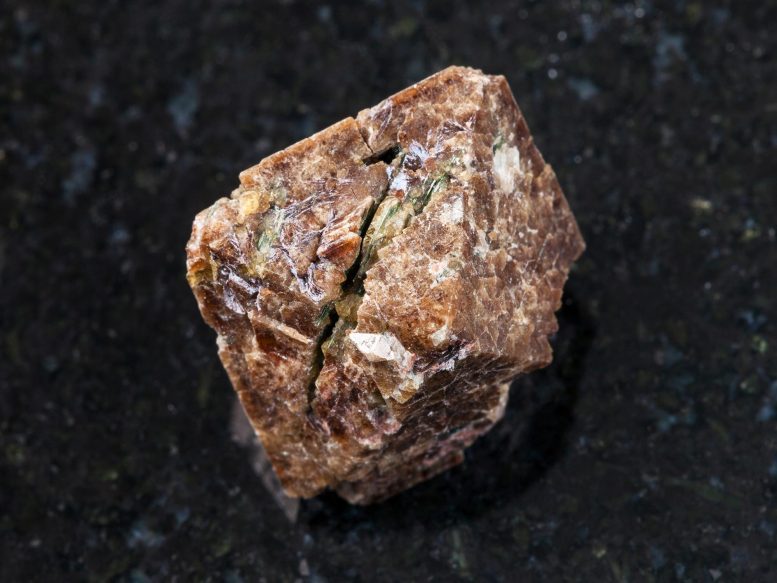
The Importance of Metals in the Emergence of Life
Research into life and its origins typically involves a variety of disciplines including genomics, the study of genes and their functions; proteomics, the study of proteins; and an emerging field called metallomics, which explores the important role of metals in performing cellular functions. As life evolved, the need for certain metals changed, but Trail and McCollom wanted to determine what metals may have been available when microbes first appeared billions of years ago.
“When hypotheses are proposed for different origin-of-life scenarios, scientists have generally assumed all metals were available because there weren’t studies that provided geologically robust constraints on metal concentrations of fluids for the earliest times of Earth’s history,” Trail says.
To address this shortcoming, Trail and McCollom studied the composition and characteristics of fluids in the lithosphere—the outer layer of Earth that includes the crust and upper mantle—billions of years ago. These lithospheric fluids are key pathways to transport dissolved parts of rocks and minerals between Earth’s interior and hydrothermal pools in its exterior where microbial life could have formed. While researchers cannot directly measure the metals that existed billions of years ago, by determining the properties of the fluids, they can infer what metals—and the concentrations of the metals—could feasibly have been transported between Earth’s interior and exterior during the time when life emerged on the planet.
Clues in Billion-Year-Old Minerals
Billion-year-old rocks and minerals are often the only direct sources of information about Earth’s earliest history. That’s because the rocks and minerals lock in information about the composition of Earth at the time they are formed.
The researchers conducted high-pressure, high-temperature experiments and applied these results to early-Earth zircons, a robust type of mineral collected at sites in Western Australia, to determine the oxygen pressure, chlorine content, and temperature of lithospheric fluids billions of years ago. They then input this information into computer models. The models allowed them to simulate the properties of the lithospheric fluids, and, in turn, simulate which metals could have traveled through the fluids to reach hydrothermal pools at Earth’s surface.
Understanding How Life Originated
The researchers were surprised by what the model simulations indicated. Many origin-of-life researchers, for instance, consider copper a likely component in the chemistry that could have led to life. But Trail and McCollom did not find evidence that copper would have been abundant under the constraints in their analysis.
One metal they did test that may have been available in high concentrations was manganese. While it is rarely considered in origin-of-life scenarios, today manganese helps the body form bones and assists enzymes in breaking down carbohydrates and cholesterol.
“Our research shows that metals like manganese may function as important links between the ‘solid’ Earth and emerging biological systems at Earth’s surface,” Trail says.
Trail says the research will help scientists studying the origin of life to input more concrete data into their experiments and models.
“Experiments designed with this information in mind will result in a better understanding of how life originated.”
Reference: “Relatively oxidized fluids fed Earth’s earliest hydrothermal systems” by Dustin Trail and Thomas M. McCollom, 9 February 2023, Science.
DOI: 10.1126/science.adc8751
Never miss a breakthrough: Join the SciTechDaily newsletter.
Follow us on Google and Google News.
3 Comments
I’d be interested in more information on this topic.
This is my current favorite subject (abiogenesis). This is yet another article touting another chemical as the ‘magic ingredient’ for the creation of biological life. Until science can explain a single protein, it has no credibility in its explanations for the existence of biological life.
Agreed. Another example of the collective intellectual dishonesty (or perhaps credulity, if we’re generous) of science writers to hype the topic. In fact, scientists are not even close to jumping the hurdles associated with abiogenesis.