
Disk of Galaxy Identified As Region Where New Stars Are Born
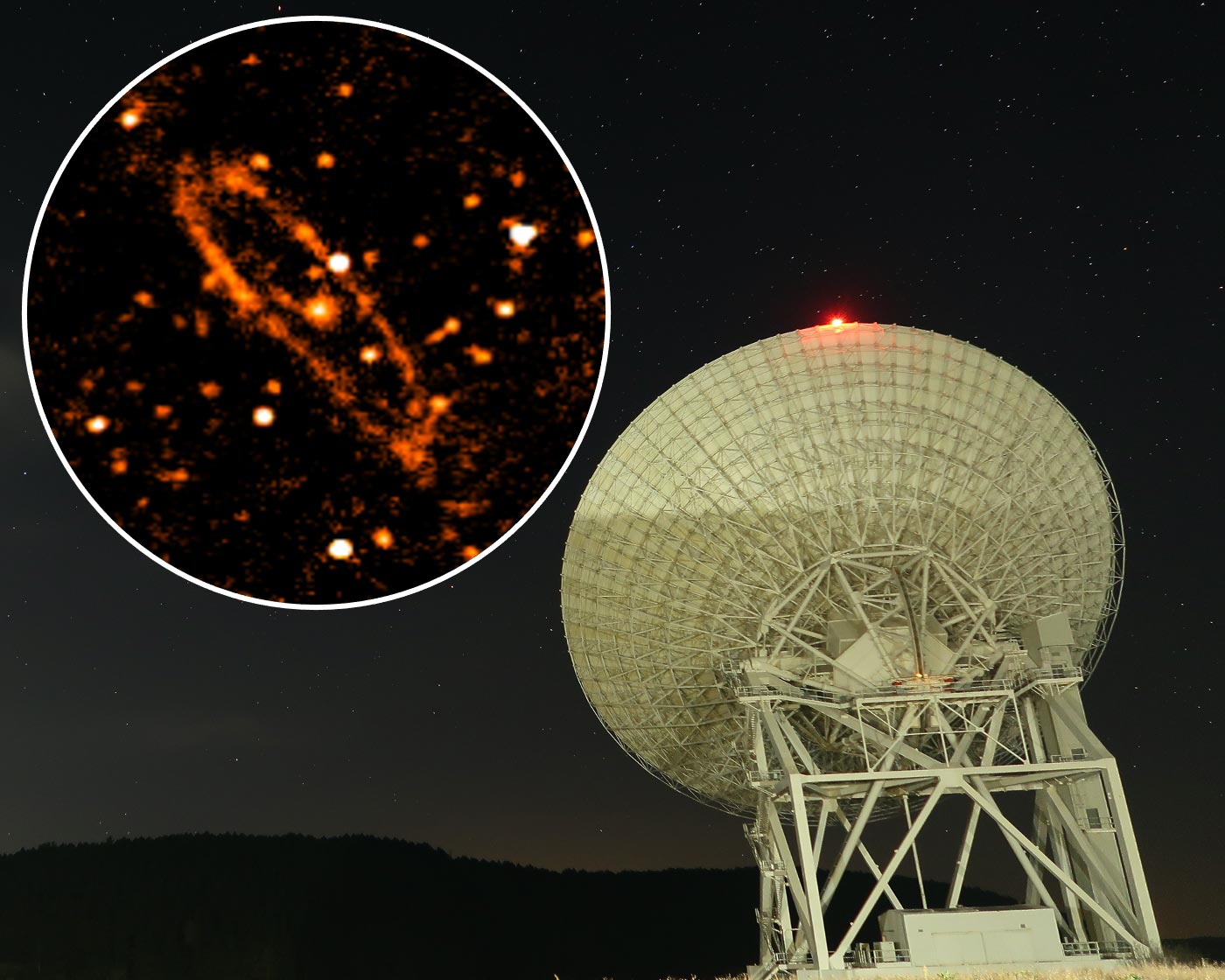
Scientists have published a new, detailed radio image of the Andromeda galaxy – the Milky Way’s sister galaxy – which will allow them to identify and study the regions of Andromeda where new stars are born.
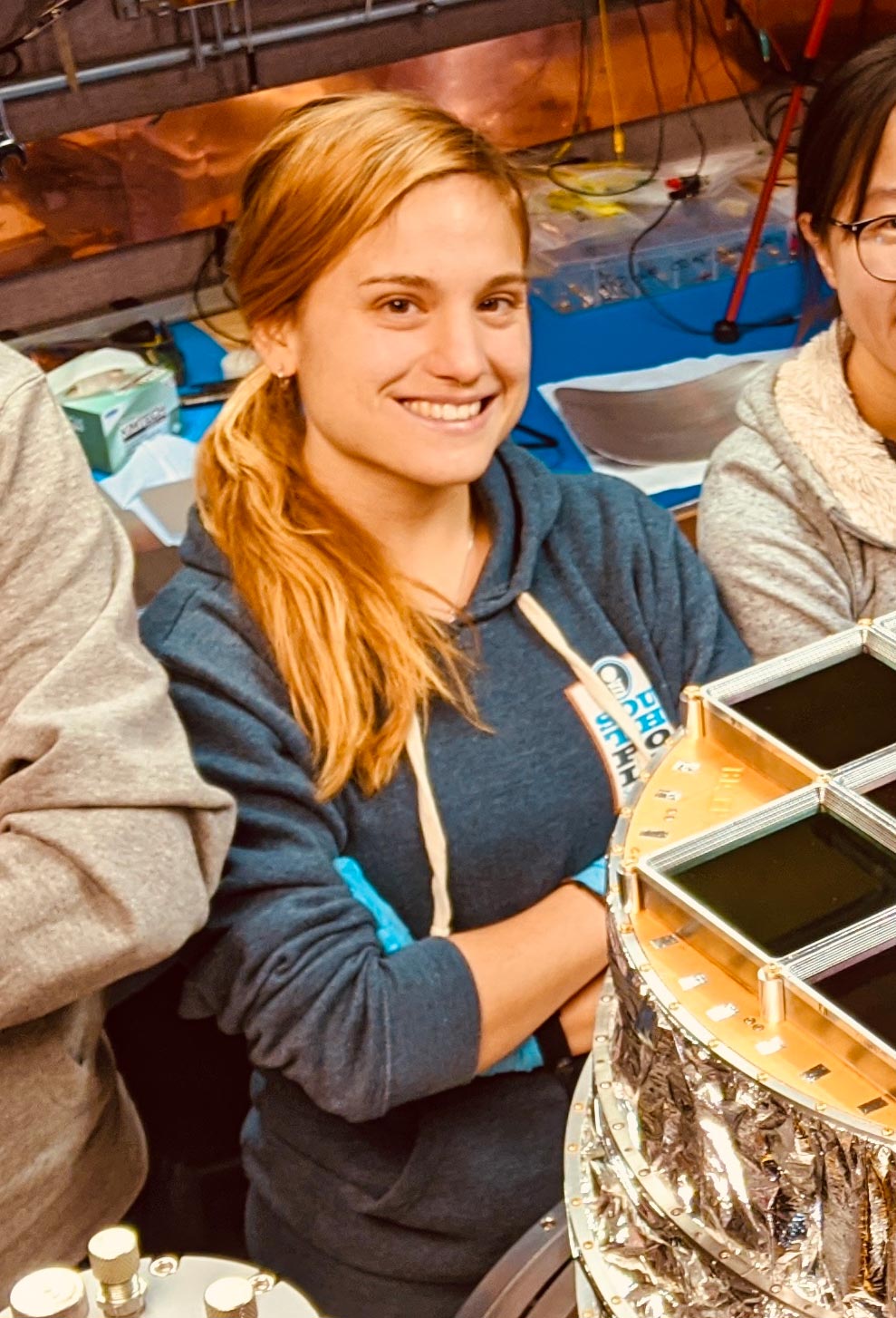
The study – which is the first to create a radio image of Andromeda at the microwave frequency of 6.6 GHz – was led by University of British Columbia physicist Sofia Fatigoni, with colleagues at Sapienza University of Rome and the Italian National Institute of Astrophysics. It was published online in Astronomy and Astrophysics.
“This image will allow us to study the structure of Andromeda and its content in more detail than has ever been possible,” said Fatigoni, a PhD student in the Department of Physics and Astronomy at UBC. “Understanding the nature of physical processes that take place inside Andromeda allows us to understand what happens in our own galaxy more clearly – as if we were looking at ourselves from the outside.”
Prior to this study, no maps capturing such a large region of the sky around the Andromeda Galaxy had ever been made in the microwave band frequencies between one GHz to 22 GHz. In this range, the galaxy’s emission is very faint, making it hard to see its structure. However, it is only in this frequency range that particular features are visible, so having a map at this particular frequency is crucial to understanding which physical processes are happening inside Andromeda.
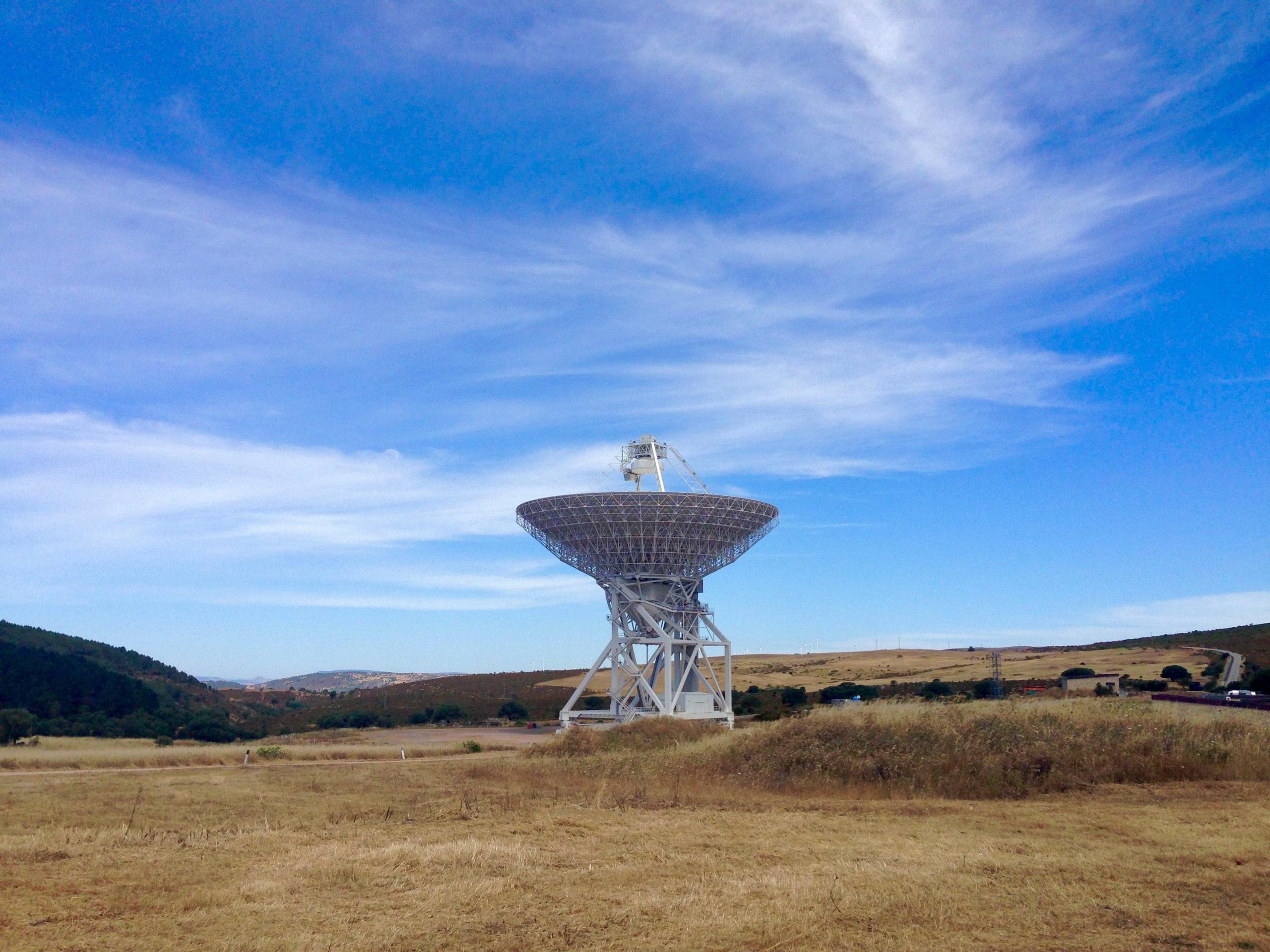
In order to observe Andromeda at this frequency, the researchers required a single-dish radio telescope with a large effective area. For the study, the scientists turned to the Sardinia Radio Telescope, a 64-meter (210-foot) fully steerable telescope capable of operating at high radio frequencies, located in Italy.
It took 66 hours of observation and consistent data analysis for the researchers to map the galaxy with high sensitivity.
Revealing Star Birth Zones and Galaxy Structure
They were then able to estimate the rate of star formation within Andromeda, and produce a detailed map that highlighted the ‘disk of the galaxy,’ as the region where new stars are born.
“By combining this new image with those previously acquired, we have made significant steps forward in clarifying the nature of Andromeda’s microwave emissions and allowing us to distinguish physical processes that occur in different regions of the galaxy,” said Dr. Elia Battistelli, a professor in the department of physics at Sapienza and coordinator of the study.
“In particular, we were able to determine the fraction of emissions due to thermal processes related to the early stations of new star formation, and the fraction of radio signals attributable to non-thermal mechanisms due to cosmic rays that spiral in the magnetic field present in the interstellar medium,” Fatigoni said.
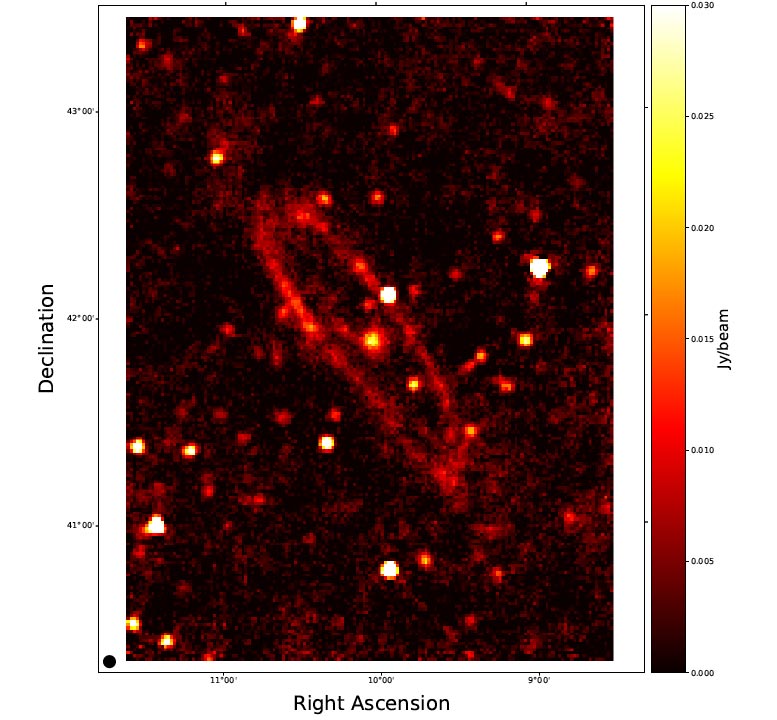
For the study, the team also developed and implemented software that allowed them to test new algorithms to identify never-before-examined lower emission sources in the field of view around Andromeda at a frequency of 6.6 GHz.
From the resulting map, researchers were able to identify a catalog of about 100 ‘point sources’ including stars, galaxies and other objects in the background of Andromeda.
Reference: “Study of the thermal and nonthermal emission components in M 31: the Sardinia Radio Telescope view at 6.6 GHz” by S. Fatigoni, F. Radiconi, E. S. Battistelli, M. Murgia, E. Carretti, P. Castangia, R. Concu, P. de Bernardis, J. Fritz, R. Genova-Santos, F. Govoni, F. Guidi, L. Lamagna, S. Masi, A. Melis, R. Paladini, F. M. Perez-Toledo, F. Piacentini, S. Poppi, R. Rebolo, J. A. Rubino-Martin, G. Surcis, A. Tarchi and V. Vacca, 23 July 2021, Astronomy and Astrophysics.
DOI: 10.1051/0004-6361/202040011
Never miss a breakthrough: Join the SciTechDaily newsletter.
Follow us on Google and Google News.
8 Comments
… cool, if not cold…
Great job fan!! Whole new world out here ain’t it? Takes my mind of this tiny earth and seeing there is more,way more ta life then this! Someday we will be able to live forever, that can only happen once we have life in other world’s! Other wise we would become over populated
At Post chikhali,Tal Haveli,Dist Pune
Awesome picture. Back in the early 70’s I had a crazy cat lady neighbor. She was elderly. She swore she was from there. Always said her people were coming for her. One day she just up and vanished. Left all her stuff. Even her car. Guessing she went home.
…or the cats ate her. More logical then traveling 2.537 million light years to Andromeda.
It often brings out a feeling of wonderment, and great curiosity… Why presumably fully educated English speaking adults don’t know the difference between the words then, and than. Oh, It’s not just individuals commenting here. It is easily 50% of Millennials. Even, sadly, among professional journalists the rate is astronomically high. Were you up later than your bed time? Then maybe you should get some sleep.
Philip for the sake of everything holy… don’t be that guy. May adjust the stick that lodged up there. Beautiful pic of Andromeda btw!
Oh sorry Philly boy let me correct my sentence (Maybe* adjust the stick that’s lodged between those cheeks) Toodles