

Human circadian rhythms remain tied to seasonal sunlight, with genetic differences influencing how individuals respond to day length and shift work.
It may be easy to assume that modern conveniences like electric lights and indoor bedrooms have freed us from the natural influence of sunlight on our sleep.
However, new research from the University of Michigan reveals that our circadian rhythms still respond strongly to seasonal changes in daylight.
“Humans really are seasonal, even though we might not want to admit that in our modern context,” said study author Ruby Kim, U-M postdoctoral assistant professor of mathematics. “Day length, the amount of sunlight we get, it really influences our physiology. The study shows that our biologically hardwired seasonal timing affects how we adjust to changes in our daily schedules.”
Implications for mental and physical health
This finding could lead to new ways of studying and understanding seasonal affective disorder, a type of depression linked to seasonal changes. It may also open new avenues of research into other health conditions that are influenced by how well our sleep patterns align with our internal body clocks.
For example, researchers—including the study’s senior author, Daniel Forger—have previously shown that our moods are closely tied to the alignment between our sleep schedules and circadian rhythms.
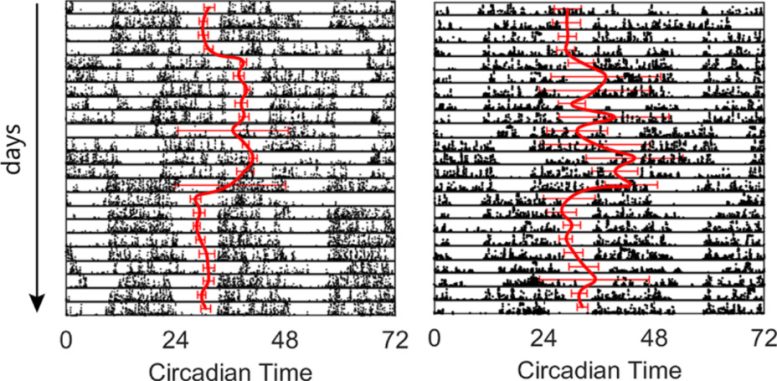
“This work shows a lot of promise for future findings,” Kim said of the new study published in the journal npj Digital Medicine. “This may have deeper implications for mental health issues, like mood and anxiety, but also metabolic and cardiovascular conditions as well.”
Genetics and individual differences
The research also revealed a genetic component to seasonal sensitivity in humans, which may help explain why some individuals are more affected by changes in day length than others.
“For some people, they might be able to adapt better, but for other people, it could be a whole lot worse,” said Forger, U-M professor of math and director of the Michigan Center for Applied and Interdisciplinary Mathematics.
Exploring this genetic component will help researchers and doctors understand where individuals fall on that spectrum, but getting to that point will take more time and effort. For now, this study is an early but important step that reframes how we conceive of human circadian rhythms.
Rethinking the human body clock
“A lot of people tend to think of their circadian rhythms as a single clock,” Forger said. “What we’re showing is that there’s not really one clock, but there are two. One is trying to track dawn and the other is trying to track dusk, and they’re talking to each other.”
Kim, Forger, and their colleagues revealed that people’s circadian rhythms were tuned into the seasonality of sunlight by studying sleep data from thousands of people using wearable health devices, like Fitbits. Participants were all medical residents completing a one-year internship who had enrolled in the Intern Health Study, funded by the National Institutes of Health.
Interns are shift workers whose schedules change frequently, meaning their sleep schedules do as well. Furthermore, these schedules are often at odds with the natural cycles of day and night.
The fact that circadian rhythms in this population exhibited a seasonal dependence is a compelling argument for just how hardwired this feature is in humans, which isn’t altogether surprising, the researchers said.
Evidence from nature supports findings
There’s a lot of evidence from studies of fruit flies and rodents that animals possess seasonal circadian clocks, Forger said, and other researchers have thought humans’ circadian clocks may behave similarly. Now, the U-M team has provided some of the strongest support for the idea yet in observing how that seasonality plays out in a large, real-world study.
“I think it actually makes a lot of sense. Brain physiology has been at work for millions of years trying to track dusk and dawn,” Forger said. “Then industrialization comes along in the blink of evolution’s eye and, right now, we’re still racing to catch up.”
Genetic links to circadian disruption
Participants in the Intern Health Study also provided a saliva sample for DNA testing, which enabled Kim and Forger’s team to include a genetic component of their study. Genetic studies led by other researchers have identified a specific gene that plays an important role in how other animals’ circadian clocks track seasonal changes.
Humans share this gene, which allowed the U-M team to identify a small percentage of interns with slight variations in the genetic makeup of that gene. For that group of people, shift work was more disruptive to the alignment of their circadian clocks and sleep schedules over seasons.
Again, this raises many questions, especially about health implications and the influence of shift work on different individuals. But these are questions the researchers plan to explore in the future.
Reference: “Seasonal timing and interindividual differences in shiftwork adaptation” by Ruby Kim, Yu Fang, Minki Lee, Dae Wook Kim, Zhengxu Tang, Srijan Sen and Daniel B. Forger, 28 May 2025, npj Digital Medicine.
DOI: 10.1038/s41746-025-01678-z
Never miss a breakthrough: Join the SciTechDaily newsletter.
Follow us on Google and Google News.
1 Comment
HELLO SCIENTIFIC FRIENDS *
Infinite greeting upon the reminder *
******* good luck *******