
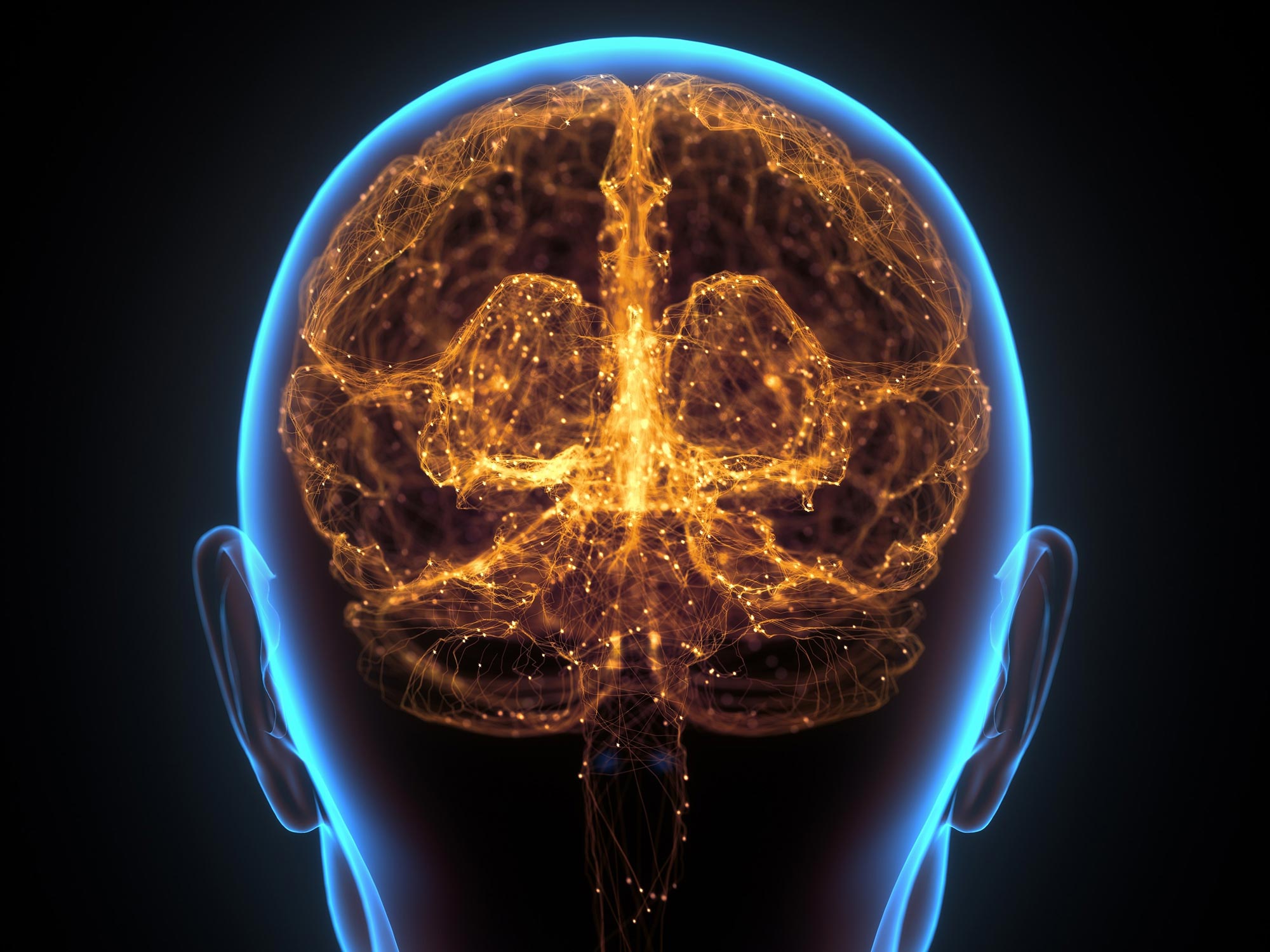
Cornell University research demonstrates that sleep resets the hippocampus, enabling continuous learning and offering new strategies for treating memory-related disorders.
While everyone knows that a good night’s sleep restores energy, a new Cornell University study finds it resets another vital function: memory.
Learning or experiencing new things activates neurons in the hippocampus, a region of the brain vital for memory. Later, while we sleep, those same neurons repeat the same pattern of activity, which is how the brain consolidates those memories that are then stored in a large area called the cortex. But how is it that we can keep learning new things for a lifetime without using up all of our neurons?
Mechanisms of Memory Resetting
A new study published in the journal Science, finds at certain times during deep sleep, certain parts of the hippocampus go silent, allowing those neurons to reset.
“This mechanism could allow the brain to reuse the same resources, the same neurons, for new learning the next day,” said Azahara Oliva, assistant professor of neurobiology and behavior and the paper’s corresponding author.
The hippocampus is divided into three regions: CA1, CA2 and CA3. CA1 and CA3 are involved in encoding memories related to time and space and are well-studied; less is known about CA2, which the current study found generates this silencing and resetting of the hippocampus during sleep.
The researchers implanted electrodes in the hippocampi of mice, which allowed them to record neuronal activity during learning and sleep. In this way, they could observe that, during sleep, the neurons in the CA1 and CA3 areas reproduce the same neuronal patterns that developed during learning during the day. But the researchers wanted to know how the brain continues learning each day without overloading or running out of neurons.
“We realized there are other hippocampal states that happen during sleep where everything is silenced,” Oliva said. “The CA1 and CA3 regions that had been very active were suddenly quiet. It’s a reset of memory, and this state is generated by the middle region, CA2.”
Implications for Memory Enhancement and Treatment
Cells called pyramidal neurons are thought to be the active neurons that matter for functional purposes, such as learning. Another type of cell, called interneurons, has different subtypes. The researchers discovered that the brain has parallel circuits regulated by these two types of interneurons – one that regulates memory, the other that allows for resetting of memories.
The researchers believe they now have the tools to boost memory, by tinkering with the mechanisms of memory consolidation, which could be applied when memory function falters, such as in Alzheimer’s disease. Importantly, they also have evidence for exploring ways to erase negative or traumatic memories, which may then help treat conditions such as post-traumatic stress disorder.
The result helps explain why all animals require sleep, not only to fix memories, but also to reset the brain and keep it working during waking hours. “We show that memory is a dynamic process,” Oliva said.
Reference: “A hippocampal circuit mechanism to balance memory reactivation during sleep” by Lindsay A. Karaba, Heath L. Robinson, Ryan E. Harvey, Weiwei Chen, Antonio Fernandez-Ruiz and Azahara Oliva, 15 August 2024, Science.
DOI: 10.1126/science.ado5708
The study was funded by the National Institutes of Health, a Sloan Fellowship, a Whitehall Research Grant, a Klingenstein-Simons Fellowship and a New Frontiers Grant.
Never miss a breakthrough: Join the SciTechDaily newsletter.
Follow us on Google and Google News.
16 Comments
Excellent investigation.
Hats off.
Wo nderfull work thanks l am one you spend time to help us
Thank you for the awesome information !!!!
I am in my early seventies, and have been diagnosed with Alzheimers and so this is great news… keep the research going and hopefully we will be able to reverse its effects and live with a healthy brain snd memory into our old age .
Sound sleep is very much necessary. One must concentrate on the same.
Soon we can reset memories, like man in black. Edit what you want to keep from your memories and remember new vacations that you never took.
So, for a great mind there’s a great reset, right?
“The researchers implanted electrodes in the hippocampi of mice, which allowed them to record neuronal activity during learning and sleep.” This means the title is wrong, since it claims this applies to humans. “Your brain resets every night”. Are they talking to mice?
How can you expect to get any valid evidence of a normal human brain during sleep with electrodes implanted into mice brains? The results are of unknown application to humans. How do you test for mouse memories, which are subjective experiences? How can mice sleep normally for mice after having electrodes permanently implanted into their brains?
This type of research is cruel and painful to animals, and is useless for humans, and to mice. Stop funding this type of animal cruelty masquerading as science. And ask yourself, can you trust any scientist who makes a living torturing animals?
Agreed, its vile.
Spot on!
1. I agree with Sydney Ross that implanting electrode in mice hippocampus is is somewhat painful . But , we should not forget that thousands of medical researches were performed in mice or other models. Thus many of our current understanding of human diseases and treatment were initially done through animal Research. Now, to what extent these findings are TRUE for human, are open to further Research . There are clear guidelines for clinical l Research with animal models. We all abide by those .
But , can we stop such animal experiments to answer so ma y issues related to human health and diseases? The answer is a clear.No. yes we should be very ethical and abide by international guidelines regarding animal experimentation.
Regarding validity of these brain Research in human, further Research will enlighten us. Finally, these paper has been published in the premiere journal,..Science
and we should be respectful to the reviewers and editor regarding their judgement in accepting this paper for publication.
I disagree on many points, Dr. Dastidar. I never forget that medicine is reliant on animal cruelty, which does not make it right, either scientifically or ethically. It also explains why there are still so many medical “mysteries” that seem to defy this animal research model for human disease. Cultural causes of disease, which are responsible for the majority of human suffering and disease, are ignored by animal models, and this is why medicine is still ignorant over the causes of most diseases. What is revealing is that you acknowledge the suffering caused to animals, in this case the mice with electrodes implanted into their brains, and accept that as a price you are willing to pay for potential medical information. It could be a dog, or a cat, or a monkey. Doctors have also justified using mentally retarded people. How about using some powerless racial or ethnic group as research subjects, as the Nazis did with the Jews? The same dismissal of the suffering of mice can be applied to any group you deem unworthy of respect. That, my Dr. friend, is psychopathy. Only psychopaths can recognize the suffering of others while causing it and justifying it. It’s a slippery slope to torturing people, as doctors have been known to do at different times throughout history. I do not believe anything good can come out of something as bad as vivisection. How about rethinking the entire medical error of vivisection, instead of perpetuating this stain on the medical world?
It will always be a question of fact in each case whether or not an animal has experienced avoidable suffering in relation to its being a subject of experiemental research. Of course the causation of detectable suffering should be avoided; it is not clear however that being the subject of a properly conducted experiment is necessarily and inevitably a cause of suffering for the creature being studied.
Furthermore suggesting that nothing significant in relation to human beings can be learned from neuroscientific study of mice brains is more than somewhat misleading; if not the result of ignorance then it is verging on outright dishonesty. The fact is the brains of different mammalian species have a whole host of features in common, as is to be expected from what has been discovered about how evolution has occurred over the eons of Earth’s history. From what I have read over the past 30 years or so, many aspects of how our brains function have been discovered and/or clarified through detailed study of the workings of various animal brains. One example of this is the discovery of how many regions of the neocortex function as two dimensional maps which embody the interrelationships between different dimensions of sensory inputs.
First, my background is in biochemistry at Duke and medicine at UTMB. I have participated in animal research, and know about its cruelty and problems.
Having electrodes implanted into the brain causes suffering for these animals. I don’t think this is disputable. Also, the ends do not justify the means. Animals are sentient beings, with many human-like traits. While this may make non-humans potential surrogates for humans in research, it also creates the ethical dilemma of needing to treat these non-humans with similar respect as we do with humans. If mice, for example, can be used in psychology experiments as human surrogates, then why are we treating them as slaves to be tortured and killed? Dogs, cats, pigs, monkeys, and other animals are tortured, mutilated, burned, crushed, mutated, poisoned, and used in every way to simulate human suffering. Hundreds of millions of animals are abused this way each year. All this research is of unknown application between species, and false interspecies equivalencies stifle medical advancement and lead to drugs and other treatments that cause unexpected side effects in humans. Perhaps the biggest lesson from our medical system and its reliance on vivisection is that humans are psychopathic animals, with selective empathy and an unlimited willingness to cause suffering to those weaker than ourselves. This is a disease humanity must overcome, which cannot be achieved with vivisection, but by the elimination of vivisection. Studying human disease in humans is the best way forward, and most of that should involve research into the cultural causes of disease. See my article, The Psychopathology of Animal Research (Vivisection). https://www.academia.edu/38646799/The_Psychopathology_of_Animal_Researchers_Vivisectors
“Brain plasticity and neurogenesis occur in adulthood as new neurons continue to be produced in the dentate gyrus in the brain (McEwen, 2006). However, various moderating affects will support proliferation and maturation of the new brain cells, such as oxytocin (Pekarek, 2020); or discourage this process causing neurogenesis suppression, such as in sleep deprivation (McEwen, 2006) or sustained glucocorticoid exposure from trauma (Sherin, & Nemeroff, 2011).” (Wargo, 2023).
I don’t think it is a good idea to erase negative or traumatic memories