

Recent research reveals that household items, including upholstery and fabrics commonly used in furniture, can emit chemical vapors under certain conditions, such as heat. These emissions, known as “volatile organic compounds” or VOCs, could pose potential health risks, especially in indoor environments.
Southwest Research Institute (SwRI) partnered with the Environmental Protection Agency (EPA) to analyze the chemical composition of 81 common household products and assess potential risks to consumers.
Exposure to chemicals can cause negative health effects, according to the Centers for Disease Control and Prevention. Building on previous research to identify chemicals in consumer goods, SwRI and EPA also analyzed how samples of rubber, plastic, clothing, upholstery, and fabric responded to environmental factors, such as a hot car or being worn.
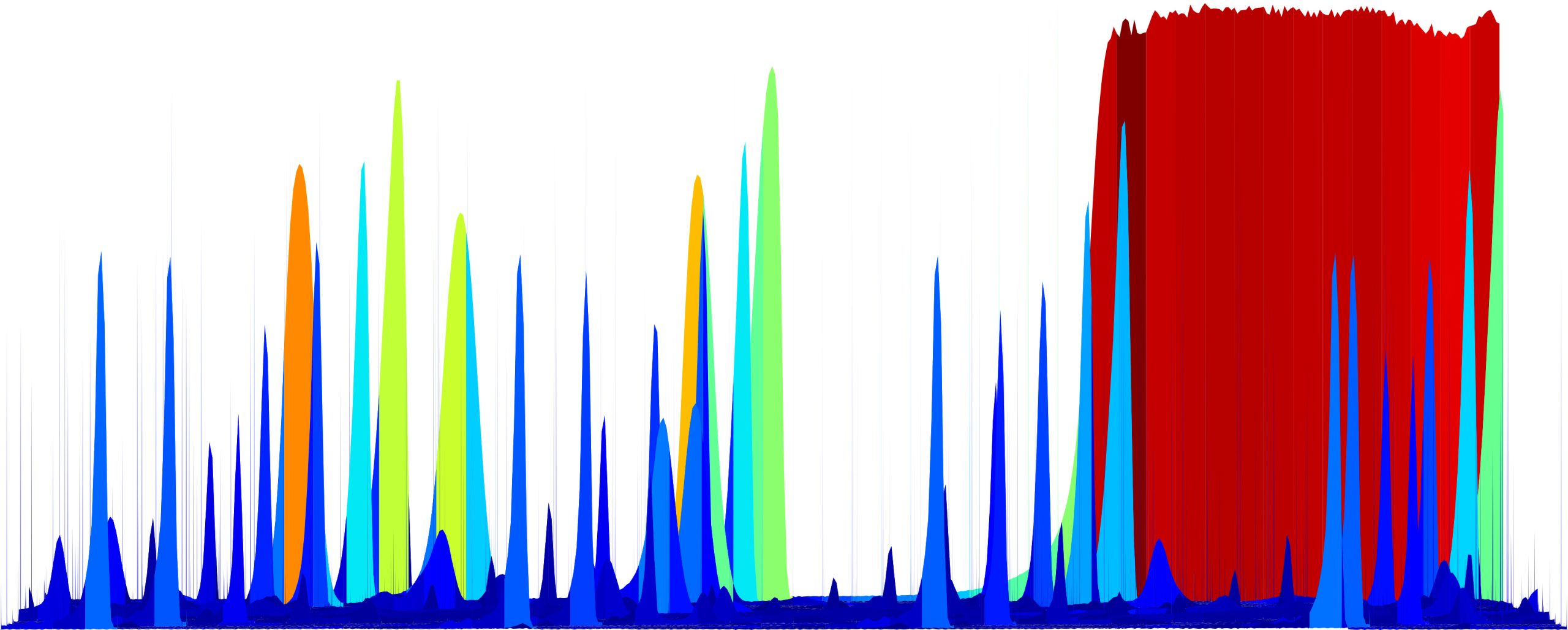
The study, published in the Environmental Science & Technology journal, examines four years of data captured with advanced chromatography, suspect screening, non-targeted analysis, and the SwRI-developed machine-learning method Highlight™. Instead of screening a sample against individual known compounds, this method allows scientists to identify, characterize,e and evaluate a large library of chemicals through suspect-screening analysis. The method identified 88,795 unique chemical features and 1,883 compound groups from 13 analytical batches.
“Highlight leverages machine learning algorithms for rapid pattern matching, which accelerated the workflow,” said William Watson, a research engineer in SwRI’s Intelligent Systems Division and the study’s lead author.
Exploring Exposomics and Chemical Exposure
Another aim of the study was to advance the field of exposomics, which explores how a lifetime of chemical exposure from the environment, diet, lifestyle, and other sources impacts human health. Characterizing chemicals in household items and common sources of exposure may help with future biomonitoring efforts.
“Consumer products don’t just consist of one chemical. Think of it as a mixed bag of related chemicals,” said Dr. Kristin Favela, a staff scientist in SwRI’s Chemistry and Chemical Engineering Division. “We wanted to determine if chemicals in the samples were ‘emittable’ or ‘extractable’ to understand the magnitude and likelihood of human chemical exposure.”
SwRI exposed samples of clothing, upholstery, fabrics, rubber, and plastics to two different heat settings and solvent strengths. The researchers wanted to determine if the test samples would emit chemical vapors that might be inhaled in an indoor environment, like a hot car, or if worn. The study also explored whether chemicals could be extracted to better understand real-world exposure risks, such as when a child chews on a household item.
“Along with helping to advance our understanding of the risk chemical exposure poses to the public, this study also demonstrates our capability to use machine learning and Highlight findings to retrospectively analyze and understand older datasets,” said Watson.
Using EPA’s Toxicity Forecasting program, ToxCast, the team performed an additional analysis and interpretation to predict risk based on human exposure and available biological activity data. Among the 88 confirmed chemicals that were both extractable and emittable, 66 had available ToxCast data, and a majority of the ToxCast in vitro assay data (92%, an average of 441 assays per chemical) indicated no activity dependent on concentration. No data was available for the other 22 chemicals.
However, at a higher concentration, synthetic antioxidant BKF, which can be used to stabilize plastics and rubbers, did show adverse effects when exposure reached 42.3 mg/kg/day. The research may help advance a screening model that can predict emission activity for household items.
Reference: “Discerning Emittable from Extractable Chemicals Identified in Consumer Products by Suspect Screening GCxGC-TOFMS” by William D. Watson, Jake A. Janssen, Michael J. Hartnett, Kristin K. Isaacs, Xiaoyu Liu, Alice Y. Yau, Kristin A. Favela and John F. Wambaugh, 27 November 2024, Environmental Science & Technology.
DOI: 10.1021/acs.est.4c07903
Never miss a breakthrough: Join the SciTechDaily newsletter.
Follow us on Google and Google News.
5 Comments
Of course they are emitting vapours. Other than leather, all of the fabrics are synthetic blends
Of course they put off vapours. That knowledge is so old. Not impressed with this site so far.
As the previous commenter’s said, this is very old (outdated) information !
Would help for scientist to write better. Not “Consumer products don’t just consist of one chemical. …” Should be “Consumer products don’t consist of just one chemical . . . “
Good job, it’s about time we had a closer look at the things we have in our houses, health problems can come from anywhere, things are great then your nephew suddenly develops autism, and companies don’t care, this is the work that gets laws passed and saves lives so ignore the hateful commentary.