

Scientists have identified the precise molecular trigger behind a rare blood-clotting disorder linked to certain adenovirus-based COVID-19 vaccines and, in rare cases, natural adenovirus infection.
Researchers led by Flinders University, working with international collaborators, have clarified how a rare blood clotting disorder can develop after certain COVID-19 adenovirus-based vaccines or following a natural adenovirus infection.
The team, which included scientists from Flinders University and Greifswald University, discovered that in a very small number of people the immune system can mistakenly identify a normal adenovirus protein as platelet factor 4 (or PF4), a protein found in human blood.
When this mix-up occurs, the immune system generates antibodies that activate clotting. Although the reaction is extremely uncommon, pinpointing its cause gives vaccine designers a way to alter the adenovirus protein and potentially prevent the complication, making future vaccines even safer.
Flinders University researcher Dr. Jing Jing Wang said the findings offer a practical roadmap for improving vaccine safety.
“By modifying or removing this specific adenovirus protein, future vaccines can avoid this extremely rare reaction while continuing to provide strong protection against disease,” says Dr. Wang.
The study is part of a broader international effort that has followed the story of VITT from its first appearance during the pandemic to the discovery of its underlying molecular trigger.
From Pandemic Mystery to Molecular Target
In 2021, during the peak of the COVID-19 pandemic, doctors identified a new condition called vaccine-induced immune thrombocytopenia and thrombosis (known as VITT). It was observed after vaccination with adenovirus vector-based vaccines – notably the Oxford-AstraZeneca vaccine, used in Australia.
Scientists determined that VITT was driven by a powerful autoantibody that targets PF4, setting off dangerous blood clotting.
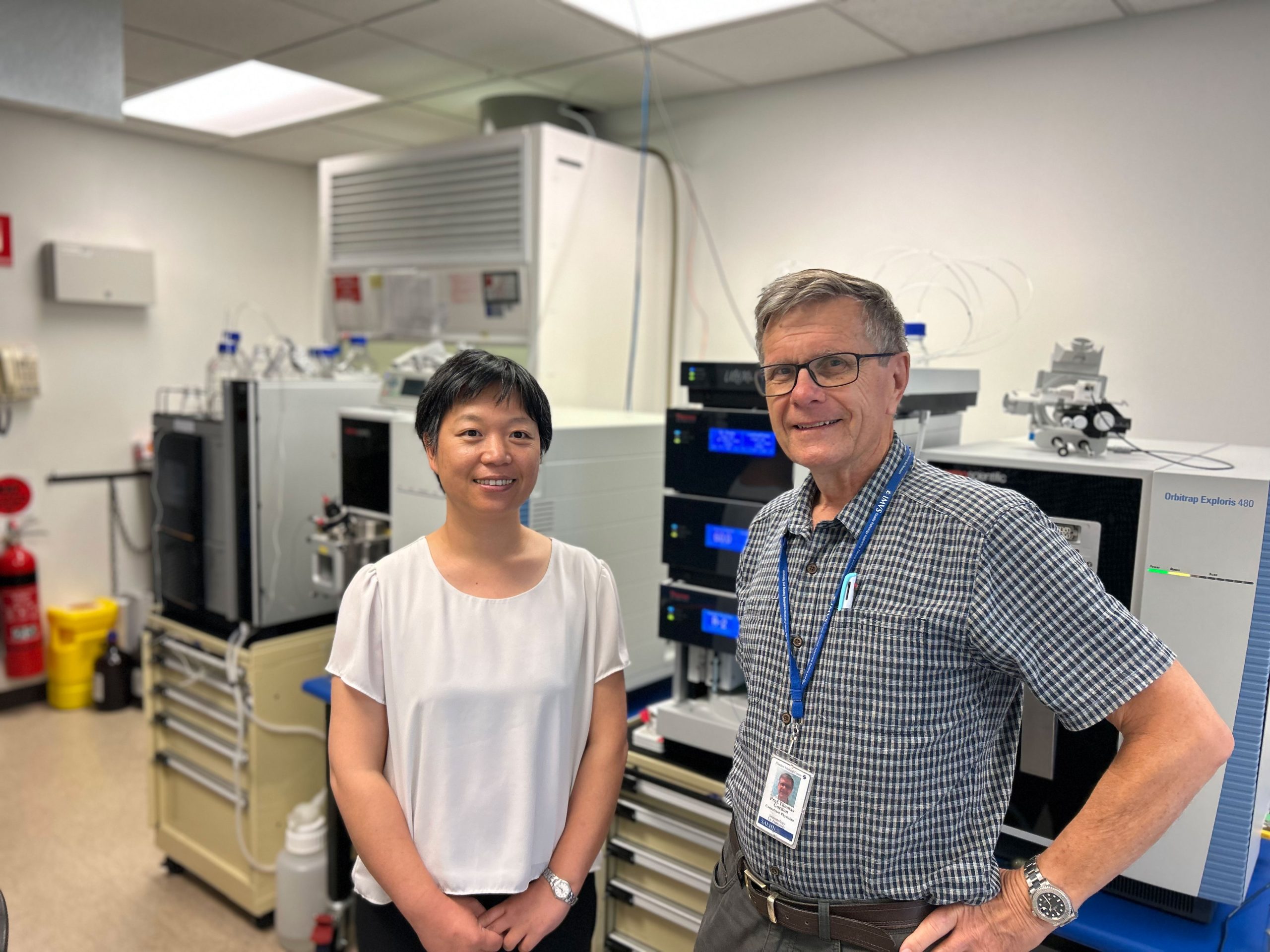
In 2022, Dr. Jing Jing Wang and Professor Tom Gordon, Head of Immunology at SA Pathology in South Australia, led research that decoded the structure of the PF4 antibody and uncovered a genetic risk factor involving an antibody gene known as IGLV3.21*02. This discovery connected cases reported in different countries and laid the foundation for an ongoing partnership with Greifswald University, led by Professor Andreas Greinacher.
Additional research in 2023 by Professor Ted Warkentin at McMaster University in Canada identified a nearly identical condition involving the same PF4 antibody. In some instances, it proved fatal after a natural adenovirus (common cold) infection.
In 2024, another paper led by Flinders, Greifswald, and McMaster Universities confirmed that the antibodies from vaccine‑related cases and infection‑related cases were indistinguishable. This established that the adenovirus itself, not a specific vaccine component, was the likely source of the trigger. But the precise molecular mechanism remained unknown.
Professor Tom Gordon says that the new research published in the eminent New England Journal of Medicine represents the culmination of years of international scientific detective work.
“It has been a fascinating journey with an outstanding international team of collaborators to complete a trilogy of publications in the New England Journal of Medicine to solve the mystery of this new group of blood-clotting disorders, and potentially translate our discoveries into safer vaccines,” says Professor Gordon.
Identifying the Missing Link
Dr. Wang said the team’s molecular analysis provided the breakthrough needed to understand the mechanism.
“A novel aspect of the paper was our use of powerful mass spectrometry sequencing to identify molecular mimicry between the adenovirus vector protein and the PF4 culprit target,” she says.
“This was the missing link that explains how a normal immune response can, in very rare cases, become harmful.”
Immunologist Professor James McCluskey from the University of Melbourne and the Peter Doherty Institute described the research as a major scientific achievement.
“It is a brilliant piece of molecular sleuthing, the culmination of a body of work that unravels the genetic and structural basis for how a normal immune response to a virus protein leads to pathogenic autoimmunity,” says Professor McCluskey.
With the precise trigger now identified, vaccine developers can modify the pVII protein in adenovirus‑based vaccines to eliminate this rare risk.
Researchers say the findings will help ensure future vaccines built on this technology remain effective, accessible, and even safer, particularly in regions where adenovirus‑vector vaccines are critical tools for disease prevention.
Reference: “Adenoviral Inciting Antigen and Somatic Hypermutation in VITT” by Jing Jing Wang, Linda Schönborn, Theodore E. Warkentin, Luisa Müller, Thomas Thiele, Lena Ulm, Uwe Völker, Sabine Ameling, Sören Franzenburg, Lars Kaderali, Ana Tzvetkova, Alex Colella, Tim Chataway, Chee Wee Tan, Bridie Armour, Alexander Troelnikov, Lucy Rutten, James McCluskey, Roland Zahn, Tom P. Gordon and Andreas Greinacher, 11 February 2026, New England Journal of Medicine.
DOI: 10.1056/NEJMoa2514824
Never miss a breakthrough: Join the SciTechDaily newsletter.
Follow us on Google and Google News.
1 Comment
Aha, “rare” blood clots. Right.
I don’t believe they’re rare at all, but even this partial admission is a huge leap from the previous “safe and effective vaccine” narrative