

A new study reveals that specific changes in the brain caused by muscle disuse are linked to cognitive decline.
A recent study found that just 10 days of physical inactivity can lead to insulin resistance and early brain changes linked to Alzheimer’s disease. The research highlights how even brief periods of muscle disuse can negatively impact both physical and brain health.
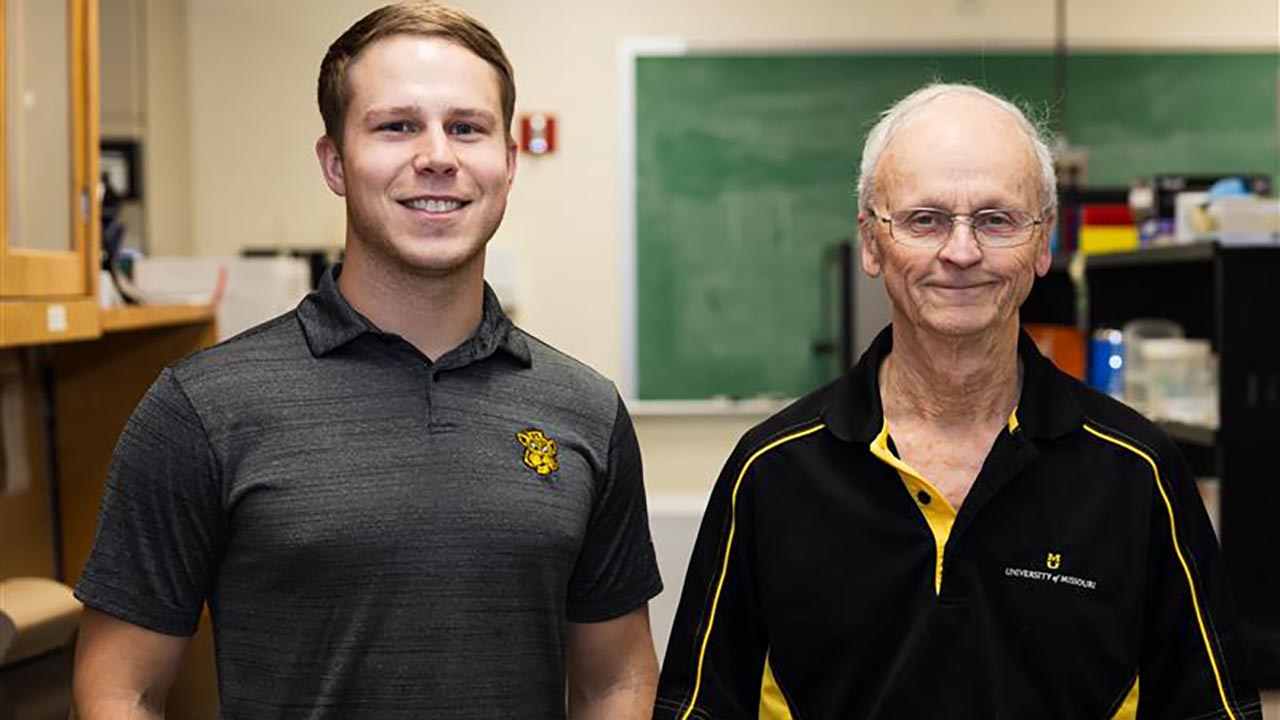
Whenever 27-year-old Nathan Kerr stops by the office of his 81-year-old mentor, Frank Booth, he often finds Booth running on a treadmill.
“You’re not going to find someone with more enthusiasm for what they do than Frank,” said Kerr, a postdoctoral fellow at the University of Missouri. “Frank is the definition of someone who practices what they preach — and he has been on a mission to encourage active lifestyles his whole career.”
While many researchers study the benefits of exercise, Booth, who was born during World War II and has been at Mizzou since 1999, takes a different approach. At Mizzou’s College of Veterinary Medicine, he studies the consequences of physical inactivity.
Although Booth jokes that his career is likely closer to its end than its beginning, he hasn’t lost a bit of his energy — or his drive to mentor the next generation of scientists like Kerr.
The link between muscle and brain health
In a recent study, Booth and Kerr found — for the first time — that just 10 days of physical inactivity leads to both insulin resistance and an increase in reactive oxygen species production in the hippocampus, the region of the brain involved in memory and learning.
They also found that just 10 days of muscle disuse elevated markers for specific proteins in the brain that are strongly associated with Alzheimer’s disease, an uncurable, irreversible, neurodegenerative disease that has become the fifth leading cause of death in older adults.
The findings confirm what many have anecdotally speculated: staying physically active isn’t just good for your physical health, it also can preserve your brain health — potentially preventing or delaying the development of neurodegenerative diseases.
“If you compare the 1940s to today, the average lifespan has risen from the mid 60s to the high 70s, but the rate of type 2 diabetes has skyrocketed,” Booth said. “While the average lifespan of Americans has improved, the average health span — the number of disease-free years lived — tends to decline after age 65. Physical inactivity has already been linked to insulin resistance in the body, and we are starting to learn more about the connection between muscle disuse and insulin resistance in the brain. We want to help people live more enjoyable lives in their later years.”
And, luckily, it doesn’t take huge steps to make a difference.
Booth said that decades of previous research have shown that people who show the greatest improvements in their health are those who switch from getting no exercise to getting periodic exercise — even more improvement than those who switch from periodic exercise to regular exercise — so the most important step is to simply start.
“Research in Alzheimer’s development is starting to show that a lot of the neurological changes for Alzheimer’s disease are occurring when people are in their 40s and 50s, even if the official diagnosis of Alzheimer’s often comes at or after age 65,” Booth said. “So, if you can develop good habits in terms of exercise and lifestyle earlier in your life, your brain will thank you later on.”
Passing the torch
While Kerr now has his doctoral degree and works in the lab of W. David Arnold, executive director of the NextGen Precision Health initiative, Kerr said he will never forget the mentorship he received from Booth and the life lessons he learned along the way.
“Aside from his intellectual contribution to my doctoral degree, I have Frank to thank for fostering my passion for science,” Kerr said. “He taught me how to fight for the things you think are important, and I can’t think of a better role model for somebody teaching their students how to approach science in a motivated and passionate way.”
Reference: “Hindlimb immobilization induces insulin resistance and elevates mitochondrial ROS production in the hippocampus of female rats” by Nathan R. Kerr, Chandler W. Mossman, Chih-Hsuan Chou, Joshua M. Bunten, Taylor J. Kelty, Thomas E. Childs, Randy Scott Rector, William David Arnold, Laurel A. Grisanti, Xiangwei Du and Frank W. Booth, 4 September 2024, Journal of Applied Physiology.
DOI: 10.1152/japplphysiol.00234.2024
During Booth’s 25-year career at Mizzou, he has earned nearly $8 million in grants and published more than 170 research studies in peer-reviewed journals. He is one reason why Mizzou — a leading research university and member of the prestigious Association of American Universities — has seen 10 consecutive years of increases in research expenditures.
Never miss a breakthrough: Join the SciTechDaily newsletter.
Follow us on Google and Google News.
1 Comment
This study was on rats that had their hind legs immobilized by wrapping their pelvis in a way that prevents them from moving their legs. This is a model for torture, and any physiological or psychological responses studied were a result of torturing these animals. Imagine studying the brains of humans by putting them in a straight jacket to prevent them from moving. The stress, discomfort, anxiety, fear, and other emotions elicited by this torture would define all results you would see. Rats are not different in this regard, and suffer from this cruelty. How can you expect any brain changes from this torture to reflect anything useful about muscle use and brain function?
This researcher is clearly a psychopath. You would hope a veterinarian would treat animals better than this. People who can cause animal suffering like this should not be allowed around animals.
In addition to the obvious cruelty and stupidity of his study design, any results are of unknown relevance to humans. See my article, Of Mice and Men: Why You Can’t Study Mice to Learn about Men. https://www.academia.edu/127948044/Of_Mice_and_Men_The_Problems_with_Studying_Mice_to_Learn_about_Men