
Close Menu
    Facebook X (Twitter) Instagram
    SciTechDaily
    • Biology
    • Chemistry
    • Earth
    • Health
    • Physics
    • Science
    • Space
    • Technology
    Facebook X (Twitter) Pinterest YouTube RSS
    SciTechDaily
    Home»Health»New Synthetic Process Provides a Better View of Diabetes, Inflammation, and Human Aging
    Health

    New Synthetic Process Provides a Better View of Diabetes, Inflammation, and Human Aging

    By Jim Shelton, Yale UniversityOctober 19, 2015No Comments3 Mins Read
    Facebook Twitter Pinterest Telegram LinkedIn WhatsApp Email Reddit
    Share
    Facebook Twitter LinkedIn Pinterest Telegram Email Reddit
    New Process Provides a Better View of Diabetes, Inflammation, and Human Aging
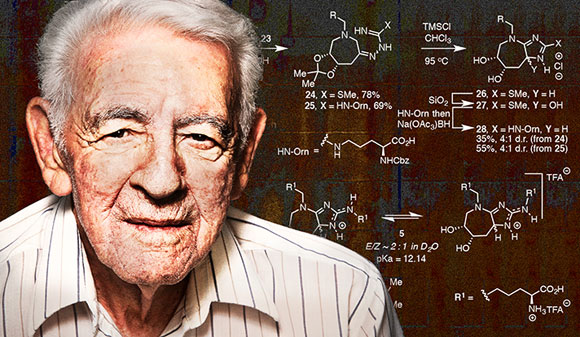
    Yale University has devised a synthetic process enabling scientists to examine a pivotal molecule implicated in diabetes, inflammation, and human aging. Credit: Yale University

    In a newly published research study, scientists describe the new synthesis, as well as a new synthetic methodology, that offers a better glimpse into diabetes and the aging process.

    A synthetic process developed at Yale University will allow scientists to study a key molecule involved in diabetes, inflammation, and human aging.

    The new process synthesizes glucosepane, which is considered a critical chemical link in both diabetes and aging. It is also an independent risk factor for long-term microvascular complications in diabetes.

    “Glucosepane forms in all human beings during the aging process, and also forms during various diseases, including diabetes,” said Spiegel, a professor of chemistry and pharmacology at Yale. “It is unknown what role glucosepane might play in aging and in these diseases, but several hypotheses have been proposed. With access to synthetic glucosepane, we will now be able to generate tools to examine the role this molecule plays in human health and also, perhaps, develop molecules to inhibit or reverse its formation.”

    Until now, it has been difficult to study glucosepane effectively. There is a scarcity of chemically homogeneous glucosepane available for scientists to examine — due to its unusual structure and properties — and researchers have been forced to rely on time-consuming extraction protocols to obtain usable material.

    Glucosepane contains a rare isomer of imidazole, which has never before been observed in natural molecules, other than those in the glucosepane family. Spiegel and his colleagues developed a new methodology for synthesizing this imidazole form. The process requires only eight steps.

    In an accompanying article in Science, Dale L. Boger of the Scripps Research Institute wrote that the Yale study represents “an important, yet largely underexplored, frontier for chemistry with broad implications in human health.” Boger said Spiegel’s methodology “is important in its own right and will find applications well beyond that envisioned by the authors.”

    Reference: “Concise total synthesis of glucosepane” by Cristian Draghici, Tina Wang and David A. Spiegel, 16 October 2015, Science.
    DOI: 10.1126/science.aac9655

    The first author of the study is Cristian Draghici, a former postdoctoral researcher at Yale who is now at the Broad Institute of MIT and Harvard. Tina Wang, a former Ph.D. student at Yale who is now at Harvard, is the other co-author.

    The work was supported by the SENS Research Foundation, a non-profit organization devoted to research and treatment of age-related diseases that emphasizes a damage repair approach to the diseases of aging.

    Never miss a breakthrough: Join the SciTechDaily newsletter.
    Follow us on Google and Google News.

    Aging Diabetes Disease Pharmacology Yale University
    Share. Facebook Twitter Pinterest LinkedIn Email Reddit

    Related Articles

    Yale Study Finds Lower Brain Glucose Levels in People with Obesity, Type 2 Diabetes

    Yale Study Identifies Apelin as a Therapeutic Target for Diabetes

    FDA-Approved Drug Treats a Rare Cardiac Disease

    Study Reveals a Promising New Target to Treat Type 2 Diabetes

    Study Shows Diabetes Drug Significantly Reduces Risk of Heart Failure

    Scientists Reverse Type 2 Diabetes and Fatty Liver Disease

    Intensive Glycemic Control Does Not Definitively Reduce the Risk of Impaired Kidney Function

    Ticks, Lyme Disease and Public Health

    Worldwide Rise in Type 1 Diabetes Could Be Linked to Obesity

    Leave A Reply Cancel Reply

    • Facebook
    • Twitter
    • Pinterest
    • YouTube

    Don't Miss a Discovery

    Subscribe for the Latest in Science & Tech!

    Trending News

    Millions Take These IBS Drugs, But a New Study Finds Serious Risks

    Scientists Unlock Hidden Secrets of 2,300-Year-Old Mummies Using Cutting-Edge CT Scanner

    Bread Might Be Making You Gain Weight Even Without Eating More Calories

    Scientists Discover Massive Magma Reservoir Beneath Tuscany

    Europe’s Most Active Volcano Just Got Stranger – Here’s Why Scientists Are Rethinking It

    Alzheimer’s Symptoms May Start Outside the Brain, Study Finds

    Millions Take This Popular Supplement – Scientists Discover a Concerning Link to Heart Failure

    The Universe Is Expanding Too Fast and Scientists Can’t Explain Why

    Follow SciTechDaily
    • Facebook
    • Twitter
    • YouTube
    • Pinterest
    • Newsletter
    • RSS
    SciTech News
    • Biology News
    • Chemistry News
    • Earth News
    • Health News
    • Physics News
    • Science News
    • Space News
    • Technology News
    Recent Posts
    • Doctors Surprised by the Power of a Simple Drug Against Colon Cancer
    • Why Popular Diabetes Drugs Like Ozempic Don’t Work for Everyone: The “Genetic Glitch”
    • Scientists Create Improved Insulin Cells That Reverse Diabetes in Mice
    • Scientists Stunned After Finding Plant Thought Extinct for 60 Years
    • A Common Diabetes Drug May Hold the Key to Stopping HIV From Coming Back
    Copyright © 1998 - 2026 SciTechDaily. All Rights Reserved.
    • Science News
    • About
    • Contact
    • Editorial Board
    • Privacy Policy
    • Terms of Use

    Type above and press Enter to search. Press Esc to cancel.