

Improved Protein Function Opens the Door to Novel Drug Development Possibilities

In a paper that was published in the journal Science, scientists from Sweden’s Karolinska Institutet and SciLifeLab reveal how they were able to enhance a protein’s ability to repair oxidative DNA damage while also creating a new protein function. The researchers’ ground-breaking technique may result in better treatments for oxidative stress-related illnesses such as cancer, Alzheimer’s, and lung diseases, but they think it has even more potential.
Finding certain pathogenic proteins and developing medicines that inhibiting these proteins has long been the foundation of the drug development process. However, many illnesses are caused by a reduction or loss of protein function, which cannot be specifically targeted by inhibitors.
Inspired by a Nobel Prize-Winning Discovery
In the current study, scientists from the Karolinska Institutet enhanced the function of the protein OGG1, an enzyme that fixes oxidative DNA damage and is linked to aging and disorders including Alzheimer’s disease, cancer, obesity, cardiovascular diseases, autoimmune disorders, and lung diseases.
The team used a technique called organocatalysis, which was created by Benjamin List and David W.C. MacMillan, who were awarded the 2021 Nobel Prize in Chemistry. The process is based on the finding that tiny organic molecules have the ability to function as catalysts and start chemical processes without becoming a component of the end result.
The researchers examined how such catalyst molecules, previously described by others, bind to OGG1 and affect its function in cells. One of the molecules proved to be of particular interest.
Ten Times More Effective
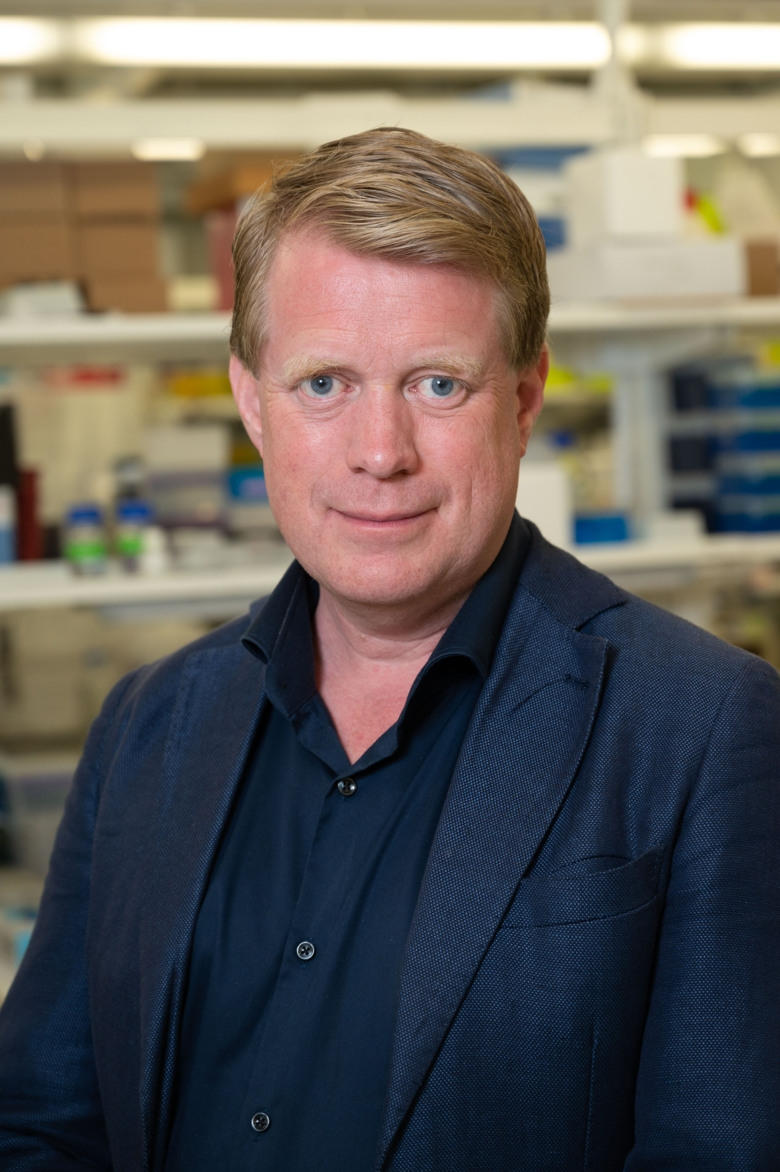
“When we introduce the catalyst into the enzyme, the enzyme becomes ten times more effective at repairing oxidative DNA damage and can perform a new repair function,” says the study’s first author Maurice Michel, assistant professor at the Department of Oncology-Pathology, Karolinska Institutet.
The catalyst made it possible for the enzyme to cut the DNA in an unusual way so that it no longer requires its regular protein APE1 to work but another protein called PNKP1.
The researchers believe that OGG1 proteins improved in this way can form new drugs for diseases in which oxidative damage is implicated. However, Professor Thomas Helleday at the Department of Oncology-Pathology, Karolinska Institutet and the study’s last author also sees broader applications, where the concept of adding a small catalyst molecule to a protein is used to improve and change other proteins as well.
New Protein Functions Are Generated
“We believe that this technology could instigate a paradigm shift in the pharmaceutical industry, whereby new protein functions are generated instead of being suppressed by inhibitors,” says Thomas Helleday. “But the technique isn’t limited to drugs. The applications are virtually unlimited.”
Reference: “Small-molecule activation of OGG1 increases oxidative DNA damage repair by gaining a new function” by Maurice Michel, Carlos Benítez-Buelga, Patricia A. Calvo, Bishoy M. F. Hanna, Oliver Mortusewicz, Geoffrey Masuyer, Jonathan Davies, Olov Wallner Kumar Sanjiv, Julian J. Albers, Sergio Castañeda-Zegarra, Ann-Sofie Jemth, Torkild Visnes, Ana Sastre-Perona, Akhilesh N. Danda, Evert J. Homan, Karthick Marimuthu, Zhao Zhenjun, Celestine N. Chi, Antonio Sarno, Elisée Wiita, Catharina von Nicolai, Anna J. Komor, Varshni Rajagopal, Sarah Müller, Emily C. Hank, Marek Varga, Emma R. Scaletti, Monica Pandey, Stella Karsten, Hanne Haslene-Hox, Simon Loevenich, Petra Marttila, Azita Rasti, Kirill Mamonov, Florian Ortis, Fritz Schömberg, Olga Loseva, Josephine Stewart, Nicholas D’Arcy-Evans, Tobias Koolmeister, Martin Henriksson, Dana Michel, Ana de Ory, Lucia Acero, Oriol Calvete, Martin Scobie, Christian Hertweck, Ivan Vilotijevic, Christina Kalderén, Ana Osorio, Rosario Perona, Alexandra Stolz, Pål Stenmark, Ulrika Warpman Berglund, Miguel de Vega and Thomas Helleday, 23 June 2022, Science.
DOI: 10.1126/science.abf8980
The study was funded by the European Research Council, the Swedish Research Council, the Crafoord Foundation, the Swedish Cancer Society, the Torsten and Ragnar Söderberg Foundation, and the Dr. Åke Olsson Foundation for Haematological Research.
Many of the researchers involved in the study are listed in a patent application concerning OGG1 inhibitors and are associated with the organization that owns the patent. Two are employed by Oxcia AB, which licenses the patent, and many are shareholders in the company.
Never miss a breakthrough: Join the SciTechDaily newsletter.
Follow us on Google and Google News.