
Canadian researchers create method to measure severity of the pandemic virus.
When COVID-19 attacks, the immune system produces a cytokine, or protein, called Interleukin-6 (IL-6), whose concentrations can offer vital information about a patient’s level and stage of infection.
But measuring the critical marker has been extremely challenging, given its nearly undetectable presence in the biological stew that makes up human blood. Existing technology has not been accurate or sensitive enough to measure concentrations of IL-6 well enough to be reliable, especially in low concentrations.
Now researchers at McMaster University and SQI Diagnostics have created a surface that repels every other element of human blood except the critical cytokine, opening a timely window for understanding the progress of COVID-19 in individual patients.
The McMaster researchers are working to adapt the technology to the Toronto company’s existing testing platforms, in the hope of moving it into clinical use as soon as possible. The same biosensing technology can also be used to measure other infectious and non-infectious diseases, including some cancers.
The innovative surface coating is made to repel every component of blood and other complex fluids such as urine, but is dotted with microscopic islands of molecules that attract IL-6, making it possible to detect and measure IL-6 with unprecedented accuracy and sensitivity, at concentrations as low as 0.5 picograms per mL — or one half of one trillionth of a gram per mL — making it far more sensitive than existing technology.
It is the latest application of smart-surface technology to emerge from the laboratory of Tohid Didar, a mechanical engineering professor at McMaster who has recently been involved in projects to create a reactive tag for food packaging that indicates the presence of harmful pathogens, a form of wrap that can repel antimicrobial-resistant bacteria and a coating for surgical implants that can repel infection while attracting cells that promote integration with surrounding tissue.
“There are so many possibilities for these smart surfaces. We can create them to repel everything, or we can design them to interact in many beneficial ways,” Didar says. “Here, we’re looking for something, and only that one thing, and this allows us to separate it from everything else in a very complex environment.”
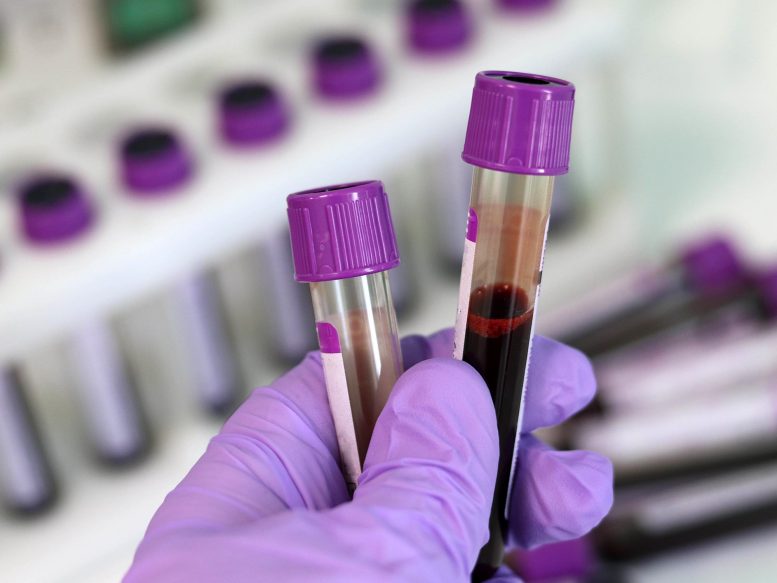
The new smart surface for detecting IL-6 can be printed inexpensively onto the inside of test tubes and onto other platforms used in diagnostic testing. After a sample of blood is exposed to the surface and removed, the captured IL-6 can readily be measured.
“The technology was challenging to create, but it is easy to use in many applications, including in testing kits that already exist,” says co-author Amid Shakeri, a PhD student in Didar’s lab. “I’m very happy that we can actually be involved in something that could be important for humankind, and I’m hopeful we can get this into clinical settings very soon.”
“Our partnership with McMaster University has opened up an innovative pathway to a low-cost manufacturing design to enable affordable and accurate diagnostics, especially for testing in the COVID-19 pandemic,” said Dr. Eric Brouwer, Chief Scientific Officer of SQI Diagnostics.
A paper introducing the technology is published today in the journal Small.
Reference: “Antibody Micropatterned Lubricant‐Infused Biosensors Enable Sub‐Picogram Immunofluorescence Detection of Interleukin 6 in Human Whole Plasma” by Amid Shakeri, Noor Abu Jarad, Jeff Terryberry, Shadman Khan, Ashlyn Leung, Simeng Chen and Tohid F. Didar, 20 October 2020, Small.
DOI: 10.1002/smll.202003844
Never miss a breakthrough: Join the SciTechDaily newsletter.
Follow us on Google and Google News.
1 Comment
very good