
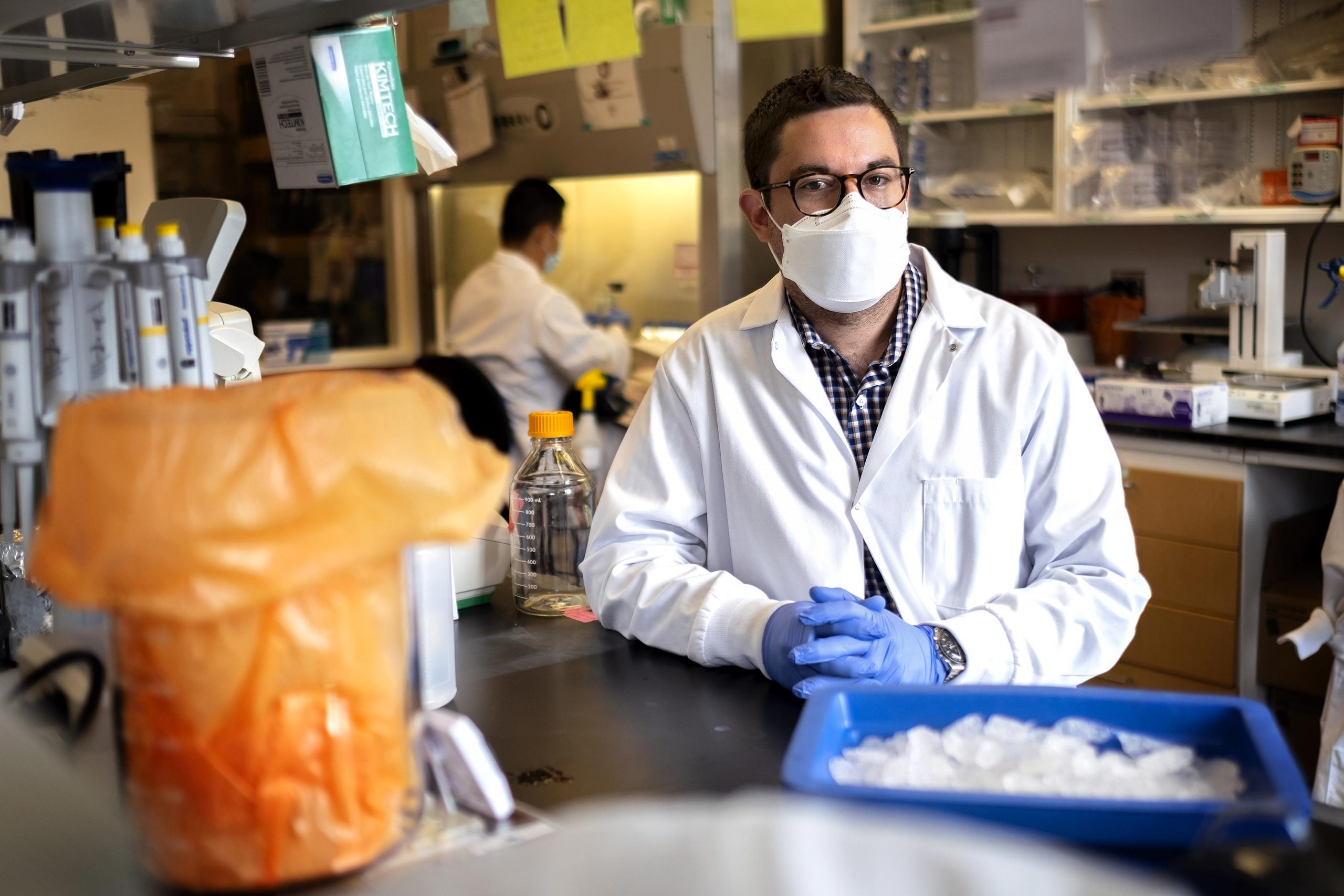
Study shows a universal vaccine could be effective against COVID-19, SARS, and other coronavirus-related diseases.
Scientists at the University of North Carolina Gillings School of Global Public Health have developed a universal vaccine that protected mice not just against COVID-19 but also other coronaviruses and triggered the immune system to fight off a dangerous variant.
While no one knows which virus may cause the next outbreak, coronaviruses remain a threat after causing the SARS outbreak in 2003 and the global COVID-19 pandemic.
A Next-Gen Vaccine Strategy
To prevent a future coronavirus pandemic, UNC-Chapel Hill researchers designed the vaccine to provide protection from the current SARS-CoV-2 coronavirus and a group of coronaviruses known to make the jump from animals to humans.
The findings were published in Science by lead authors David Martinez, a postdoctoral researcher at UNC Gillings School of Global Public Health and a Hanna H. Gray Fellow at the Howard Hughes Medical Institute, and Ralph Baric, an epidemiologist at UNC Gillings School of Global Public Health and professor of immunology and microbiology at the UNC School of Medicine, whose research has sparked new therapies to fight emerging infectious diseases.
The lead authors worked with a team of scientists from UNC-Chapel Hill, Duke University School of Medicine, and the University of Pennsylvania Perelman School of Medicine.
Researchers at UNC-Chapel Hill are playing a key role in coronavirus vaccine development. After testing the effectiveness of the first generation of COVID-19 vaccines, they pivoted to look at a second-generation vaccine: one that targets sarbecoviruses, Baric said.
Sarbecoviruses, part of the large family of coronaviruses, are a priority for virologists after two devastating diseases in the past two decades: SARS and COVID-19.
Hybrid mRNA: A New Design
The team’s approach started with mRNA, which is similar to the Pfizer and Moderna vaccines used today. But instead of including the mRNA code for only one virus, they welded together mRNA from multiple coronaviruses.
When given to mice, the hybrid vaccine effectively generated neutralizing antibodies against multiple spike proteins — which viruses use to latch onto healthy cells, including one associated with B.1.351, known as the South African variant.
“The vaccine has the potential to prevent outbreaks when used as a new variant is detected,” said Baric, a trailblazer in pandemic preparedness.
The paper includes data from mice infected with SARS-CoV and related coronaviruses and the vaccine prevented infection and lung damage in mice. Additional testing could lead to human clinical trials next year.
“Our findings look bright for the future because they suggest we can design more universal pan coronavirus vaccines to proactively guard against viruses we know are at risk for emerging in humans,” Martinez said. “With this strategy, perhaps we can prevent a SARS-CoV-3.”
Reference: “Chimeric spike mRNA vaccines protect against Sarbecovirus challenge in mice” by David R. Martinez, Alexandra Schäfer, Sarah R. Leist, Gabriela De la Cruz, Ande West, Elena N. Atochina-Vasserman, Lisa C. Lindesmith, Norbert Pardi, Robert Parks, Maggie Barr, Dapeng Li, Boyd Yount, Kevin O. Saunders, Drew Weissman, Barton F. Haynes, Stephanie A. Montgomery and Ralph S. Baric, 22 June 2021, Science.
DOI: 10.1126/science.abi4506
The National Institutes of Allergy and Infectious Disease at the National Institutes of Health and the North Carolina Policy Collaboratory, with funding from the North Carolina General Assembly, supported the study.
Never miss a breakthrough: Join the SciTechDaily newsletter.
Follow us on Google and Google News.
2 Comments
All the talk is about the spike proteins, but the real problem is in the virus and how coronaviruses may attack cells and why two of the most dangerous, MERS and Covid-19, are so infectious. My independent research has found multiple one-in-a-million nucleotide sequence matches between all the coronaviruses and the human genome. Those sequences are the same as some of the DHU loops of human tRNA. Using those loops and their anticodon matches, viruses may be able to fool the nucleus membrane in cells to allow the virus to enter and associate with the human DNA, creating more opportunities for further infection. Our immune system may be compromised and may no longer be able to stop the virus and other diseases from attacking organs throughout the body. Vaccines that attack the virus protein shells while ignoring their contents are doomed to failure from the Darwin effect, but recognizing these DHU loops suggests a possible approach to successful coronavirus vaccines. For MERS, eliminating the nucleotide sequence CAGTGGTAG from the virus may make it less infectious and stimulate the body to create antibodies to attack the entire virus. And eliminating the nucleotide sequence TAGTGGTGAG from Covid-19 may do the same thing. SARS doesn’t have a double match, so from my
view it remains a mystery. Only the infection process is considered in my work, not the innate virulence of the virus. For more info, check out this YouTube: https://www.youtube.com/watch?v=pd4OD4GpsJI
Layman question:
why all researcher are focused on virus spikes? Why not let them to doke on cells and try to attack the virus from the human body with some active substances delivered previously as vaccine?