
Close Menu
    Facebook X (Twitter) Instagram
    SciTechDaily
    • Biology
    • Chemistry
    • Earth
    • Health
    • Physics
    • Science
    • Space
    • Technology
    Facebook X (Twitter) Pinterest YouTube RSS
    SciTechDaily
    Home»Chemistry»New Water Treatment Zaps “Forever Chemicals” for Good
    Chemistry

    New Water Treatment Zaps “Forever Chemicals” for Good

    By University of British ColumbiaMay 15, 20233 Comments4 Mins Read
    Facebook Twitter Pinterest Telegram LinkedIn WhatsApp Email Reddit
    Share
    Facebook Twitter LinkedIn Pinterest Telegram Email Reddit
    Chemistry Chemical Molecule Concept
    PFAS (Per- and Polyfluoroalkyl Substances) are a group of synthetic chemicals that have been widely used in various industrial and consumer products due to their unique properties, such as resistance to heat, water, and oil. However, PFAS have been found to be persistent in the environment and can bioaccumulate in the human body, leading to potential health risks such as thyroid dysfunction, reproductive and developmental toxicity, and increased risk of certain cancers.

    UBC’s innovative water treatment system eliminates PFAS effectively, using sustainable methods suitable for rural and urban settings.

    The engineers at the University of British Columbia have created a revolutionary water treatment system that efficiently and safely eliminates “forever chemicals” from drinking water once and for all.

    “Think Brita filter, but a thousand times better,” says UBC chemical and biological engineering professor Dr. Madjid Mohseni, who developed the technology.

    Forever chemicals, formally known as PFAS (per-and polyfluoroalkyl substances) are a vast group of substances that give certain products their non-stick and stain-resistant qualities. With over 4,700 different types of PFAS in use, these chemicals are commonly found in rain gear, non-stick cookware, stain repellents, and firefighting foam. Studies have connected PFAS to various health issues, including hormonal imbalance, cardiovascular disease, developmental issues, and even cancer.

    Revolutionary Adsorbing Material for Water Treatment

    To remove PFAS from drinking water, Dr. Mohseni and his team devised a unique adsorbing material that is capable of trapping and holding all the PFAS present in the water supply.
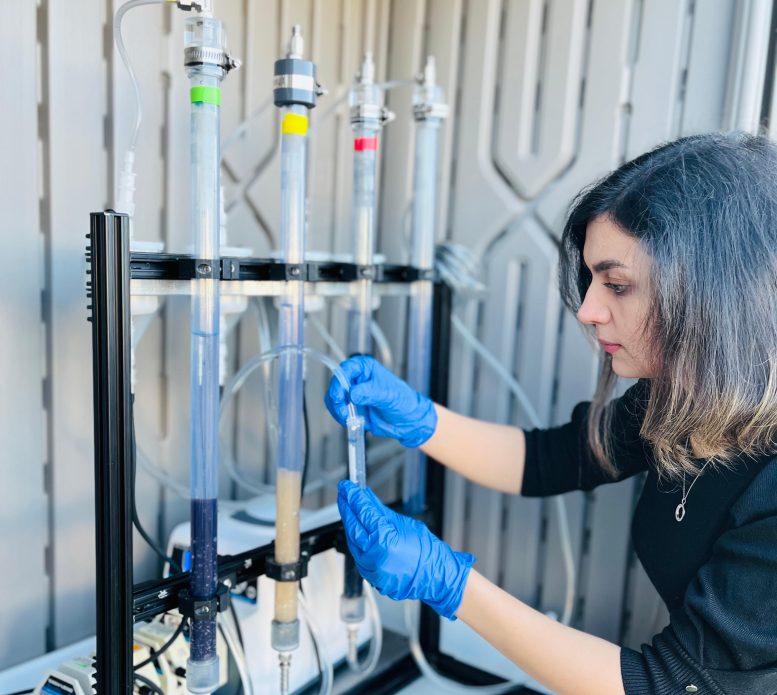
    UBC Unique Adsorbing Material
    UBC researchers devised a unique adsorbing material that is capable of capturing all the PFAS present in the water supply. Credit: Mohseni Lab/UBC

    The PFAS are then destroyed using special electrochemical and photochemical techniques, also developed at the Mohseni lab and described in part in a new paper published recently in Chemosphere.
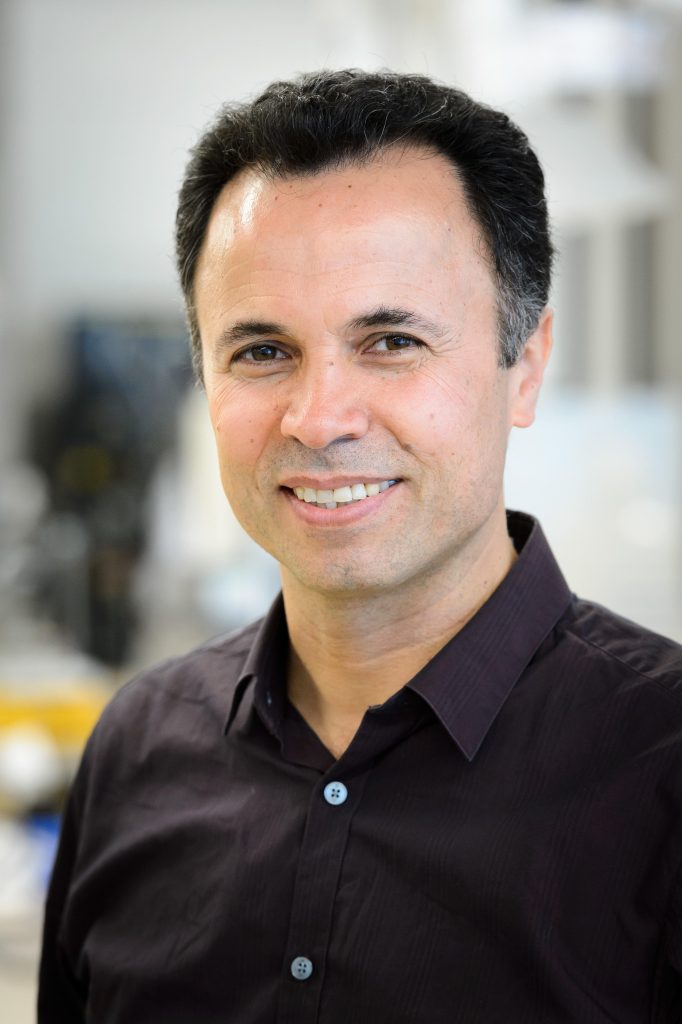
    Madjid Mohseni
    UBC researcher, professor Madjid Mohseni. Credit: University of British Columbia

    While there are treatments currently on the market, like activated carbon and ion-exchange systems which are widely used in homes and industry, they do not effectively capture all the different PFAS, or they require longer treatment time, Dr. Mohseni explained.

    “Our adsorbing media captures up to 99 percent of PFAS particles and can also be regenerated and potentially reused. This means that when we scrub off the PFAS from these materials, we do not end up with more highly toxic solid waste that will be another major environmental challenge.”

    He explained that while PFAS are no longer manufactured in Canada, they are still incorporated in many consumer products and can then leach into the environment. For example, when we apply stain-resistant or repellent sprays/materials, wash PFAS-treated raingear, or use certain foams to put down fires, the chemicals end up in our waterways. Or when we use PFAS-containing cosmetics and sunscreens, the chemicals could find their way into the body.

    For most people, exposure is through food and consumer products, but they can also be exposed from drinking water – particularly if they live in areas with contaminated water sources.

    A Solution for Smaller and Remote Communities

    Dr. Mohseni, whose research group also focuses on developing water solutions for rural, remote, and Indigenous communities, noted: “Our adsorbing media are particularly beneficial for people living in smaller communities who lack resources to implement the most advanced and expensive solutions that could capture PFAS. These can also be used in the form of decentralized and in-home water treatments.”

    The UBC team is preparing to pilot the new technology at a number of locations in B.C. starting this month.

    “The results we obtain from these real-world field studies will allow us to further optimize the technology and have it ready as products that municipalities, industry, and individuals can use to eliminate PFAS in their water,” said Dr. Mohseni.

    Reference: “Electrochemical degradation of PFOA and its common alternatives: Assessment of key parameters, roles of active species, and transformation pathway” by Fatemeh Asadi Zeidabadi, Ehsan Banayan Esfahani, Sean T. McBeath, Kristian L. Dubrawski and Madjid Mohseni, 3 January 2023, Chemosphere.
    DOI: 10.1016/j.chemosphere.2023.137743

    Never miss a breakthrough: Join the SciTechDaily newsletter.
    Follow us on Google and Google News.

    PFAS University of British Columbia Water Water Quality
    Share. Facebook Twitter Pinterest LinkedIn Email Reddit

    Related Articles

    Scientists Develop All-in-One Solution To Catch and Destroy “Forever Chemicals”

    98% Efficiency: Scientists Unveil Game-Changing Nanoplastic Removal Technology

    100% Breakdown: Revolutionary New Method Uses Light To Clean Up Forever Chemicals

    Scientists Discover That Toxic Compounds in Everyday Products Are Disrupting Vital Human Proteins

    Revolutionary “Forever Chemical” Cleanup Strategy Discovered

    Scientists Solve Electrochemical “Catalysis vs Corrosion” Mystery

    Want Fewer Microplastics in Your Tap Water? Try This Simple Tip

    Half of U.S. Tap Water Tainted by “Forever Chemicals” – Breakthrough Detection Method Acts in Minutes

    Accomplishing the Impossible: New, Simple Method Can Destroy “Forever” Chemicals

    3 Comments

    1. Wah Dizit on May 16, 2023 12:38 pm

      “Unique adsorbing material”? The article doesn’t mention what it is, making this not a copy-paste press release, but pure marketing. The photo looks suspiciously like tubes of activated charcoal, and zeolite, which is non-unique; buy it at any pet store. The study is about using a boron-doped diamond electrode to electrolytically decompose PFOA — nothing about filter.

      Reply
    2. Mark on December 30, 2023 9:07 pm

      Does distilling your water remove pfas

      Reply
    3. Mark on December 30, 2023 9:08 pm

      Does distilling your drinking water remove the forever chemicals?

      Reply
    Leave A Reply Cancel Reply

    • Facebook
    • Twitter
    • Pinterest
    • YouTube

    Don't Miss a Discovery

    Subscribe for the Latest in Science & Tech!

    Trending News

    Scientists Uncover Potential Brain Risks of Popular Fish Oil Supplements

    Scientists Discover a Surprising Way To Make Bread Healthier and More Nutritious

    After 60 Years, Scientists Uncover Unexpected Brain Effects of Popular Diabetes Drug Metformin

    New Research Uncovers Hidden Side Effects of Popular Weight-Loss Drugs

    Scientists Rethink Extreme Warming After Surprising Ocean Discovery

    Landmark Study Links Never Marrying to Significantly Higher Cancer Risk

    Researchers Discover Unknown Beetle Species Just Steps From Their Lab

    Largest-Ever Study Finds Medicinal Cannabis Ineffective for Anxiety, Depression, PTSD

    Follow SciTechDaily
    • Facebook
    • Twitter
    • YouTube
    • Pinterest
    • Newsletter
    • RSS
    SciTech News
    • Biology News
    • Chemistry News
    • Earth News
    • Health News
    • Physics News
    • Science News
    • Space News
    • Technology News
    Recent Posts
    • Not Just Alzheimer’s: Scientists Uncover Clues to a Second, Overlooked Disorder
    • Scientists Uncover Dangerous Connection Between Serotonin and Heart Valve Disease
    • Scientists Discover a “Protector” Protein That Could Help Reverse Hair Loss
    • Powerful Lasers Reveal How Matter Becomes Plasma in Trillionths of a Second
    • A Simpler Path to Super-Resolution: Scientists Reinvent Microscopy
    Copyright © 1998 - 2026 SciTechDaily. All Rights Reserved.
    • Science News
    • About
    • Contact
    • Editorial Board
    • Privacy Policy
    • Terms of Use

    Type above and press Enter to search. Press Esc to cancel.