
Close Menu
    Facebook X (Twitter) Instagram
    SciTechDaily
    • Biology
    • Chemistry
    • Earth
    • Health
    • Physics
    • Science
    • Space
    • Technology
    Facebook X (Twitter) Pinterest YouTube RSS
    SciTechDaily
    Home»Earth»Newberry Volcano Photographed by Astronaut Onboard the International Space Station
    Earth

    Newberry Volcano Photographed by Astronaut Onboard the International Space Station

    By NASA Earth ObservatoryDecember 28, 2020No Comments2 Mins Read
    Facebook Twitter Pinterest Telegram LinkedIn WhatsApp Email Reddit
    Share
    Facebook Twitter LinkedIn Pinterest Telegram Email Reddit
    Newberry Volcano Annotated
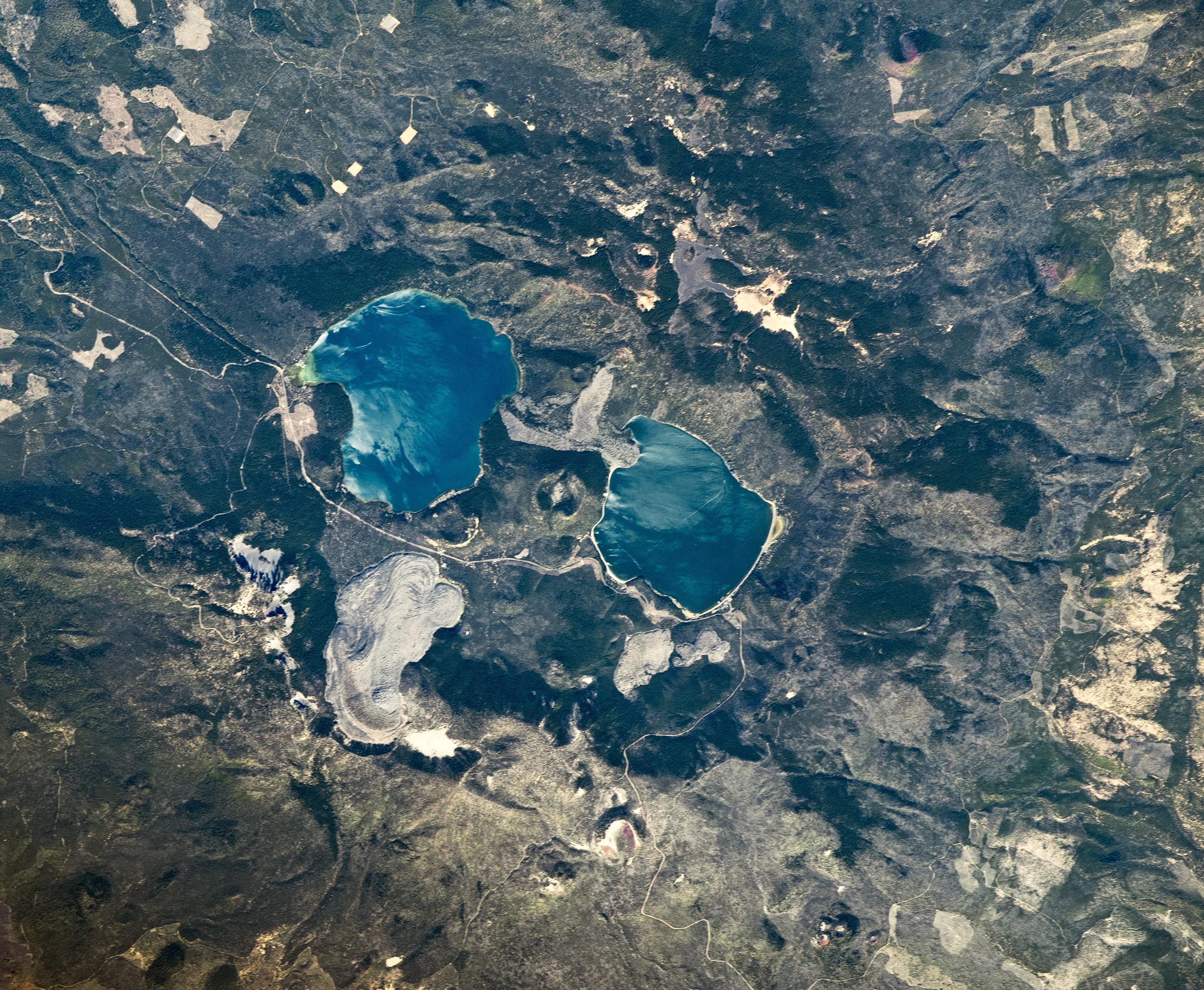
    August 13, 2020. An astronaut on the International Space Station (ISS) captured this photo of Newberry Volcano in the eastern Cascade Mountains.

    While passing over Oregon, an astronaut onboard the International Space Station (ISS) shot this photograph of Newberry Volcano in the eastern Cascade Mountains. With its last eruption just 1,300 years ago, Newberry is one of a number of active and potentially dangerous volcanoes in the Pacific Northwest.

    Numerous eruptions over the past 400,000 years have produced a large range of ash and rock deposits, pyroclastic flows, lava flows, and small vents within and surrounding Newberry’s large caldera. (The approximate extent, as determined from geologic evidence, is indicated by the dashed line.) The caldera is topped by twin crater lakes: Paulina and East Lake. Though it initially developed as one large lake, subsequent volcanism formed a ridge that separated it into two.

    During Newberry’s most recent activity, the Big Obsidian Flow was born. This large, light-toned mass of obsidian gets its coloring from a mix of black obsidian and grey pumice.

    The Newberry volcanic area was one of numerous locations used in the 1960s for geology field training for Apollo astronauts. This hands-on training prepared the astronauts to identify igneous rocks types and to collect samples from the lunar surface.

    Astronaut photograph ISS063-E-70532 was acquired on August 13, 2020, with a Nikon D5 digital camera using an 800 millimeter lens and is provided by the ISS Crew Earth Observations Facility and the Earth Science and Remote Sensing Unit, Johnson Space Center. The image was taken by a member of the Expedition 63 crew. The image has been cropped and enhanced to improve contrast, and lens artifacts have been removed. The International Space Station Program supports the laboratory as part of the ISS National Lab to help astronauts take pictures of Earth that will be of the greatest value to scientists and the public, and to make those images freely available on the Internet. Additional images taken by astronauts and cosmonauts can be viewed at the NASA/JSC Gateway to Astronaut Photography of Earth. Caption by Sara Schmidt, GeoControl Systems, JETS Contract at NASA-JSC.

    Never miss a breakthrough: Join the SciTechDaily newsletter.
    Follow us on Google and Google News.

    Geography NASA NASA Earth Observatory Volcano
    Share. Facebook Twitter Pinterest LinkedIn Email Reddit

    Related Articles

    Massive Tonga Volcano Plume Reached the Mesosphere – 36 Miles Into the Atmosphere

    Island Obliterated: Dramatic Changes at Hunga Tonga-Hunga Ha’apai

    Hunga Tonga Island Obliterated – NASA Satellites Capture Massive Blast

    A Wolf Awakens in the Galápagos Islands at Night

    A Deadly Day on Mount Semeru: Destructive Rivers of Debris on Indonesian Volcano

    Wall of Lava Burns a Path Through La Palma

    Cumbre Vieja Lights Up the Night – Astronaut Photo Captures Volcanic Eruption From Space

    Socked in Stratovolcano: Astronaut on ISS Captures Incredible View of Uninhabited Atlasov Island

    Kilauea’s Lava Lake Returns – Hawaii’s Most Active Volcano Is Erupting Again

    Leave A Reply Cancel Reply

    • Facebook
    • Twitter
    • Pinterest
    • YouTube

    Don't Miss a Discovery

    Subscribe for the Latest in Science & Tech!

    Trending News

    “I Couldn’t Do It Anymore” – Antarctic Guides Quit Their Dream Jobs After Witnessing Tourism’s Damage

    Scientists Say Eating Less Protein May Help You Live Longer

    Scientists Solve a Long-Standing Mystery About Bird and Dinosaur Eggs

    Belly Fat and Low Vitamin D May More Than Double the Risk of Early Death

    Lost in Space: Rare Cosmic Flare Exposes a Wandering Black Hole Far From Its Galaxy’s Center

    Dark Matter May Be Leaving a Signal in Earth’s Atmosphere

    Scientists Discover a 300-Million-Year-Old Geological Time Capsule Inside Fossilized Wood

    Oral Weight Loss Pill Helps Patients Lose up to 12% of Body Weight

    Follow SciTechDaily
    • Facebook
    • Twitter
    • YouTube
    • Pinterest
    • Newsletter
    • RSS
    SciTech News
    • Biology News
    • Chemistry News
    • Earth News
    • Health News
    • Physics News
    • Science News
    • Space News
    • Technology News
    Recent Posts
    • Never-Before-Seen Vortices Are Swirling Across the Sun
    • Something May Be Flowing Beneath Pluto’s Giant Heart-Shaped Glacier
    • Don’t Miss: Europe Is About To Go Dark in a Spectacular Total Solar Eclipse
    • Industrial Chicken Farming Is Supercharging the Spread of a Dangerous Foodborne Bacterium
    • Honeybee Queens May Pass Toxic Chemicals to the Next Generation
    Copyright © 1998 - 2026 SciTechDaily. All Rights Reserved.
    • Science News
    • About
    • Contact
    • Editorial Board
    • Privacy Policy
    • Terms of Use

    Type above and press Enter to search. Press Esc to cancel.