
Close Menu
    Facebook X (Twitter) Instagram
    SciTechDaily
    • Biology
    • Chemistry
    • Earth
    • Health
    • Physics
    • Science
    • Space
    • Technology
    Facebook X (Twitter) Pinterest YouTube RSS
    SciTechDaily
    Home»Science»No More Cracked Phone Screens: Scientists Crack the Code to Stronger, More Durable Glass
    Science

    No More Cracked Phone Screens: Scientists Crack the Code to Stronger, More Durable Glass

    By Tohoku UniversityDecember 4, 2024No Comments3 Mins Read
    Facebook Twitter Pinterest Telegram LinkedIn WhatsApp Email Reddit
    Share
    Facebook Twitter LinkedIn Pinterest Telegram Email Reddit
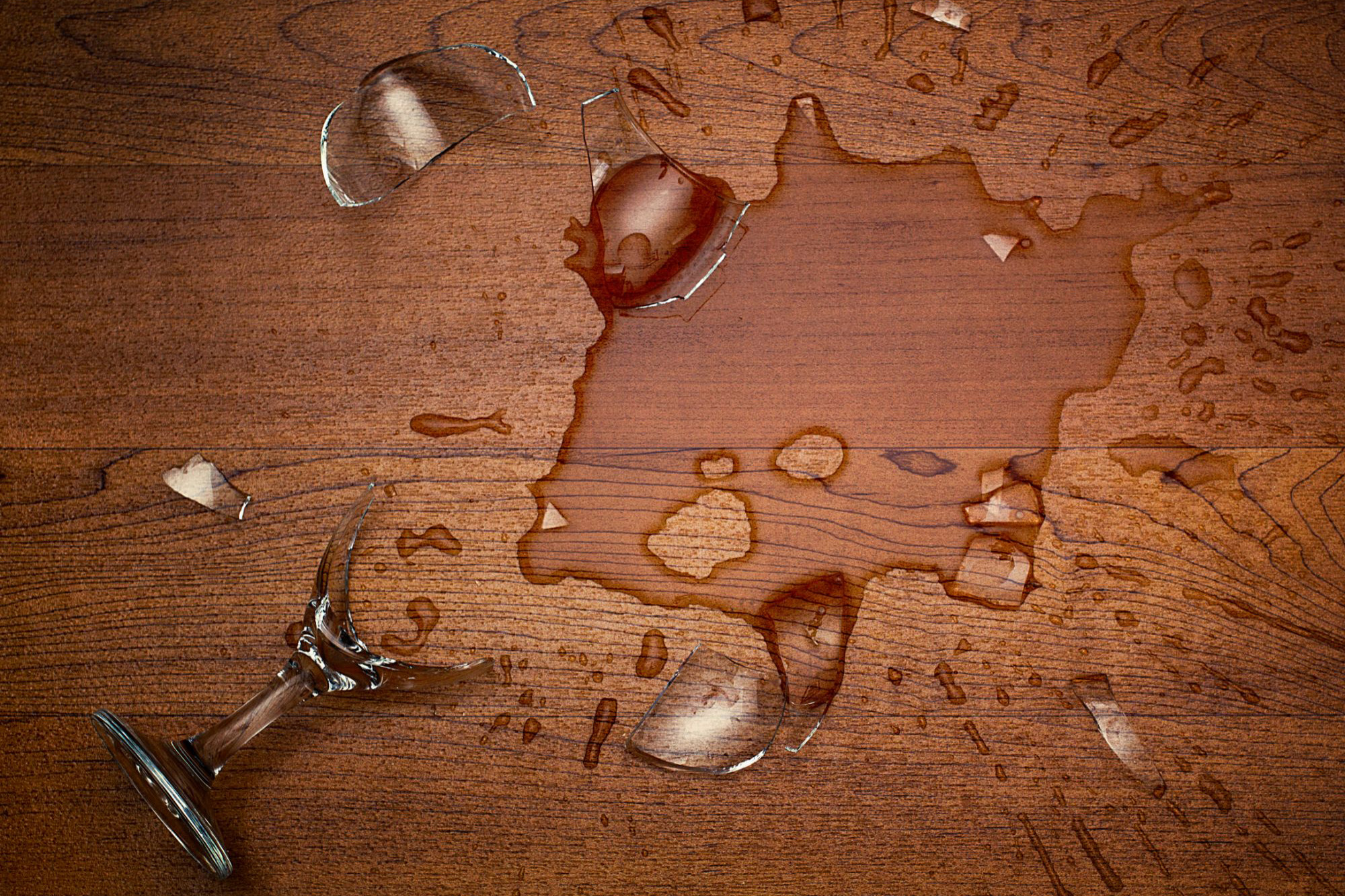
    Shattered Wine Glass
    A discovery by Tohoku University reveals how atomic movements in glass reduce stress, potentially leading to stronger, break-resistant materials with broad industrial applications.

    Scientists at Tohoku University discovered how atomic movements in glass reduce internal stress, making it more durable.

    We’ve all felt that moment of panic when a glass slips from our hands and shatters into pieces upon hitting the ground. But what if this common mishap could become a thing of the past?

    Now, a new discovery by researchers at Tohoku University has offered insights into how glass resists breakage, potentially paving the way for highly durable, break-resistant materials. The breakthrough has wide-ranging implications for glass-related industries.

    Details of their findings were published in the journal Acta Maeterialia on December 2, 2024.

    “Glass, while strong, is prone to breaking when stress exceeds its tolerance, but interestingly, the movement of atoms and molecules within glass can relax internal stress, making the material more resistant to fractures,” points out Makina Saito, an associate professor at Tohoku University’s Graduate School of Science. “Although we know that some atoms ‘jump’ into nearby empty spaces, how this process alleviates stress has long been a mystery.”

    Advanced Techniques Unveil Atomic Motion

    Saito and his colleagues, who comprised researchers from Kyoto University, Shimane University, the National Institute for Materials Science, and the Japan Synchrotron Radiation Research Institute, uncovered a previously unknown mechanism of stress relaxation in ionic glass, a model system of glass.

    Schematic of the Model Ionic Glass Structure Experimental Apparatus and Specimen
    Experimental apparatus and specimen. Schematic of the model ionic glass structure and its dynamics are also presented. Credit: Makina Saito

    Their research utilized state-of-the-art synchrotron radiation experiments and computer simulations to observe atomic motions in glass on a nanosecond-to-microsecond timescale.

    The team discovered that when some atoms within the glass ‘jump’ into nearby empty spaces, surrounding groups of atoms slowly move together to fill the void. This interplay of atomic jumps and collective motion reduces internal stress, protecting the glass from breaking under external force.

    “Our results have far-reaching implications for industries such as consumer electronics, construction, and automotive manufacturing, where break-resistant glass is essential,” adds Saito.

    Looking ahead, the research team plans to explore whether similar atomic mechanisms operate in other types of glass. Their ultimate goal is to establish universal guidelines for designing glass with superior impact resistance, which could revolutionize applications requiring durable materials.

    Reference: “Discovery of collective nonjumping motions leading to Johari–Goldstein process of stress relaxation in model ionic glass” by Makina Saito, Takeaki Araki, Yohei Onodera, Koji Ohara, Makoto Seto, Yoshitaka Yoda and Yusuke Wakabayashi, 4 November 2024, Acta Materialia.
    DOI: 10.1016/j.actamat.2024.120536

    Never miss a breakthrough: Join the SciTechDaily newsletter.
    Follow us on Google and Google News.

    Glass Materials Science Tohoku University
    Share. Facebook Twitter Pinterest LinkedIn Email Reddit

    Related Articles

    Superelastic Alloy Stays Strong from Liquid Helium to Boiling Water, Transforming Space and Medicine

    New Luminescent Material Could Be the Answer to Crumbling Infrastructure

    Scientists Have Developed a New Type of Glass With Unique and Even Contradictory Properties

    Hard Yet Stretchable: Scientists Create “Unbreakable” New Material

    Reinventing Glass: A Breakthrough in Atomic Stability

    Unmasking the Mystery of Glass: Scientists Uncover Hidden Atomic Structure Secrets

    Changing the Silkworm’s Diet to Spin Silk 2x Stronger

    Researchers Strengthen Machines That Produce “Super Engineering Plastics”

    Scientists Uncover Key Element to How Glasses Transition Into Resilient States

    Leave A Reply Cancel Reply

    • Facebook
    • Twitter
    • Pinterest
    • YouTube

    Don't Miss a Discovery

    Subscribe for the Latest in Science & Tech!

    Trending News

    Scientists Discover Cheap, Natural Remedy for High Blood Pressure

    Earth’s Upper Atmosphere Is Cooling Fast and Scientists Finally Know Why

    32,000 Olympic Pools of Magma Nearly Erupted Beneath Atlantic Island

    Exercise Changes the Heart in a Way Researchers Never Expected

    Too Much Sleep May Age Your Body Faster, New Study Warns

    Scientists Uncover Promising New Strategy To Stop Parkinson’s in Its Tracks

    Experts Reveal the Surprising Cancer Link Behind a Common Vitamin

    This Strange “Golden Orb” Found 2 Miles Deep Stumped Scientists for Years

    Follow SciTechDaily
    • Facebook
    • Twitter
    • YouTube
    • Pinterest
    • Newsletter
    • RSS
    SciTech News
    • Biology News
    • Chemistry News
    • Earth News
    • Health News
    • Physics News
    • Science News
    • Space News
    • Technology News
    Recent Posts
    • The Type of Alcohol You Drink Could Affect How Long You Live
    • 19-Year Study Reveals the Surprising Truth About Sitting and Dementia
    • This Common Vitamin May Help Stop Prediabetes From Turning Into Diabetes
    • Canada’s Billion-Year-Old Rocks Could Hold the Future of Clean Energy
    • Climate Change Is Quietly Choking Rivers Across the Planet
    Copyright © 1998 - 2026 SciTechDaily. All Rights Reserved.
    • Science News
    • About
    • Contact
    • Editorial Board
    • Privacy Policy
    • Terms of Use

    Type above and press Enter to search. Press Esc to cancel.