
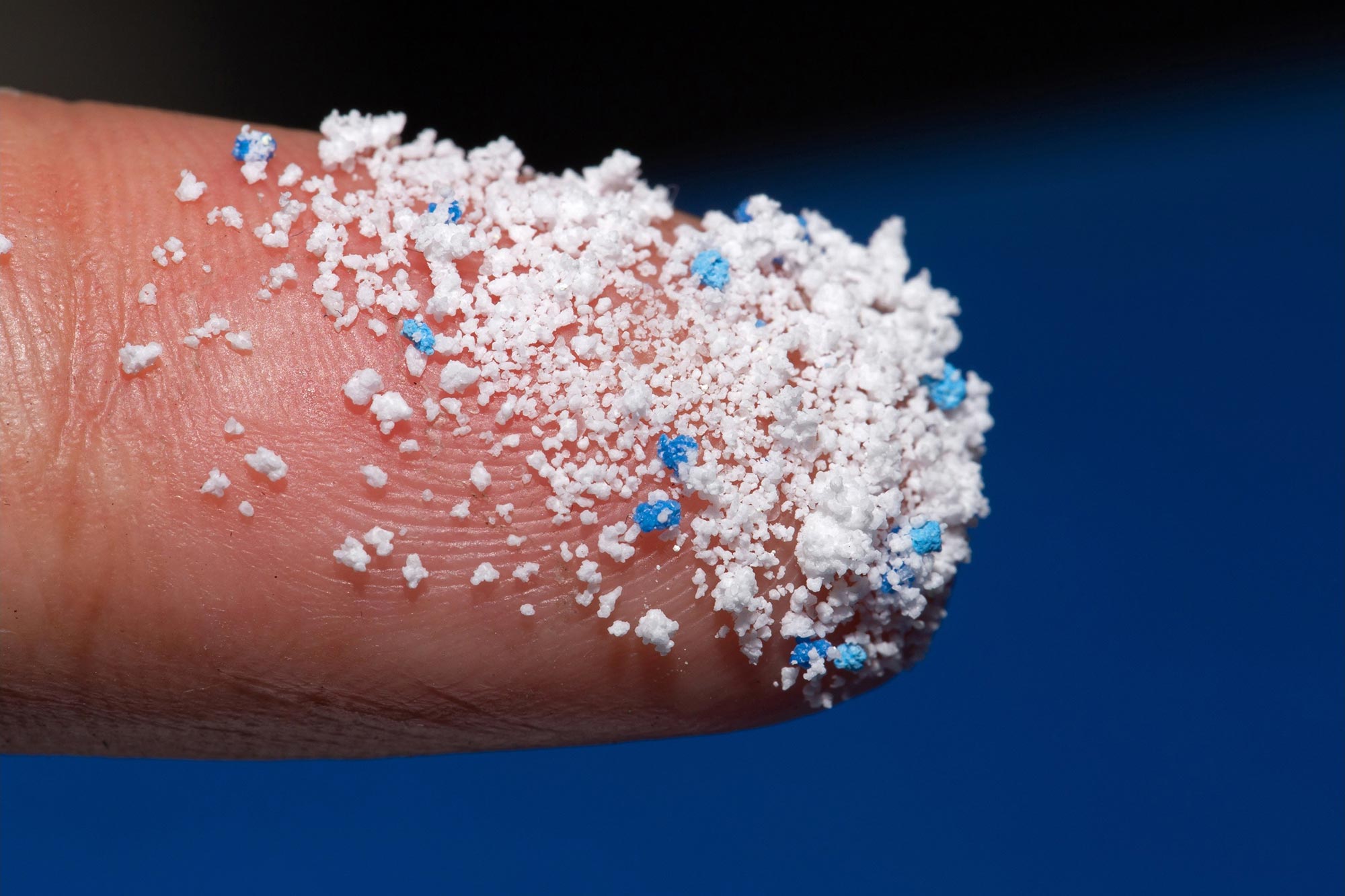
Plastic pollution impacts all planetary boundaries, affecting the environment and health on a global scale. Researchers call for addressing the full life cycle of plastics, urging policymakers to shift from waste-focused approaches to comprehensive sustainability solutions.
Plastics are proving to be less safe and inert than once believed. A recent research article by an international team of scientists uses the planetary boundaries framework to organize the growing body of evidence on plastics’ impact on the environment, health, and human well-being.
500 million tons of plastics are now produced yearly but only nine percent get recycled globally. Plastics are everywhere: from the top of Mount Everest to the deepest part of the Mariana Trench.
“It’s necessary to consider the full life cycle of plastics, starting from the extraction of fossil fuel and the primary plastic polymer production,” says lead article writer Patricia Villarrubia-Gómez at Stockholm Resilience Center.
The Global Environmental Impact of Plastics
Through a synthesis review of the scientific literature on the impacts of plastics in the natural environment, the research team shows that plastics pollution is changing the processes of the entire Earth system, and affects all pressing global environmental problems, including climate change, biodiversity loss, ocean acidification, and the use of freshwater and land.

The paper emphasizes the need to consider the complexity of plastics. As synthetic polymer-based materials are associated with thousands of other chemicals, their impacts occur throughout the full life cycle of these products and materials.
“Plastics are seen as those inert products that protect our favorite products, or that make our lives easier that can be “easily cleaned-up” once they become waste. But this is far from reality. Plastics are made out of a combination of thousands of chemicals. Many of them, such as endocrine disruptors and forever chemicals, which pose toxicity and harm to ecosystems and human health. We should see plastics as the combination of these chemicals with which we interact on a daily basis,” says PhD Candidate Patricia Villarrubia-Gómez at Stockholm Resilience Centre at Stockholm University.
Until recently, the scientific community has mostly studied these impacts separately, without addressing interactions between them. Also, public discourse and policy tend to address plastics as mainly a waste problem.
“The impacts of plastics in the Earth system are complex and interconnected, and this work clearly demonstrates how plastics are acting to destabilize the system,” says co-author associate professor Sarah Cornell, at Stockholm Resilience Centre at Stockholm University.
The team suggests a set of control variables that can be used together to include plastic pollution in the operational use of the Planetary Boundaries framework. Their impact pathway approach considers impacts and indicators at three main stages in the full life cycle of plastics: raw material extraction, plastics production and use; environmental release and fate; and Earth system effects.
“We emphasize the need to account for impacts at all stages along the life cycle of plastics, rather than looking for a single quantified planetary boundary threshold. We propose a set of control variables that together allow us to better understand and control plastics pollution,” says Patricia Villarrubia-Gómez.
The Scale of Plastic Production and Data Challenges
The researchers examined the publicly available data on plastics production. In 2022 (the most recent data), at least 506 million tons of plastics were produced worldwide, with an accumulative 11,090 million tons of plastics produced from 1950 to 2022. The researchers note that there are major challenges in obtaining data on plastics production and use to make these calculations.
Data reporting relates to different polymer types, with insufficient standardization, lacking methodological detail and metadata about their sources and assumptions. Transparent and consistent aggregation and uncertainty assessments are not possible, hindering research and policy responses alike.
However, the available evidence shows clearly how plastics contribute to environmental problems up to the planetary scale, both directly and via knock-on biophysical interactions and cumulative effects.
Many people worldwide already face crisis conditions due to the breached planetary boundaries. Understanding the systemic interactions of plastics in the planetary boundaries framework can inform strategies for more sustainable responses, as an integrative part of climate change, biodiversity, and natural resource-use policy.
“We now find plastics in the most remote regions of the planet and in the most intimate, within human bodies. And we know that plastics are complex materials, released to the environment throughout the plastics life cycle, resulting in harm in many systems. The solutions we strive to develop must be considered with this complexity in mind, addressing the full spectra of safety and sustainability to protect people and the planet,” says co-author of the paper, Professor Bethanie Carney Almroth at the University of Gothenburg.
As the international Plastics Treaty negotiations approach closure, the research team calls for experts and policymakers to shift away from considering plastics pollution as merely a waste management problem, and instead to tackle material flows through the whole impact pathway. This approach lets Earth system effects of plastics be detected, attributed, and mitigated in a timely and effective way.
Reference: “Plastics pollution exacerbates the impacts of all planetary boundaries” by Patricia Villarrubia-Gómez, Bethanie Carney Almroth, Marcus Eriksen, Morten Ryberg and Sarah E. Cornell., 7 November 2024, One Earth.
DOI: 10.1016/j.oneear.2024.10.017
Funding: Svenska Forskningsrådet Formas
Never miss a breakthrough: Join the SciTechDaily newsletter.
Follow us on Google and Google News.
4 Comments
Plastic burns or have you forgotten about that
So, when exactly to trust scientists? When they were wrong before or when they’re wrong now?
“Plastics are proving to be less safe and inert than once believed.” Seriously? By whom – DuPont?
Commercial interests have helped to create a world wherein people accept anything put in front of them and if there’s a profit to be made, well, we know how that works,
There are always references to commercial to consumer use of plastics but what about requiring more responsible use in things like the medical and pharmaceutical field? Take a closer look at how much throw away plastic used that is not necessary, it is just easy and something else to upcharge for. Even things like those Ozempic large injection pens result in crazy amounts of plastic trash when they could easily be regular injections.