
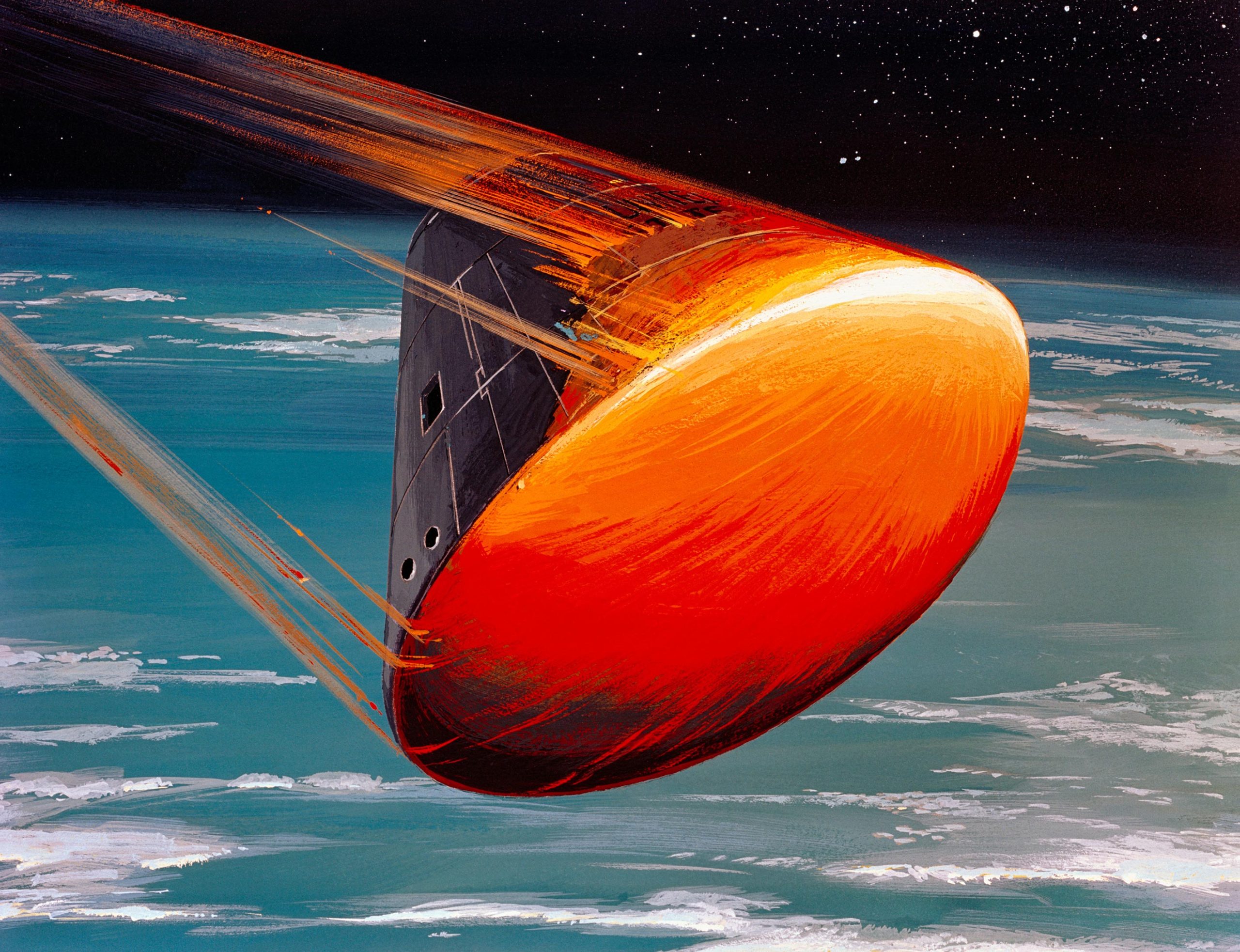
The Orion capsule concluded its 25-day Artemis I mission in 2022 with a landing in the Pacific, revealing significant heat shield damage. NASA is now focused on enhancing heat shield designs for the upcoming manned missions to the Moon.
In December 2022, off the coast of Baja California, sunlight glinted off the rippling sea as waves lapped against the USS Portland. Navy officials on deck scanned the sky, waiting for a crucial sign. Suddenly, a distant glow emerged.
At first, it was just a tiny speck, but it rapidly expanded into a round object hurtling toward Earth from the edge of space. It was NASA’s Orion capsule, nearing the end of its 25-day Artemis I mission, which had taken it around and beyond the Moon.
Orion’s reentry followed a steep, precise trajectory. The capsule plunged through Earth’s atmosphere at astonishing speed before deploying three large red-and-white parachutes. After traveling more than 270,000 miles (435,000 kilometers), it appeared intact to those watching from the deck of the USS Portland as it splashed down into the Pacific Ocean.
The Orion spacecraft splashed down in December 2022, marking the end of the Artemis I mission.
Heat Shield Challenges in Space Travel
As the recovery crew lifted Orion to the carrier’s deck, shock waves ruffled across the capsule’s surface. That’s when crew members started to spot big cracks on Orion’s lower surface, where the capsule’s exterior bonds to its heat shield.
But why wouldn’t a shield that has endured temperatures of about 5,000 degrees Fahrenheit (2,760 degrees Celsius) sustain damage? Seems only natural, right?
At 12:40 p.m. EST, December 11, 2022, NASA’s Orion spacecraft for the Artemis I mission splashed down in the Pacific Ocean after a 25.5 day mission to the Moon. Seen here is NASA’s Landing and Recovery team, U.S. Navy and Department of Defense partners recovering the Orion spacecraft aboard the USS Portland off the coast of California. Credit: NASA
Preparing for Future Missions
This mission, Artemis I, was uncrewed. But NASA’s ultimate objective is to send humans to the Moon in 2026. So, NASA needed to make sure that any damage to the capsule– even its heat shield, which is meant to take some damage – wouldn’t risk the lives of a future crew.
On December 11, 2022 – the time of the Artemis I reentry – this shield took severe damage, which delayed the next two Artemis missions. While engineers are now working to prevent the same issues from happening again, the new launch date targets April 2026, and it is coming up fast.
As a professor of aerospace technology, I enjoy researching how objects interact with the atmosphere. Artemis I offers one particularly interesting case – and an argument for why having a functional heat shield is critical to a space exploration mission.
Critical Engineering Behind Reentry
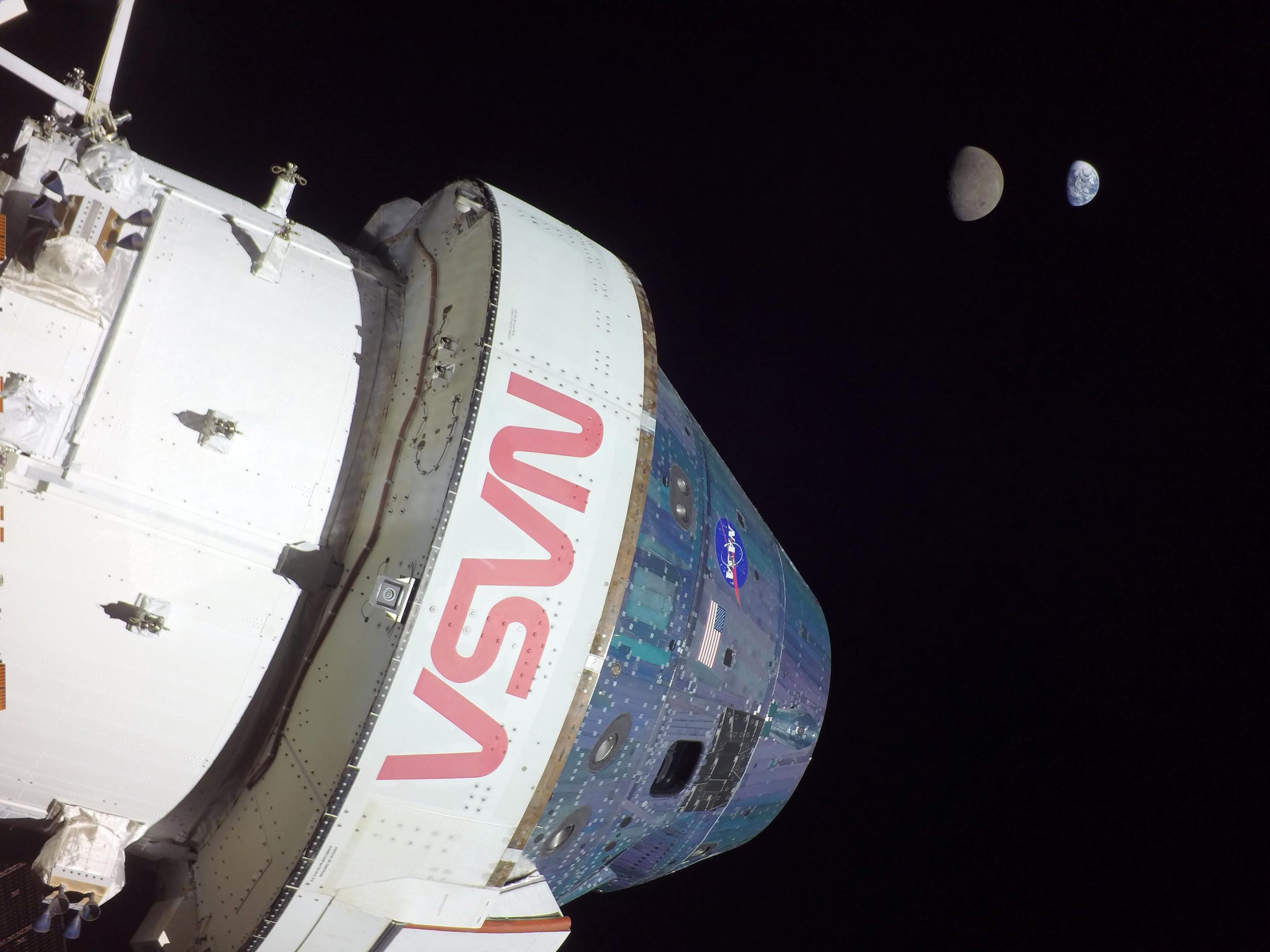
To understand what exactly happened to Orion, let’s rewind the story. As the capsule reentered Earth’s atmosphere, it started skimming its higher layers, which acts a bit like a trampoline and absorbs part of the approaching spacecraft’s kinetic energy. This maneuver was carefully designed to gradually decrease Orion’s velocity and reduce the heat stress on the inner layers of the shield.
After the first dive, Orion bounced back into space in a calculated maneuver, losing some of its energy before diving again. This second dive would take it to lower layers with denser air as it neared the ocean, decreasing its velocity even more.
The Physics of Spacecraft Reentry
While falling, the drag from the force of the air particles against the capsule helped reduced its velocity from about 27,000 miles per hour (43,000 kilometers per hour) down to about 20 mph (32 kph). But this slowdown came at a cost – the friction of the air was so great that temperatures on the bottom surface of the capsule facing the airflow reached 5,000 degrees Fahrenheit (2,760 degrees Celsius).
At these scorching temperatures, the air molecules started splitting and a hot blend of charged particles, called plasma, formed. This plasma radiated energy, which you could see as red and yellow inflamed air surrounding the front of the vehicle, wrapping around it backward in the shape of a candle.
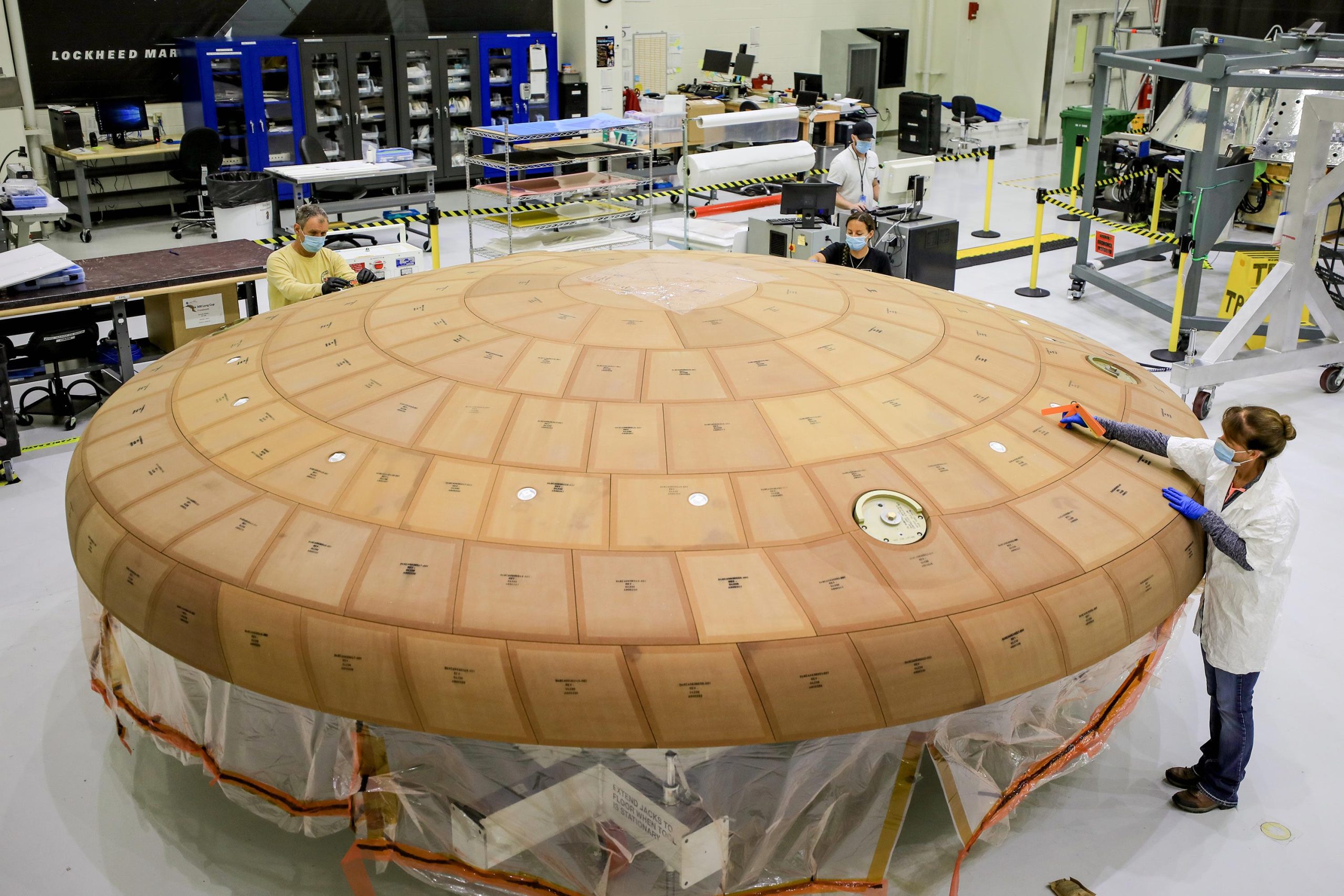
No material on Earth can stand this hellish environment without being seriously damaged. So, the engineers behind these capsules designed a layer of material called a heat shield to be sacrificed through melting and evaporation, thus saving the compartment that would eventually house astronauts.
By protecting anyone who might one day be inside the capsule, the heat shield is a critical component.
In the form of a shell, it is this shield that encapsulates the wide end of the spacecraft, facing the incoming airflow – the hottest part of the vehicle. It is made of a material that is designed to evaporate and absorb the energy produced by the friction of the air against the vehicle.
Investigating the Damage and Future Adjustments
But what really happened with Orion’s heat shield during that 2022 descent?
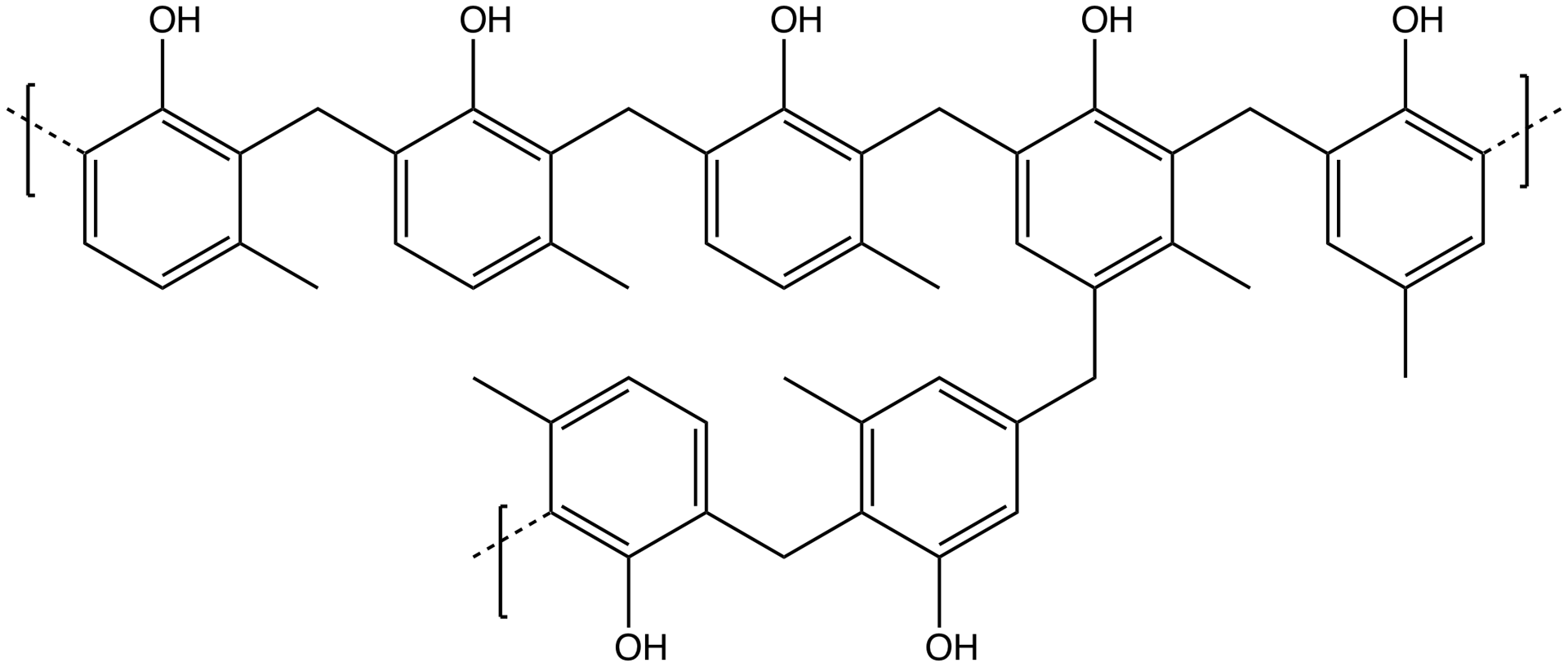
In the case of Orion, the heat shield material is a composite of a resin called Novolac – a relative to the Bakelite which some firearms are made of – absorbed in a honeycomb structure of fiberglass threads.
As the surface is exposed to the heat and airflow, the resin melts and recedes, exposing the fiberglass. The fiberglass reacts with the surrounding hot air, producing a black structure called char. This char then acts as a second heat barrier.
NASA used the same heat shield design for Orion as the Apollo capsule. But during the Apollo missions, the char structure didn’t break like it did on Orion.
After nearly two years spent analyzing samples of the charred material, NASA concluded that the Orion project team had overestimated the heat flow as the craft skimmed the atmosphere upon reentry.
As Orion approached the upper layers of the atmosphere, the shield started melting and produced gases that may have escaped through pores in the material. Then, when the capsule gained altitude again, the outer layers of the resin froze, trapping the heat from the first dive inside. This heat vaporized the resin.
When the capsule dipped into the atmosphere the second time, the gas expanded before finding a way out as it heated again – kind of like how a frozen lake thaws upward from the bottom – and its escape produced cracks in the capsule’s surface where the char structure got damaged. These were the cracks the recovery crew saw on the capsule after it splashed down.
In a December 5, 2024, press conference, NASA officials announced that the Artemis II mission will be designed with a modified reentry trajectory to prevent heat from accumulating.
For Artemis III, which is planned to launch in 2027, NASA intends to use new manufacturing methods for the shield, making it more permeable. The outside of the capsule will still get very hot during reentry, and the heat shield will still evaporate. But these new methods will help keep the astronauts cozy in the capsule all the way through splashdown.
Written by Marcos Fernandez Tous, Assistant Professor of Space Studies, University of North Dakota.
Chonglin Zhang, assistant professor of mechanical engineering at the University of North Dakota, assisted in researching this article.
Adapted from an article originally published in The Conversation.
Never miss a breakthrough: Join the SciTechDaily newsletter.
Follow us on Google and Google News.
2 Comments
So, they still haven’t solved the problems they were having back in the sixties. Keep it up, boys…
This article has a fundamental error. The resin does not melt. Under severe heat load, it decomposes into various gases primarily water and a solid carbonaceous char. This char is porous and permeable and this can allow the generated gases to flow. If the heating rate is sufficiently high such as occurs during reentry, the rate of gas formation can exceed the rate at which they can flow out this causing an accumulation and attendant increase in pressure inside the pores of the material and if this pressure is sufficiently high, it may exceed the charred layer’s strength. The char is very weak in tension and the purpose of the fiberglass is to augment this property. However the fiberglass itself is the melting component thus it too can be compromised further compounding the situation.